Chevy least distracting, Google Siri, Cortana & Text are more distracting

New Hands-Free Technologies Pose Hidden Dangers for Drivers (PRNewsFoto/AAA)

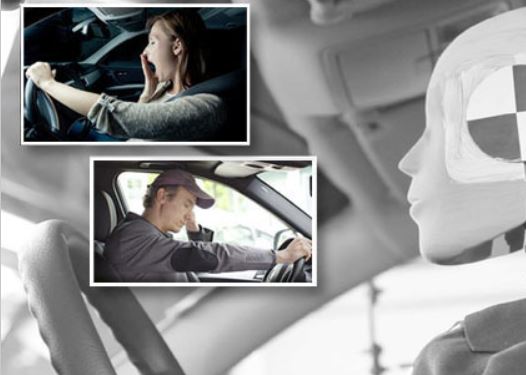
New AAA Foundation for Traffic Research shows that hands-free technologies can mentally distract drivers even if their eyes are on the road and their hands are on the wheel.

The research found that practice with voice-recognition systems doesn’t eliminate distraction. The studies also showed older drivers – those most likely to buy autos with infotainment systems – are much more distracted than younger drivers when giving voice commands.

AAAphoto1-1In the in-car information system study, the researchers did an initial test on the subjects, then let them take the cars home for five days to practice using the systems. Then they returned for reassessment of the mental workload from using the systems. The best performing system was the Chevy Equinox with a cognitive distraction rating of 2.4, while the worst performing system was the Mazda 6 with a cognitive distraction rating of 4.6.

A study of smartphone systems found all three major smartphone personal assistants either highly or very highly distracting. Two scores were given to each voice-based system: A lower number for using voice commands only to make calls or change music when driving – the same tasks done with the in-car systems – and a higher number that also included using smartphones to send texts by voice commands. Google Now rated highly distracting (3.0, 3.3), as did Apple Siri (3.4, 3.7), while Microsoft Cortana rated highly to very highly distracting (3.8, 4.1).

The vast majority of people  tested ended up being frustrated by the complexity and error-prone nature of the systems, noted Joel Cooper who also observed Many of these systems have been put into cars with a voice-recognition system to control entertainment: Facebook, Twitter, Instagram, Snapchat, Facetime, etc. We are now trying to entertain the driver rather than keep the driver’s attention on the road.”

Researchers found that potentially unsafe levels of mental distraction can last for as long as 27 seconds after completing a distracting task in the worst-performing systems studied. At the 25 MPH speed limit in the study, drivers traveled the length of nearly three football fields during this time. When using the least distracting systems, drivers remained impaired for more than 15 seconds after completing a task.

The researchers discovered the residual effects of mental distraction while comparing new hands-free technologies in ten 2015 vehicles and three types of smartphones. The analysis found that all systems studied increased mental distraction to potentially unsafe levels. The systems that performed best generally had fewer errors, required less time on task and were relatively easy to use.

The researchers rated mental distraction on a five-point scale. Category one represents a mild level of distraction and category five represents the maximum.  AAA considers a mental distraction rating of two and higher to be potentially dangerous while driving.

“The results indicate that motorists could miss stop signs, pedestrians and other vehicles while the mind is readjusting to the task of driving,” said Peter Kissinger, President and CEO of the AAA Foundation for Traffic Safety.

“The massive increase in voice-activated technologies in cars and phones represents a growing safety problem for drivers,” said Marshall Doney, AAA’s President and CEO, “We are concerned that these new systems may invite driver distraction, even as overwhelming scientific evidence concludes that hands-free is not risk free.”

Previous AAA Foundation research established that a category 1 mental distraction is about the same as listening to the radio or an audio book. A category 2 distraction is about the same as talking on the phone, while category 3 is equivalent to sending voice-activated texts on a perfect, error-free system. Category 4 is similar to updating social media while driving, while category 5 corresponds to a highly-challenging, scientific test designed to overload a driver’s attention.

Over the last two weeks, AAA has used the findings to continue collaborative work with policymakers, safety advocates and manufacturers to improve the safety of future technology.

“Developers should reduce mental distractions by designing systems that are no more demanding than listening to the radio or an audiobook,” continued Doney. “Given that the impairing effects of distraction may last much longer than people realize, AAA advises consumers to use caution when interacting with these technologies while behind the wheel.”

Dr. David Strayer and Dr. Joel Cooper of the University of Utah conducted the research. A total of 257 drivers ages 21-70 participated in the study of 2015 model-year vehicles, while 65 additional drivers ages 21-68 tested the three phone systems.

The video is very humorous as long as you are not the one trying to complete the voice command.
Read full report.

https://vimeo.com/aaapublicaffairs/review/141697388/791daa0c75

ADAS could save big bucks, lives and crashes

A new report from Boston Consulting Group found that advanced driver assistance systems (ADAS) could benefit society, reduce the number, cost, and severity of automotive

Better connected car research from outer space for Ford

Ford  and St. Petersburg State Polytechnic University are finishing research for better vehicle communication technology. As a result of telematics and space robot communications research,

Cars Online Report shows that car buyers want to get personal

SelfieeexperienceA recent survey by Capgemini reports that car buyers expect an increasingly individualized experience, requiring OEMs and dealers to further communicate and share customer data. The 16th annual Cars Online report: ‘The selfie experience: The evolving behavior of the connected customer” shows that consumers expect more and better communication during the buying period. People expect more communication and want good contact with their car dealers. Consumers expect to be excited to be loyal to the car brand. Consumers are highly interested in autonomous driving and are willing to pay for it.

The report found:
• A wider variety of online sources are utilized when choosing a car, with dealer/manufacturer websites (49%), search engines (43%) and traditional dealerships (48%) now supplemented by web forums (19%), social media pages (12%) and smartphone apps (9%).
• The use of more varied and non-traditional online information sources is particularly driven by the Asian markets (India/China), where 80% are significantly influenced by positive social media comments.
• The physical dealership still plays a critical role for consumers, with 95% visiting one or more dealerships before purchase as people still want a tactile experience when buying a car.
• Consumers want instantaneous personalized online services when buying a car and for post-sale experience too with 95% expect a response to requests within 24 hours; for growth markets, 69% want one in less than four hours.
• While consumers desire more personalized on and offline services, 45% have concerns over data privacy.
• There is a strong correlation between customer satisfaction and loyalty particularly for dealers – Only 10% of customers, not satisfied at all, say they would likely or very likely buy their next car from the same dealer. 87% of highly satisfied customers would purchase the same brand again and 85% would buy from the same dealer.

onlinebuyingWhile the younger generation (18-34 year olds) has a higher affinity with online channels, the study reveals that even ‘digital natives’ want physical touch-points for purchase.  Customers demand technical expertise from dealers and expect more personalized and frequent communication between purchase and delivery. Half expect at least weekly notifications on delivery updates while the majority (58%), want to be able to adjust their order after the initial purchase. Most consumers (80%), interested in connected car features, are prepared to allow access to their data, provided there is transparent information on how it’s used – showing high levels of trust in OEMs. Nearly all (99%) of customers who feel very informed about the use of their data are satisfied with their dealer or OEM. However, surprisingly as many as 37% in mature markets say they have not been contacted at all by their dealer or manufacturer in the last year.
“Accustomed to personalized services and an experience that combines on and offline channels in other sectors such as retail, consumers are demanding the same in the automotive industry both pre- and post-car purchase. Digital communication channels such as social media, insights into behavior made possible by data analytics, and the desire for added services means OEMs and dealers should provide such an experience,” Kai Grambow, Global Head of Automotive at Capgemini, commented. “However, in order to achieve this, there must be a shift in mentality away from the segregation of manufacturing, sales and aftercare. Currently there is little data sharing between OEMs and dealers – but this is a real opportunity for the industry. OEMs and dealers need to co-operate and use the right analytical technology to provide a more comprehensive 360 degree customer experience.”
The report also details a significant appetite for advanced new technologies and connected services, providing OEMs and dealers with fresh opportunities, but also challenges. Half of consumers (47%) want to use or are already using connected car features, with over three quarters (80%) of these saying it is important for their next car. However, the threat of a cyber attack is still a significant concern for some consumers (38%), who say it is a reason not to use these features. Looking ahead, half of all consumers surveyed (49%) would be interested in buying a car from technology giants like Apple or Google, even if they are currently satisfied with their current brand. This increases to 65% among younger customers and those in the growth markets – including China (74%) and India (81%), compared to more mature markets such as the UK (26%) and the US (29%). Consumers, particularly in the younger age category, are equally willing to pay significantly more for autonomous driving with 79% of respondents expressing interest – rising to 95% in growth markets compared to mature markets (68%). Positive benefits such as stress reduction and safety are seen to outweigh the negatives.

Research Methodology
Cars Online 2015 is Capgemini’s annual research into consumer behavior and expectations across the entire car purchase lifecycle (including interest and purchase through to ownership and re-purchase). It also covers consumer views on the innovation areas of “connected vehicles”, “autonomous driving” and alternative “mobility services”. This year’s 16th annual edition of the report, had 7,553 consumers participate in the survey. All respondents were “in-market”, planning to buy or lease a car in the next 12 months. Countries represented were Brazil, China, France, Germany, India, the United Kingdom (UK), and the United States (US). Capgemini worked with FreshMinds, an insight and innovation consultancy, to conduct this survey. All analysis and interpretation of the data was done by Capgemini. The research was conducted in June 2015.

Read Report.

Cybersecurity is important for connected cars, says report

Frost & Sullivan’s recent whitepaper, Cybersecurity: Automakers Remain Passive as Government Takes Action, analyzes cyber security challenges, identifies solutions, and outlines a best-practices approach. Historically,

New Mobility Design Winners from Michelin

Michelin announced the winners of the global 2016 Michelin Challenge Design, “Mobility for All – Designing for the Next Frontier.” The 14 winning designs from