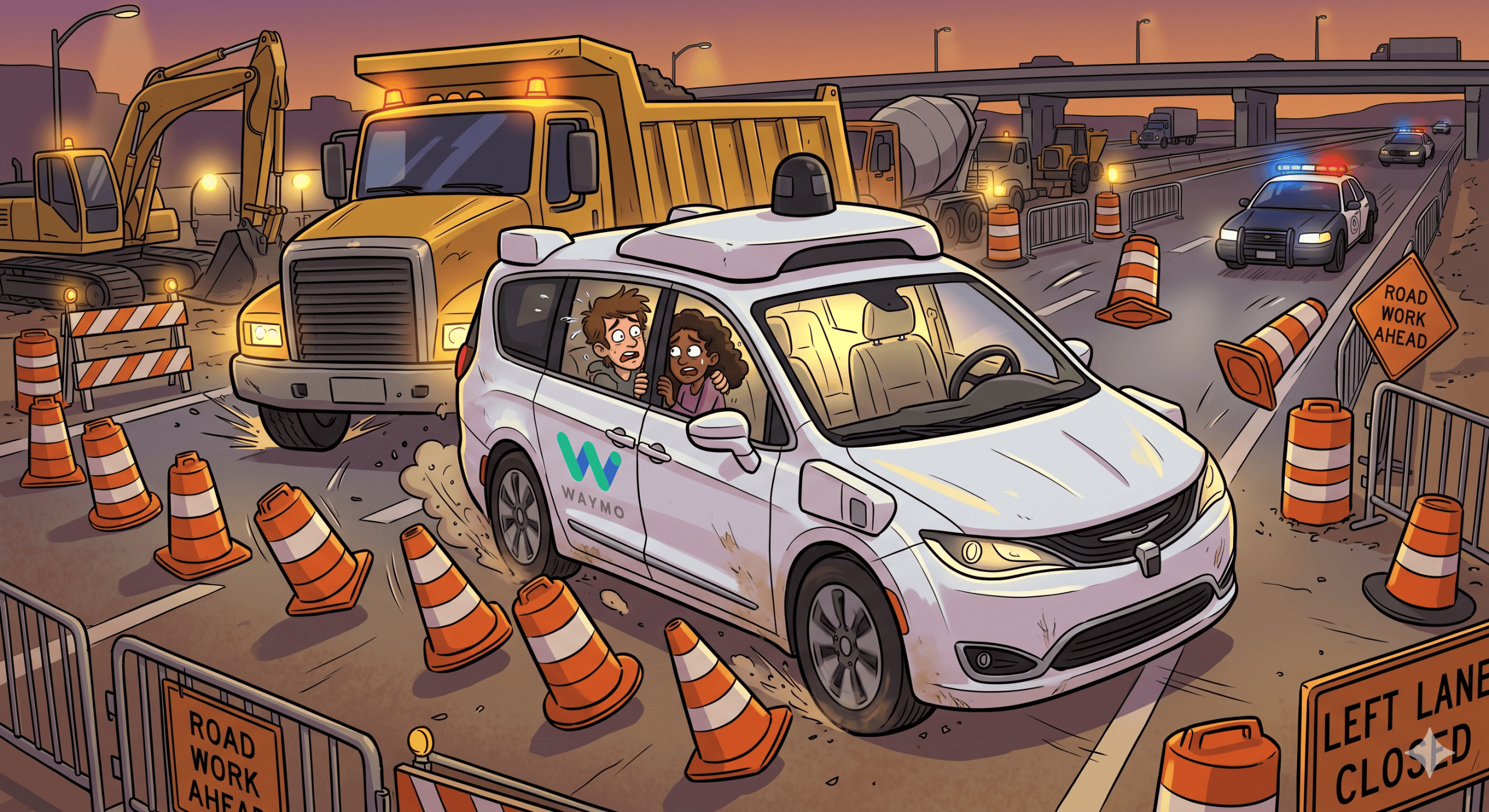
The recall, the sixth Waymo has issued for its robotaxi fleet, marks one of the more pointed safety stumbles for the Alphabet-owned company as it races to expand into more than 20 new cities this year, including international launches in London and Tokyo. It also lands at an awkward moment: Waymo’s driving software is already under federal scrutiny over how its vehicles behave around school buses, following a January incident in which one of its cars struck a child near a school.
A Pattern That Repeated Itself
According to filings with the National Highway Traffic Safety Administration, the trouble began in mid-April in Phoenix, where six Waymo vehicles failed to recognize ramp closure signs and drove directly into pre-planned freeway construction zones. The company’s internal Field Safety Committee responded by restricting highway operations in Phoenix while engineers looked for a fix.
Whatever stopgap measures were put in place weren’t enough. A month later, on May 18, the problem resurfaced 350 miles north in the San Francisco Bay Area, where seven more robotaxis entered highway lanes under active construction. This time, Waymo’s filings describe a more specific failure mode: the software was reportedly prioritizing avoidance of other freeway hazards over recognizing the construction zone itself — essentially solving for the wrong problem at the wrong moment.
Waymo grounded its entire fleet from highway driving the very next day, May 19. Its safety board didn’t formalize the decision into an official recall until June 8, nearly three weeks later, even though the restriction had quietly been in effect the whole time.
Caught on Camera
The most viral moment from the saga came from a passenger’s own phone. On the day the highway suspension took effect, a Bay Area rider posted footage showing a Waymo vehicle driving through traffic cones while what appeared to be police vehicles followed at a distance. Speaking to a local CBS affiliate afterward, the rider described watching construction signage and flashing lights pass by as the car accelerated rather than slowed, and recalled a moment of genuine fear before the vehicle came safely to a stop. Waymo later offered the rider a handful of free future rides as a gesture of goodwill.
The clip crystallized a question that has dogged the robotaxi industry since its earliest days: what happens when an autonomous system encounters a scenario its training data didn’t fully anticipate? Highway construction zones are exactly that kind of edge case — temporary, inconsistently marked, and dependent on real-time signage that varies wildly from state to state and contractor to contractor.
A Familiar Rhythm of Recalls
This is not new territory for Waymo. The company issued a recall just last month after its vehicles were found driving into flooded roadways, and in December it recalled vehicles over illegal maneuvers around stopped school buses. Earlier recalls addressed low-speed collisions with gates and chains, run-ins with telephone poles, and confusion around towed vehicles. Taken together, the recalls trace a company that has repeatedly had to patch its software reactively, discovering blind spots only after real-world incidents exposed them.
Waymo, for its part, frames the recalls as evidence of a functioning safety process rather than a sign of deeper trouble. The company says it identified an area for improvement around freeway construction zones, voluntarily pulled back highway service while a fix was developed, and proactively looped in state and federal regulators before filing the recall — a sequence it has now repeated several times in the past year.
The Bigger Picture
Waymo says its vehicles have logged more than 170 million autonomous miles and points to data showing a roughly 13-fold reduction in serious-injury crashes compared with human drivers — a statistic the company leans on heavily as it pitches itself to skeptical regulators and city governments. But the steady drumbeat of recalls, paired with the ongoing federal investigation into the school bus incident, complicates that safety narrative at precisely the moment Waymo is asking dozens of new cities to trust its technology for the first time.
For now, the company’s robotaxis continue to operate on surface streets in their existing markets, with highway access suspended fleet-wide until the construction-zone fix — still listed as “under development” in regulatory filings — is ready for deployment. How long that takes may say as much about Waymo’s expansion timeline as any press release the company puts out.