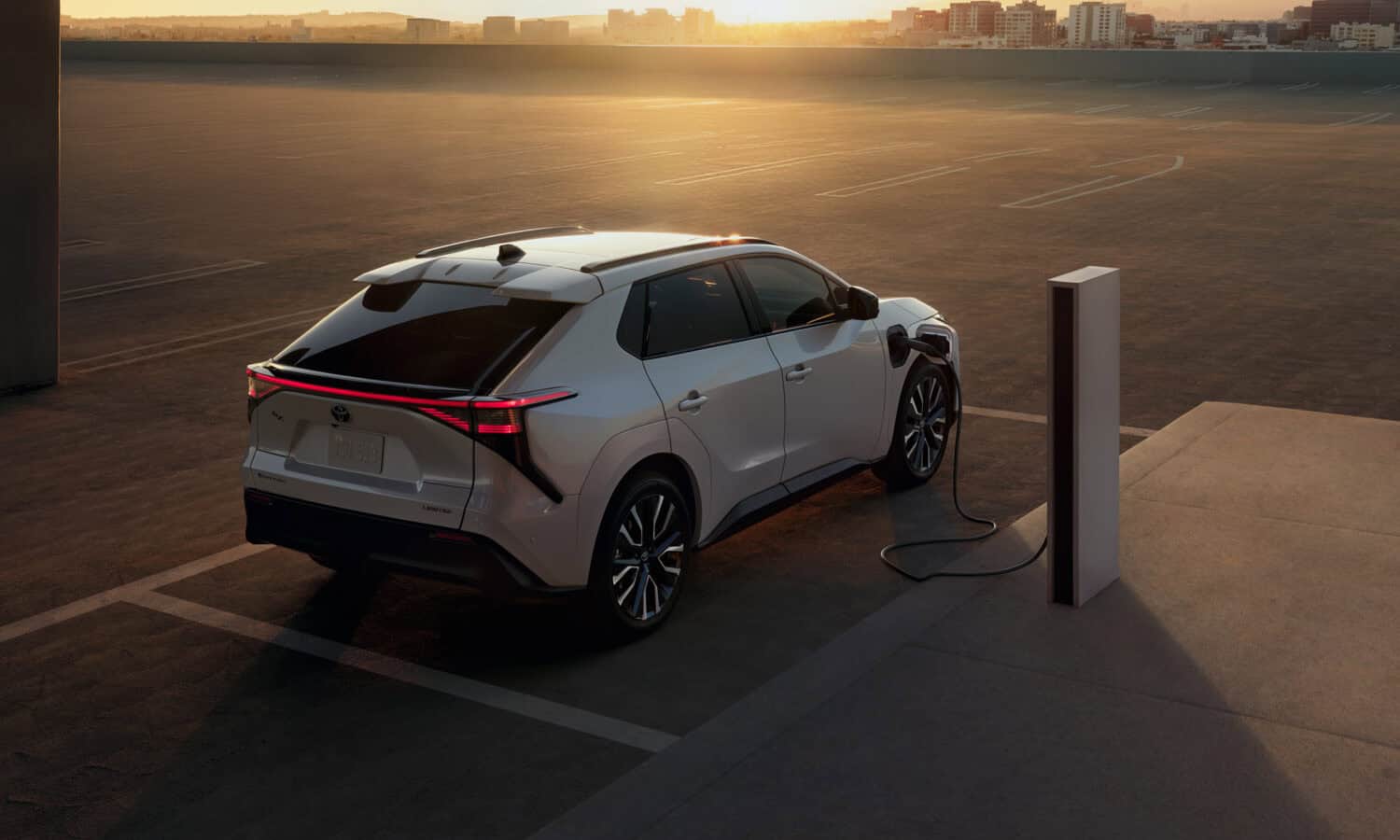
That lack of change is itself a kind of statement. In a segment where electric SUVs are frequently reworked year to year to chase range numbers or software upgrades, Toyota is signaling confidence that the bZ’s current formula already works. The vehicle now sits as one of three battery-electric models in a Toyota lineup that leans heavily on hybrids — fifteen of them — and two plug-in hybrids, underscoring the company’s continued preference for offering customers multiple paths to electrification rather than pushing everyone toward a single technology.
Range and Charging Built for Real Life
The core pitch of the bZ has always been usability, and the 2027 model leans further into that idea. The XLE FWD Plus, paired with a 74.7-kWh battery, carries a manufacturer-estimated range of 314 miles, the longest in the lineup. The Limited AWD and Limited FWD trims land at 299 miles, while the XLE AWD comes in at 288 miles. A smaller 57.7-kWh battery is available on the base XLE FWD model, with a 236-mile estimated range for buyers prioritizing a lower entry price over maximum distance.
Charging infrastructure compatibility has been one of the more consequential shifts in the EV market over the past two years, and Toyota has followed the industry toward the North American Charging System port, giving bZ owners access to most DC fast chargers in the United States. Under ideal conditions, the battery can go from 10 to 80 percent in around 30 minutes. Preconditioning technology adjusts the battery ahead of a charging stop, which should help mitigate the slowdowns EV owners often encounter in cold weather. Toyota also includes a dual-voltage cable for Level 1 and Level 2 charging, plus an adapter for J1772 and CCS stations, so bZ buyers are not boxed out of older charging networks during the transition to NACS.
A More Assertive Look, Without Reinvention
Visually, the bZ retains the low, planted stance introduced at launch, but the design leans harder into presence this year, with a hammerhead hood and a standard LED light bar across the front end. Buyers can further distinguish their vehicles with color-matched overfenders, two-tone paint combinations, and a Midnight Black Metallic roof option paired with either Wind Chill Pearl, Supersonic Red, or Heavy Metal paint on the Limited grade. Privacy glass wraps the rear windows, and a color-keyed front bumper and rear spoiler come standard across the lineup.
Cabin Tech Centers on a Familiar 14-Inch Display
Inside, Toyota has resisted the temptation to overhaul the bZ’s interior architecture, keeping the horizontal dashboard and the 14-inch Toyota Audio Multimedia touchscreen as the cabin’s focal point. That system, developed by the Texas-based Toyota Connected North America team, supports wireless Apple CarPlay and Android Auto and comes standard with six speakers; Limited grade buyers can step up to a nine-speaker JBL setup with a subwoofer and amplifier.
Comfort features extend well beyond the screen. Dual wireless charging pads, ambient lighting with 64 selectable colors, dual-zone climate control, and heated front seats are standard across the lineup. Limited grade models add heated and ventilated front seats, heated rear seats, and front radiant foot-and-leg heaters, along with a panoramic fixed-glass moonroof and a digital rearview mirror. Cargo capacity holds steady at 27.7 cubic feet behind the second row and 56.9 cubic feet with the second row folded, figures that keep the bZ competitive for buyers cross-shopping compact electric SUVs for family use.
Connected Services Remain a Subscription Proposition
Toyota continues to bundle its connected car ecosystem into the bZ ownership experience, with five-year trials for Safety Connect, Service Connect, and Remote Connect, plus a 30-day, 3-gigabyte Wi-Fi Connect trial. The vehicle is Digital Key capable, letting owners unlock and start the car from a smartphone once a Remote Connect subscription is active, and the Toyota App allows remote monitoring of charging status and the ability to start or stop a charging session from a distance. As with much of the industry, several of the bZ’s more convenient features — Plug & Charge, Traffic Jam Assist, and Drive Connect among them — depend on an active subscription once the initial trial period lapses, a reminder that connected features increasingly come with a recurring cost attached.
Driving Character Leans on Toyota’s BEV Platform
The bZ rides on Toyota’s dedicated e-TNGA platform, which places the battery pack flat under the floor to lower the center of gravity and stiffen the body structure. Silicon carbide semiconductors in the eAxles are intended to balance power delivery with efficiency, and output ranges from 165 horsepower on the base XLE FWD grade up to 338 total system horsepower on the all-wheel-drive models. Buyers who opt for AWD also gain access to X-MODE for traction management and Grip-Control for low-speed maneuvering in slippery conditions, features that push the bZ toward being a genuine four-season option rather than a fair-weather commuter.
Pricing and Availability
The 2027 Toyota bZ starts at $34,980 for the XLE FWD, excluding the Dealer Processing and Handling fee, positioning it as a value-oriented entry point into Toyota’s electric lineup. All trims come backed by Toyota’s standard warranty structure, including 8-year/100,000-mile coverage on the EV drive components and traction battery, along with one year of ToyotaCare scheduled maintenance and three years of roadside assistance. Toyota Safety Sense 3.0 is standard fleet-wide, bringing pre-collision detection, dynamic radar cruise control, and lane tracing assist to every trim, while Limited buyers add Traffic Jam Assist, Lane Change Assist, and a Panoramic View Monitor with perimeter scan.
With the 2027 model, Toyota is making clear that the bZ’s job is not to dazzle but to hold steady — a dependable, well-equipped electric SUV that fits into an existing routine rather than demanding a new one. For a manufacturer still balancing hybrids, plug-in hybrids, and full electrics across its lineup, that consistency may be exactly the point.