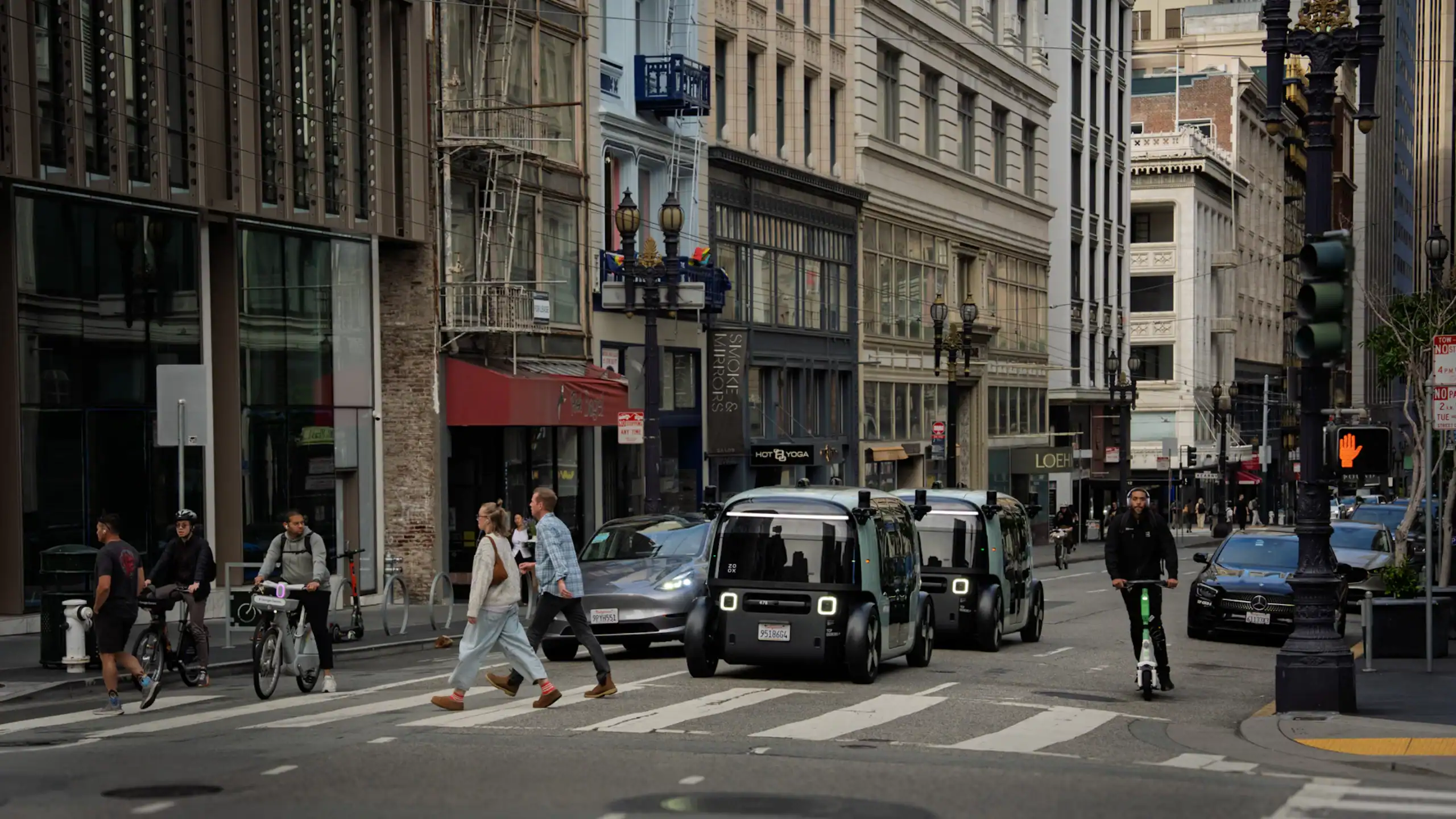
The approval covers eight Federal Motor Vehicle Safety Standards, including requirements around windshield defrosting and light vehicle braking systems, that were written decades ago with the assumption that every car on the road would have a steering wheel, pedals, and a person behind them. Zoox’s carriage-style pod, which seats up to four passengers facing one another and drives bidirectionally, has neither.
From Demonstration to Commercial Deployment
Zoox has argued since its founding in 2014 that a vehicle built from the ground up for autonomy, rather than a modified conventional car retrofitted with sensors, offers the clearest path to solving the hardest problems in self-driving technology while delivering a more comfortable ride-hailing experience. That philosophy required years of engagement with NHTSA over safety standards that simply did not anticipate a vehicle without manual controls.
The breakthrough came in August 2025, when Zoox became the first AV company to receive a demonstration exemption under NHTSA’s newly opened pathway for vehicles without traditional controls. That earlier approval let Zoox test and carry passengers on public roads for research and demonstration purposes, but it stopped short of allowing the company to collect a fare. Thursday’s commercial exemption closes that gap. NHTSA Administrator Jonathan Morrison framed the decision as part of a broader effort to keep the United States ahead of global competitors in autonomous vehicle development, saying the agency is removing unnecessary barriers to innovation while maintaining strong enforcement oversight as it works toward formal performance standards for the industry.
Zoox CEO Aicha Evans called the exemption an important milestone for the company and for the future of autonomous mobility, noting that it allows Zoox to begin charging for its service and represents another step toward bringing autonomous ride-hailing to more communities.
Building on a Year of Rider Demand
Zoox launched its free public service in Las Vegas last year and opened its Explorers Program in San Francisco around the same time, giving riders in both markets a chance to experience the purpose-built vehicle before any money changed hands. That approach appears to have paid off in demonstrated demand. The company says it has welcomed more than half a million riders since launch, with another half a million people signed up on its waitlist.
Las Vegas will be the first market to see paid rides, with Zoox planning to begin charging fares there next month. San Francisco will take longer to reach commercial status, since California requires its own layer of approval beyond the federal exemption. Zoox still needs driverless deployment permits from the California Public Utilities Commission and the state Department of Motor Vehicles before it can charge riders there, even though the company has been operating free rides in the city for months.
The commercial exemption arrives alongside other actions NHTSA announced the same day as part of the Department of Transportation’s broader Innovation Agenda, including a three-year, $5 million partnership with the SAE Industry Technologies Consortia to accelerate development of the first-ever performance standards for automated driving systems, and an update to the exemption process that allows automakers to temporarily sell a limited number of non-compliant vehicles for testing new technologies.
An Industry Still Writing Its Own Rulebook
Zoox’s approval sets it apart from Waymo, whose vehicles retain steering wheels and pedals and therefore have not required the same category of federal exemption. It also puts Zoox ahead of Tesla, which has begun producing its own steering-wheel-free Cybercab but has not yet laid out a regulatory path toward commercial deployment. For an industry still operating largely under safety rules drafted before self-driving technology existed, Zoox’s exemption offers a template other manufacturers building purpose-designed autonomous vehicles are likely to study closely.
Zoox says it will continue working with the Department of Transportation and NHTSA toward lasting, industry-wide updates to the Federal Motor Vehicle Safety Standards themselves, aiming to remove what the company calls vestigial requirements that apply only to human drivers. The company credited Transportation Secretary Sean Duffy, the administration, and NHTSA Administrator Morrison for their engagement throughout a process that has stretched across more than a decade of Zoox’s development, calling it a shared commitment to advancing autonomous vehicle innovation responsibly in the United States.
For riders in Las Vegas, the shift from free rides to paid fares next month will be the most visible sign of how much regulatory ground Zoox has covered since it first put a demonstration vehicle on public roads less than a year ago. For the broader autonomous vehicle industry, it marks the first time federal regulators have given a purpose-built robotaxi, one designed from its first sketch to carry passengers rather than drivers, a clear path to commercial revenue.