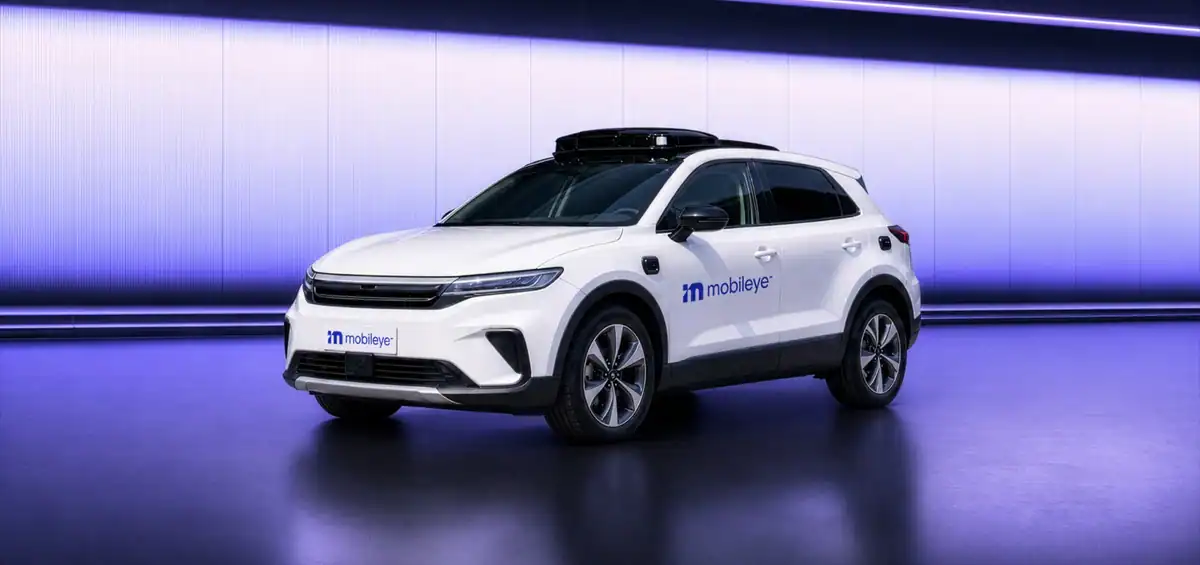
The plan, as outlined by the Jerusalem-based company, calls for a modest start: an initial fleet of about 100 vehicles deployed in a major American city beginning in 2027, with the rollout staged in phases under fully driverless conditions. From there, Mobileye intends to grow the fleet to roughly 17,000 vehicles over the following five years. It is a small first step toward a market that Waymo, Tesla, Zoox and a growing list of challengers are already racing to claim.
A supplier becomes a competitor
Mobileye executives were careful to frame the move as additive rather than disruptive. The company said the initiative does not change its commitment to existing customers, and that direct robotaxi operations will run alongside its supplier business rather than replace it. The company described the robotaxi unit as a new operating business built around its self-driving system, with Mobileye managing the fleet and leaning on Moovit, its transit and ride-hailing app, to handle the consumer-facing side.
Amnon Shashua, Mobileye’s founder and chief executive, put the strategic logic plainly. He described the move as combining technologies built over more than two decades with operational ownership, aiming to create a robotaxi business designed from the start to scale financially and geographically across the globe. Shashua argued that the industry has grown too dependent on a narrow set of technology providers and business models, and said Mobileye sees room for an alternative built on its autonomous-driving expertise, industry partnerships and experience across the mobility ecosystem.
What the service will actually look like
The integrated offering is meant to draw on assets Mobileye already owns. The new business will pair Mobileye’s self-driving system, known as Mobileye Drive, with the mobility platform of its Moovit subsidiary, which serves more than 1.7 billion users across more than 3,500 cities in 112 countries. Mobileye said the combined platform will also fold in fleet management, rider-facing applications and teleoperation infrastructure, covering the full ride-hailing value chain from trip planning to mission control.
The company has not said which city will get the first cars, nor has it settled on a vehicle. Mobileye declined to name the city or the vehicle that will make up the fleet, saying only that it will work with “AV-ready vehicle platform manufacturers,” though a photo illustration in its announcement showed what appeared to be a modified Ora iQ, the electric crossover built by China’s Great Wall Motors. More broadly, the company said it plans to work with vehicle platform manufacturers, fleet operators, integration partners and technology suppliers to build out the service.
Markets, skeptics and the road already traveled
Investors responded favorably to the news, if not dramatically. Shares of the company rose more than 5 percent in premarket trading, with some reports putting the gain closer to 4 percent. Analysts were more measured about what the announcement actually changes. One research executive framed the real test as operational, not strategic. Parth Talsania, chief executive of Equisights Research, said the pressure point is whether Mobileye can keep data boundaries, customer economics and engineering focus clearly separated as it now competes with the companies it sells to.
For Shashua, the announcement is less a pivot than a destination he has been describing for years. In a 2020 interview, he said he viewed full passenger-car autonomy as the industry’s ultimate goal, but argued that reaching it required going through the robotaxi business first, telling an interviewer at the time that there was no other way to get there.
Mobileye is also not entering empty-handed. It already supplies the technology behind a robotaxi service Lyft is preparing with May Mobility, and last year Lyft said it would deploy fully autonomous robotaxis as soon as 2026 in Dallas using Mobileye’s system. The new venture, in other words, runs parallel to relationships the company insists it intends to keep.
A crowded road ahead
The timing reflects how quickly the driverless ride-hailing market has shifted from experimental to commercial. Waymo already offers commercial driverless rides in cities including Phoenix, San Francisco and Austin, Tesla started a limited robotaxi service in Austin in 2025, and Lyft is preparing its own robotaxi launch in Atlanta with May Mobility. Regulatory tailwinds have helped clear the way for more entrants. Federal policy changes have also made it easier for automakers to deploy vehicles that lack standard controls such as steering wheels.
Mobileye has signaled it is not finished explaining itself. The company said it plans to share additional commercial and operational details at a Capital Markets Day in the United States before the end of 2026. Until then, the announcement leaves the company in an unfamiliar position for a firm built on staying out of the spotlight: no longer just the eyes inside someone else’s car, but the operator hoping passengers will choose to ride in its own.