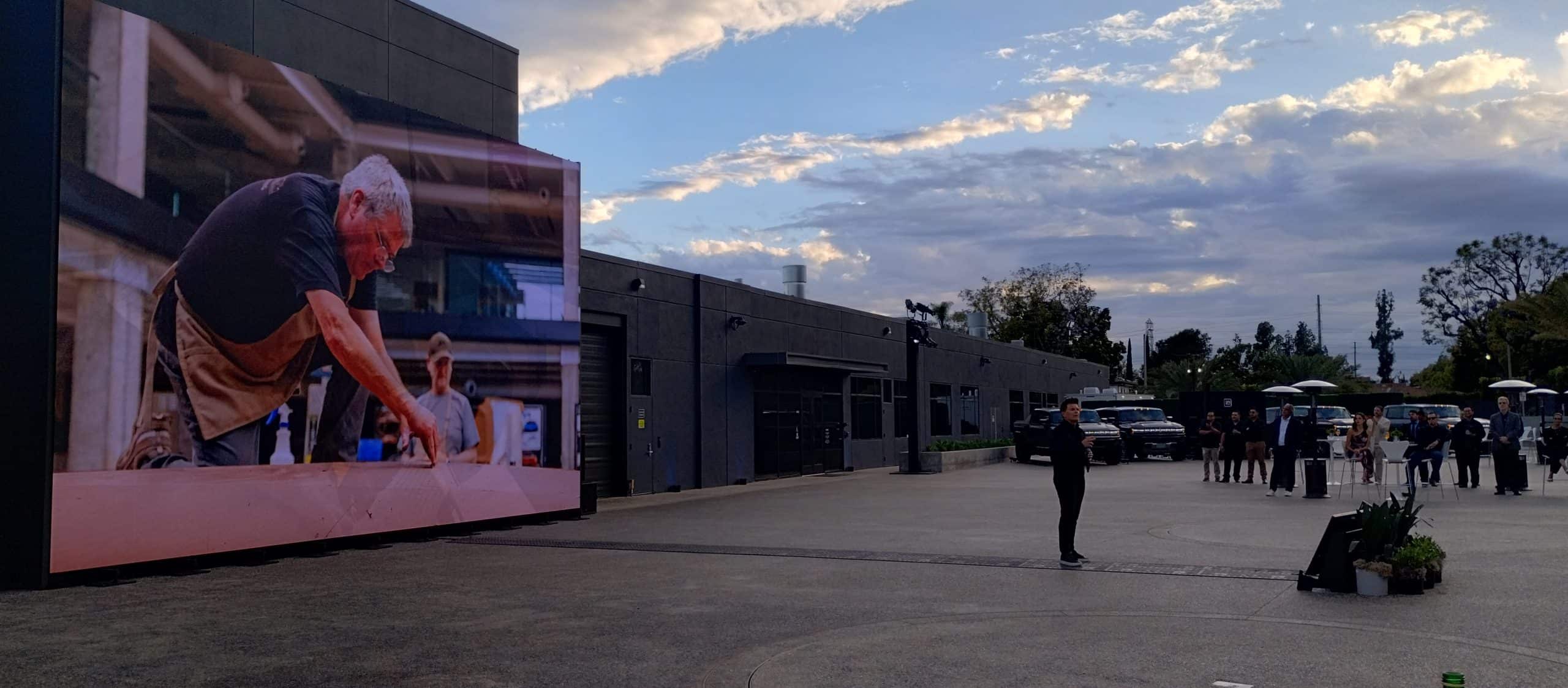
PASADENA, Calif. — More than twenty valet attendants managed a procession of cars outside General Motors’ new Advanced Design studio. Inside, the mood was a gallery opening with a twist mission briefing. Servers in black offered trays of delicate finger food, champagne, sashimi and chicken breast stuffed with a black truffle soufflé filling complimented with black napkins. But the really tasty event du jour was that a normal reporter or even American could design their off road SUV Hummer concept vehicle. In a world where cars look a like, you could make a statement in your own style and get a vehicle with all the bells and whistles plus the color that matches the rocks at Moab.
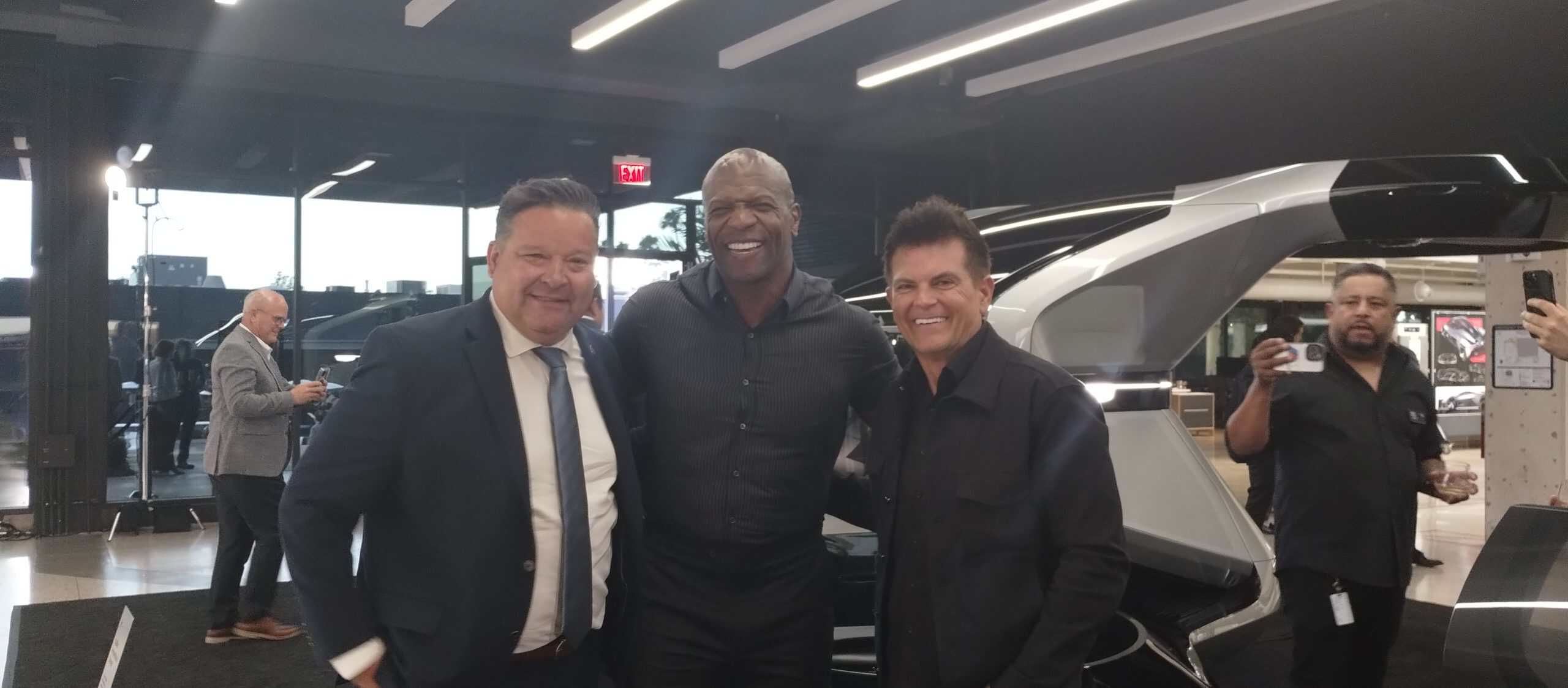
GM chose Pasadena to plant its most ambitious West Coast design flag, and the choice carries a logic that Pasadena Mayor Victor Gordo articulated. Standing among guests that included actor and Pasadena resident Terry Crews, who chatted warmly with the mayor. In presenting a certificate to GM’s Bryan Nesbitt, GM’s Vice President of Global Design, Gordo noted that the city offers GM something no other location can: direct proximity to the California Institute of Technology and ArtCenter College of Design, two institutions that between them have shaped how scientists and artists alike imagine the future.
The new campus spans 148,000 square feet across three buildings, fully equipped for full-scale clay modeling, fabrication, and immersive digital collaboration, and staffed by roughly 100 designers, sculptors, fabricators, and artisan specialists.
“Southern California isn’t just a place where we work,” said Bryan Nesbitt. “It’s a place of unfiltered inspiration. Film, art, architecture, aerospace, technology and the remarkably diverse topography create an unparalleled canvas of experiences that drives an incredibly unique vehicle culture.”
The studio’s mandate, he added, is explicitly speculative: designers here are expected to look beyond current production programs and envision what mobility might become ten or twenty years from now.
Hussein Al Attar, recognized globally for his creativity and commitment to design with real-world impact, has been named the studio’s new director. He succeeds Brian Smith, who spent four years leading the Pasadena operation before returning to Michigan to rejoin the Chevrolet Corvette design team — a kind of homecoming that doubles as a signal of how seriously GM takes the careers shaped here.
Pasadena Mayor Victor Gordo, Terry Crews and Bryan NesbittGM’s Bryan NesbittBrian Smith
The studio’s roots in Southern California run deeper than the new building. Harley Earl, GM’s first design director, appointed in 1927, was a Hollywood native who got his start customizing automobiles for movie stars before going on to pioneer clay modeling as a design tool — a practice that remains standard across the industry a century later. GM established its first permanent West Coast advanced design presence in the 1980s, and the decades since have produced concept work ranging from experimental Corvettes and Camaros to the autonomous Cadillac Halo portfolio.
The Pasadena campus is the next chapter in that lineage, connected to GM’s global Advanced Design network, which also includes studios in Detroit, the United Kingdom, and Shanghai.
The Hummer X Marks the Flex Fab Fabulous Spot
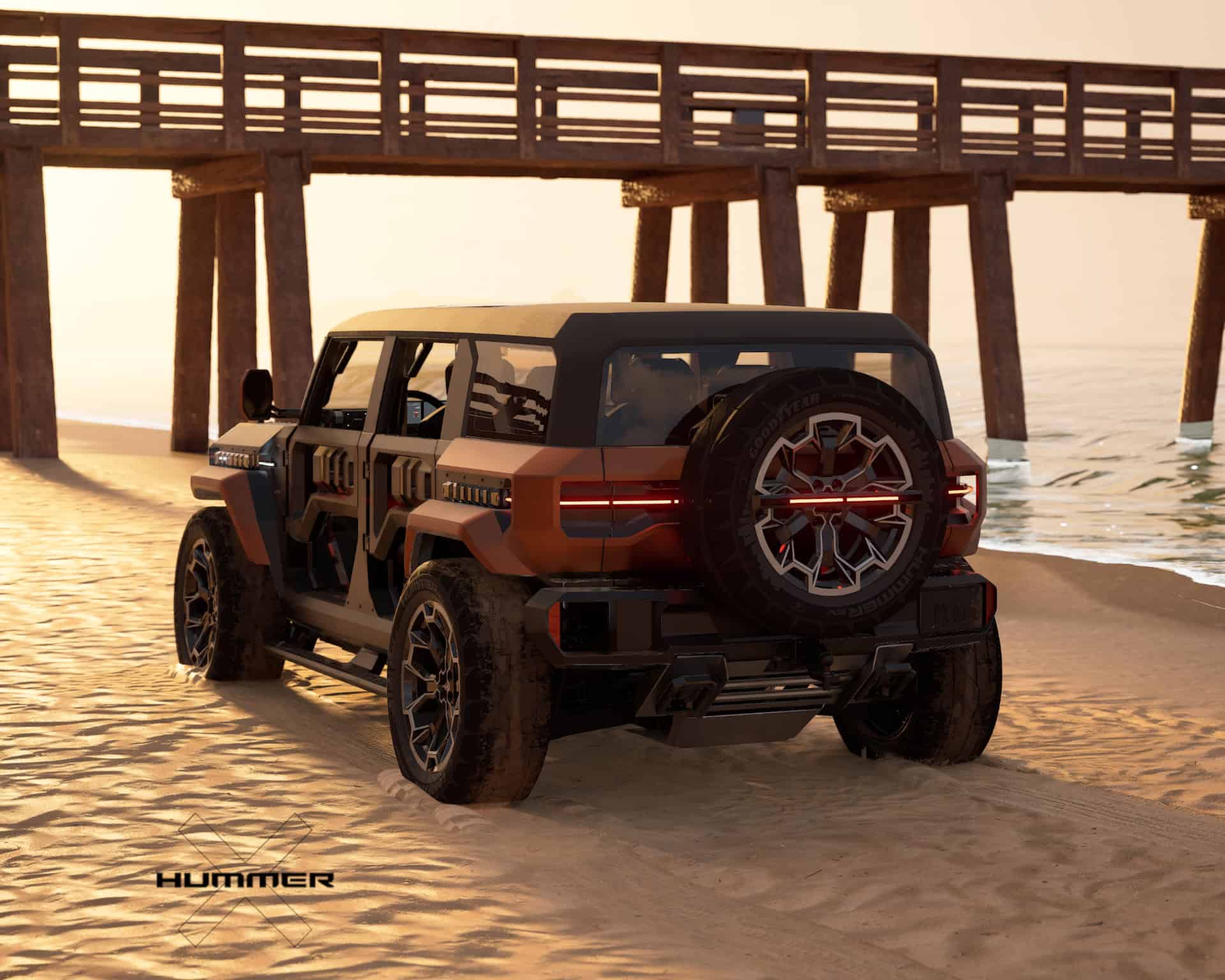
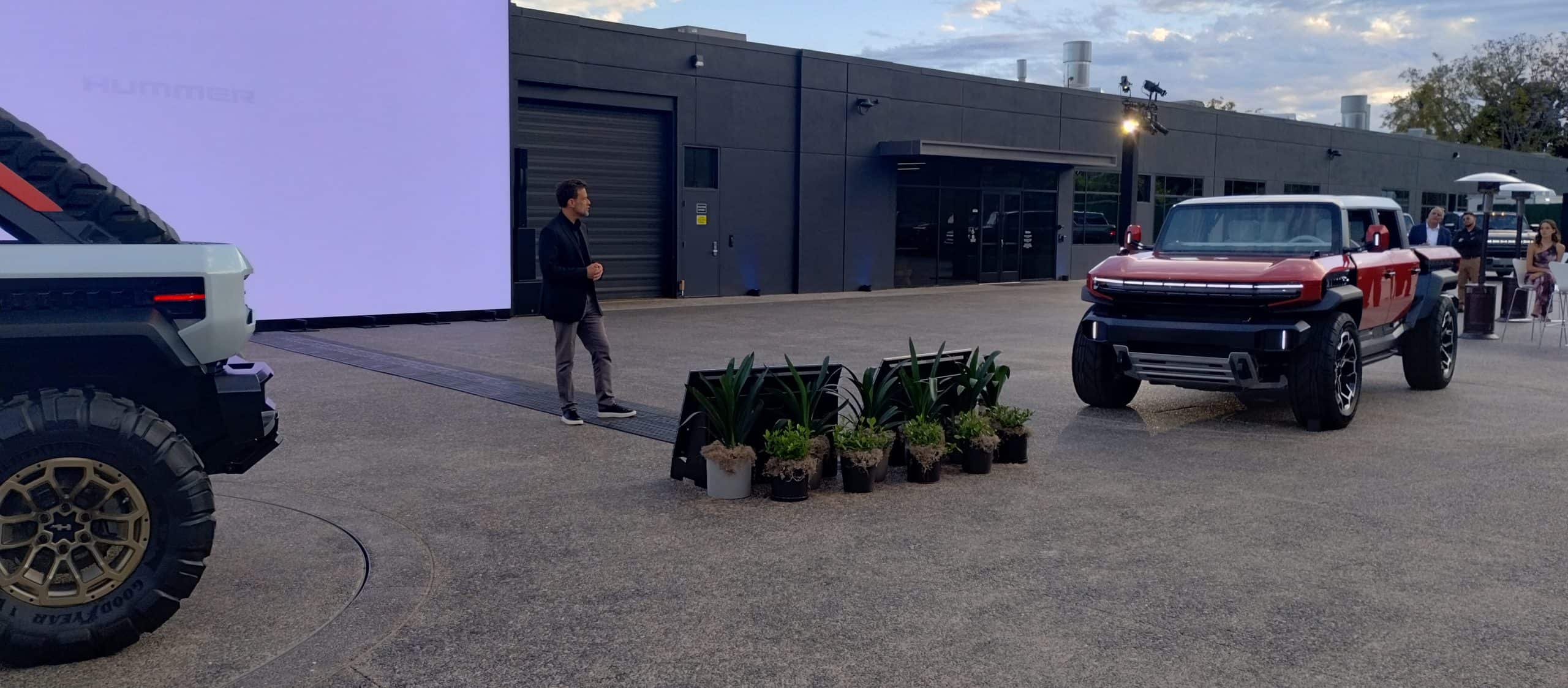
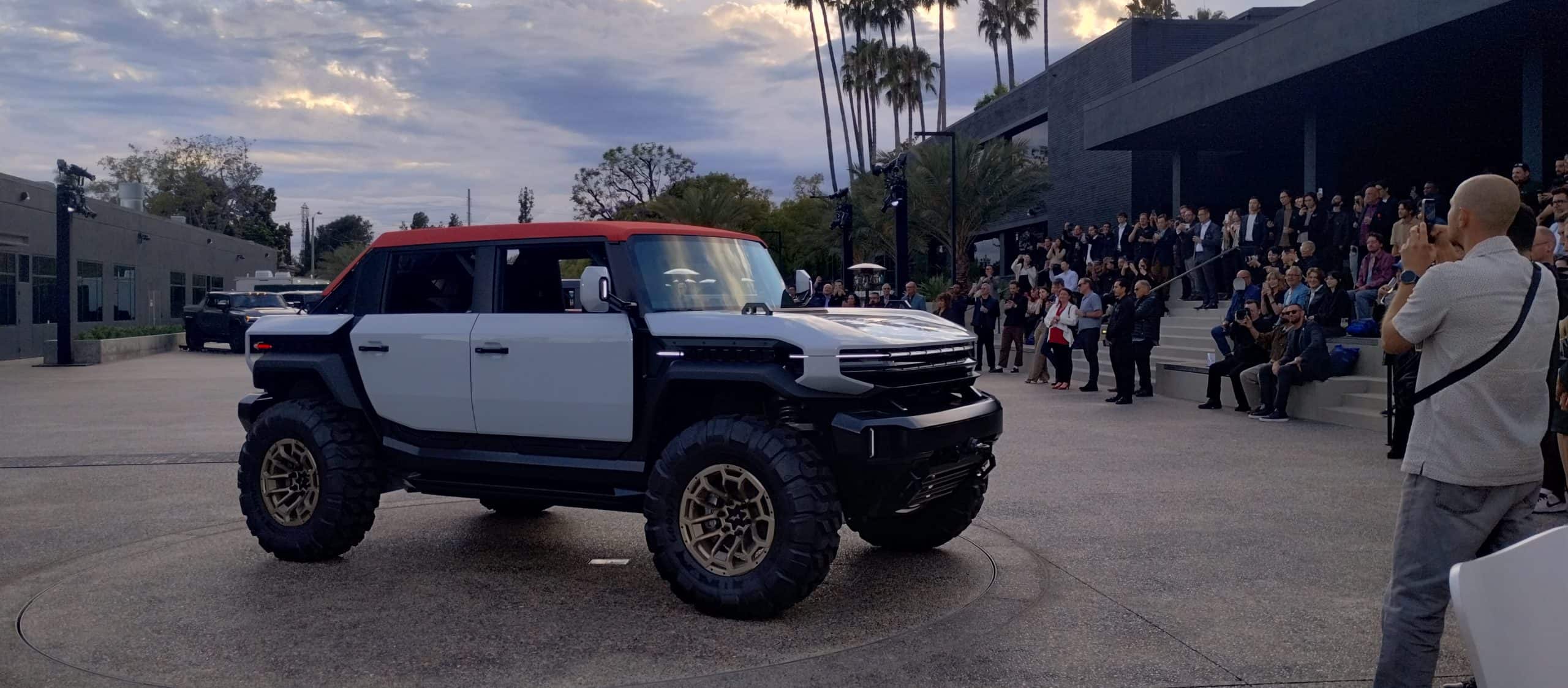
The evening’s reveal — was the GMC HUMMER X, a concept vehicle in both truck and SUV form that represents something rare in modern automotive design: a sincere attempt to imagine what the genre could become rather than what it already is.
“Every great concept starts with a belief,” said Smith, speaking as the outgoing studio director. “Ours was this: the courage to get lost leads us to new discoveries.” The team organized itself around a working mantra borrowed from the outdoor ethicist’s code — take nothing but pictures, leave nothing but footprints — and let that philosophy dictate not just the aesthetics but the engineering logic beneath them. Hidden throughout the concept are handcrafted Easter eggs: the mantra rendered in Morse code on the floor, and tire treads that, read carefully, spell out “the courage to get lost leads to new discoveries.”
The HUMMER X is a mid-size electric concept, engineered as a modular platform and built around four interdependent pillars: reconfigurability, capability, community, and sustainability. It is not intended for production. But it is intended, unmistakably, to be taken seriously.
What makes the concept genuinely novel is FLEX FAB, a flexible manufacturing technology that functions, roughly, like 3D printing for metal — enabling fast, small-batch, on-demand fabrication without specialized stamping tools. The result is a vehicle whose body panels can be rethought and re-formed from the same machines, liberating the design team from the constraints that typically force concept vehicles to remain just that. FLEX FAB gave the HUMMER X its signature aesthetic: a clean, flat-topped silhouette with radiused edges, laser-welded seams, and visible precision bolts. Honest. Functional. Unmistakably HUMMER.
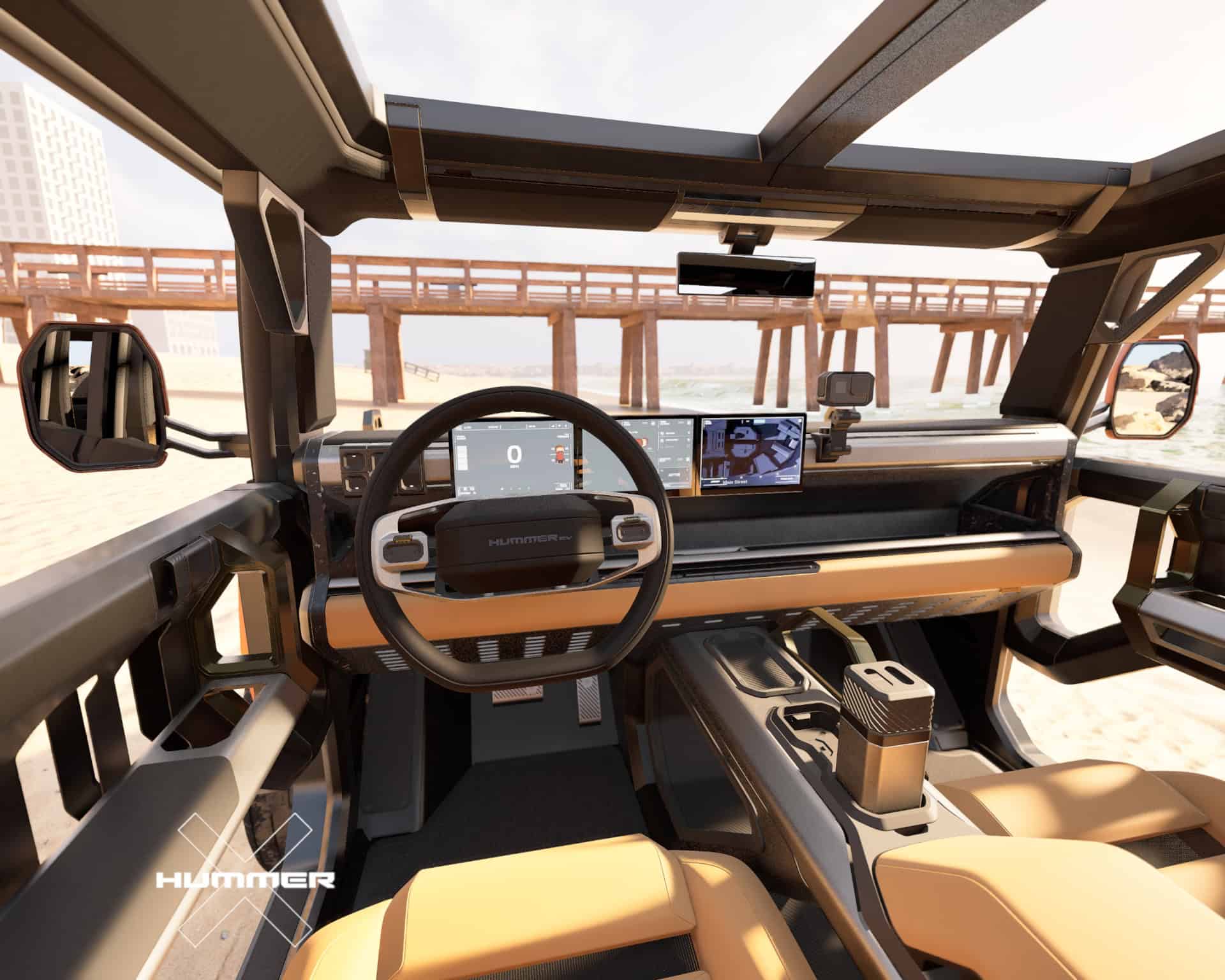
The cockpit takes the reconfigurability further. A stackable display system allows drivers to customize their digital environment — up to seven individual screens can be configured — depending on whether they’re navigating a rock face, threading a trail, or simply getting home from work. The interior, rendered in warm amber leather against a dark structural framework, reads as both industrial and inviting, the kind of cabin that suggests serious equipment without sacrificing the idea of comfort.
Configuring Your Future
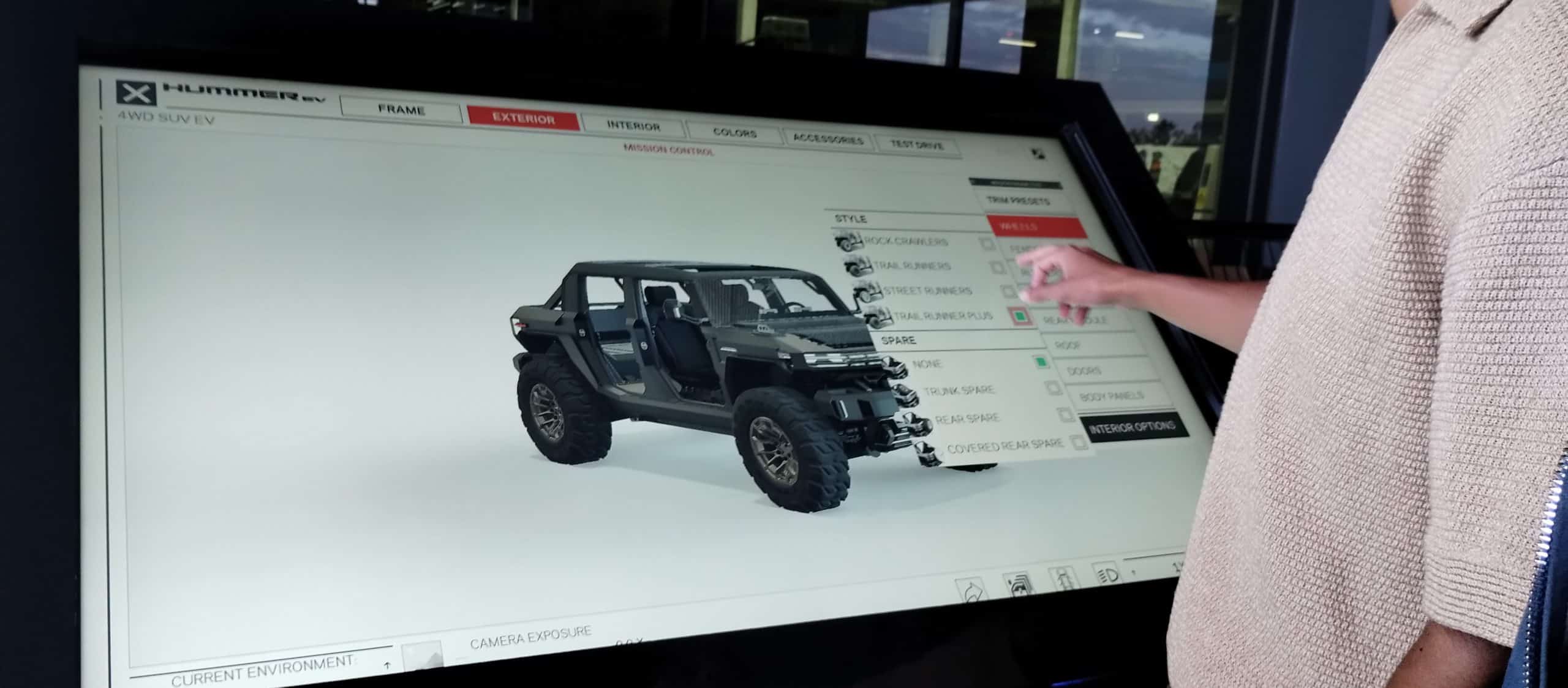
Guests at the event were not merely shown the concept vehicles. They were invited to inhabit them, in a manner of speaking. On large display screens positioned throughout the studio, visitors could configure their own HUMMER X — selecting from an array of exterior colors, wheel designs, door configurations, and screen arrangements, composing a vehicle that reflected their own preferences before it ever touches pavement.
For those who wanted to push further, a test drive experience awaited — one built using Epic Games’ Unreal Engine, the same game development platform that powers some of the most visually sophisticated interactive environments in the world. The interface was game-like in its immediacy, allowing guests to take the HUMMER X through terrain scenarios like Moab or snowy mountain trails.
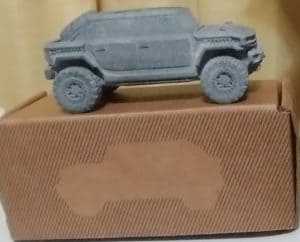
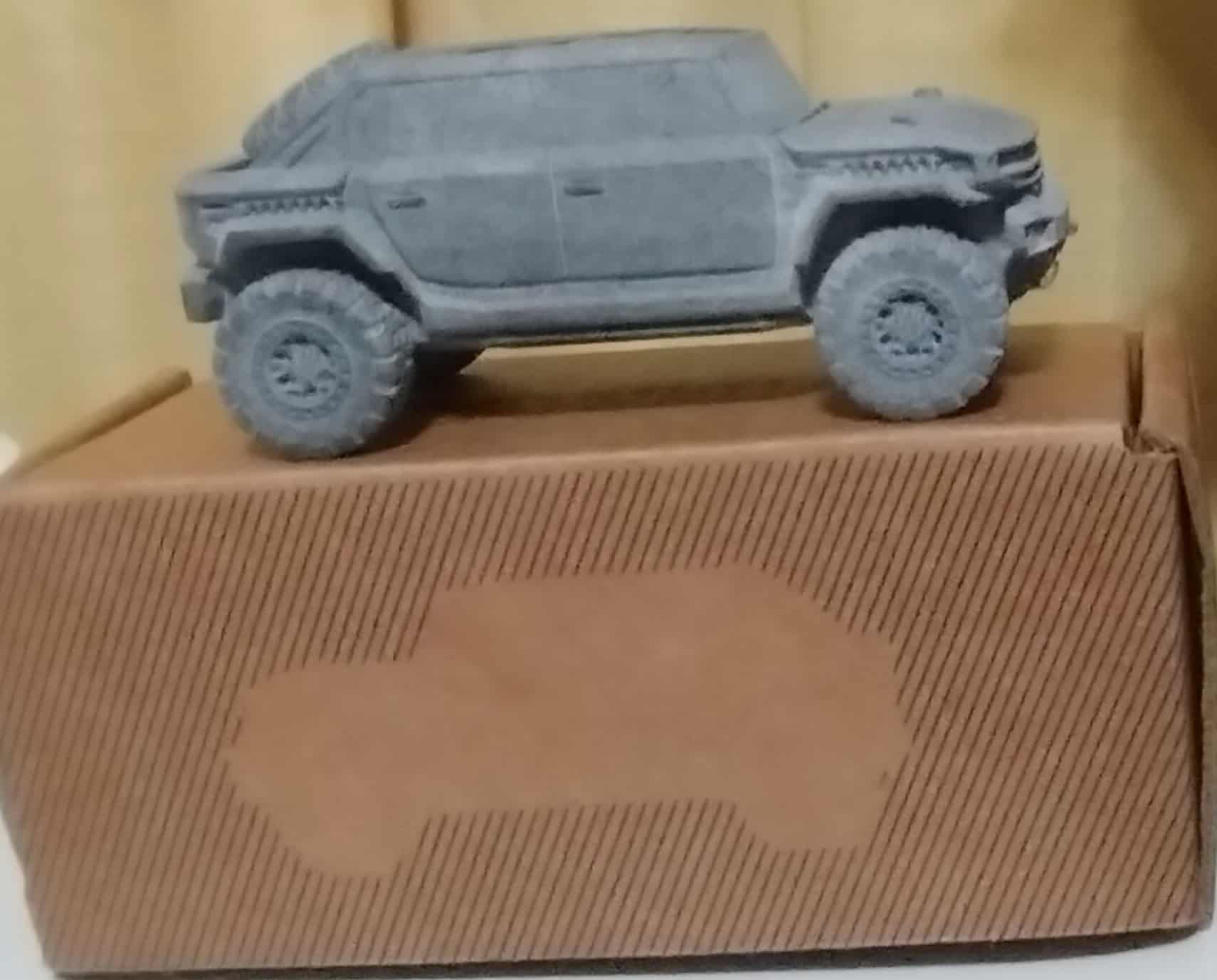
As a memento of the evening, this correspondent was presented with not only a beautiful rendering of the desire designed but a three-dimensional printed model of the HUMMER X — and asked the designers to sign it.
Built To Go Anywhere and Everywhere
The performance specifications underlying the HUMMER X concept are not cosmetic. The SUV variant rides on a wheelbase of 116 inches, stretches 188.3 inches in length, and stands 72.9 inches tall, offering 13.2 inches of ground clearance, a 44-degree approach angle, and a 46-degree departure angle — geometry that describes a vehicle engineered for terrain that would stop most anything else. The truck version extends the wheelbase to 130.7 inches and overall length to 207.3 inches, with 35-inch Goodyear street tires and 22-inch aluminum wheels.
Both variants use Multimatic shocks, beadlock wheels, and removable fender flares. Both are designed around a low center of gravity that, paired with the electric drivetrain’s on-demand acceleration, redefines what a mid-size EV can do when the pavement ends.
Hummer Hub Hubub
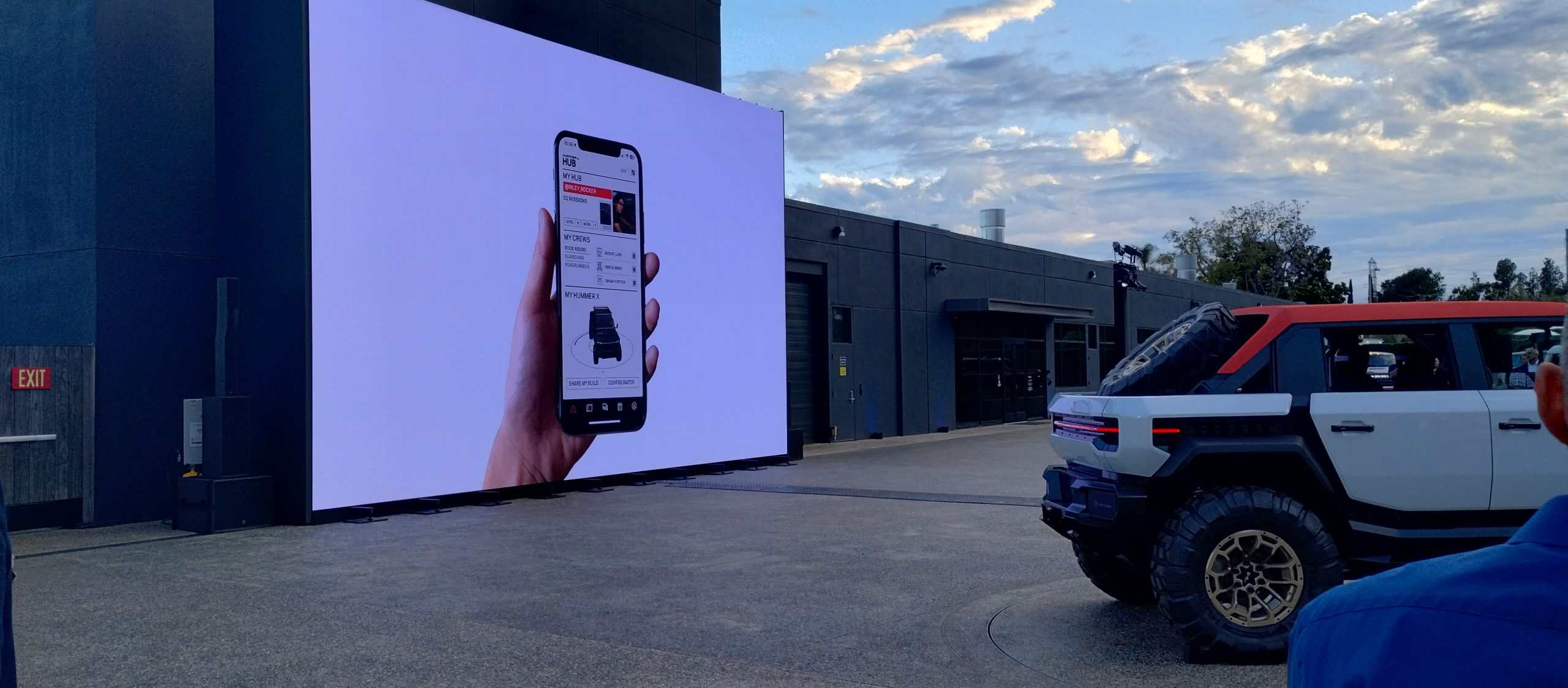
GM’s designers gave a name to the imagined owner of the HUMMER X: the “builder maker.” This is someone who does not simply purchase a vehicle; they modify it, build community around it, and participate in an ecosystem of shared knowledge and shared parts. To serve that customer, the Pasadena team developed the concept of the HUMMER HUB, a suite of connected applications intended to link drivers and their vehicles before, during, and after any trip. Among its envisioned capabilities: a scout drone that flies ahead on the trail, relays live terrain data back to the vehicle, then autonomously lands and docks when its work is done.
The sustainability commitments embedded in the concept are equally deliberate. The HUMMER X explores the use of mono-materials — single-substance components fastened with snap fits and mechanical connectors rather than adhesives — designed for full recyclability. Seatbacks, headrests, and instrument panel ends are fabricated from recycled car fascias. Parts are designed to be easily disassembled and re-circulated, a philosophy of designed durability that aspires to close the loop rather than defer it.
Designs for the Future
What GM has built in Pasadena is an institutional commitment to the kind of future thinking that production timelines and quarterly earnings reports tend to crowd out. The Pasadena studio’s mandate is explicitly to envision what mobility might offer a decade or two from now, drawing on the cultural ferment of a city that sits at the intersection of Caltech’s engineering rigor, ArtCenter’s design sensibility, and hand decorated Rose Parade floats that express individuality and creativity.
Manage Cookie Consent
To provide the best experiences, we use technologies like cookies to store and/or access device information. Consenting to these technologies will allow us to process data such as browsing behavior or unique IDs on this site. Not consenting or withdrawing consent, may adversely affect certain features and functions.
Functional
Always active
The technical storage or access is strictly necessary for the legitimate purpose of enabling the use of a specific service explicitly requested by the subscriber or user, or for the sole purpose of carrying out the transmission of a communication over an electronic communications network.
Preferences
The technical storage or access is necessary for the legitimate purpose of storing preferences that are not requested by the subscriber or user.
Statistics
The technical storage or access that is used exclusively for statistical purposes.The technical storage or access that is used exclusively for anonymous statistical purposes. Without a subpoena, voluntary compliance on the part of your Internet Service Provider, or additional records from a third party, information stored or retrieved for this purpose alone cannot usually be used to identify you.
Marketing
The technical storage or access is required to create user profiles to send advertising, or to track the user on a website or across several websites for similar marketing purposes.