A Platform Problem
The EV6, Kia’s award-winning electric crossover, and the EV9, its three-row electric flagship, both ride on the E-GMP architecture — the dedicated electric platform that Hyundai Motor Group developed to compete with Tesla and Volkswagen in the global EV market. It is, by most engineering assessments, a technically ambitious piece of work: 800-volt charging capability, wide-body proportions, and genuine range and performance credentials.
But the E-GMP platform also brought the ICCU, and the ICCU, it has emerged, has a vulnerability. The unit can become damaged over time from transient high voltage and thermal cycling. A damaged ICCU may not be able to charge the 12-volt battery, which can discharge gradually while the car is being driven, causing progressive reductions in power. If the driver ignores warnings associated with the condition and continues driving in reduced-power mode, the vehicle can eventually experience a complete loss of drive power.
A complete loss of drive power, as federal regulators note tersely in recall documents, increases the risk of a crash.
In April 2024, Kia America initiated a safety recall covering all 2022–2023 model-year EV6 vehicles and certain 2024 models manufactured through February of that year. The component in question: the Integrated Charging Control Unit, which may become damaged and stop charging the 12-volt battery, resulting in a loss of drive power.
That recall, federal campaign SC302, covered roughly 48,000 vehicles.
Recall Upon Recall
By the end of 2024, the problem had widened. Kia expanded its recall to cover 62,872 of its 2022–2024 EV6 vehicles for loss of drive power from a damaged charging unit. The NHTSA notice specified that this recall expands and replaces the earlier action; vehicles repaired under the previous recall would need the new maintenance completed as well.
The issue was not confined to Kia. A total of 145,351 vehicles in the United States are part of Hyundai’s parallel recall, including the 2023–2025 Genesis G80, the 2022–2024 Hyundai Ioniq 5, the 2023–2025 Genesis GV70, the 2023–2025 Genesis GV60, and the 2023–2025 Hyundai Ioniq 6. All are E-GMP platform vehicles. All share the same fundamental charging architecture. All share, to varying degrees, the same vulnerability.
The remedy that Kia and Hyundai have prescribed involves a software update to the ICCU and, where the module has already failed, hardware replacement. Owners are directed to contact a Kia dealership to have recall repairs performed. Kia expected to initially contact known owners of affected vehicles in December 2024.
Dealers have processed a significant portion of the affected fleet. By late January 2025, 41,137 Hyundai and Genesis EVs had already been repaired, along with another 14,828 Kia EV6s. But statistically, the companies have argued, the actual failure rate is low. Approximately 1 percent of Kia electric vehicles affected by the ICCU recall are estimated to experience ICCU failure, according to the company’s own assessment of the defect rate.
Motor Trend, reporting on the issue, reached a similar conclusion: it is, one reviewer acknowledged, a big deal — but not one that individual E-GMP owners are statistically likely to face.
The Lawsuit That Says the Fix Isn’t Fixed
In April 2026, the legal system weighed in with a more skeptical view of Kia and Hyundai’s remediation efforts. A class-action lawsuit claims that the recall fix is simply using more bad parts — that the replacement ICCUs may be just as defective as the originals. Drivers of the Ioniq 5, EV6, and Genesis Electrified models say the recall did not end their charging problems; it merely delayed them. The complaints include 12-volt battery drain, limp mode, and total power loss continuing even after vehicles were serviced under the recall.
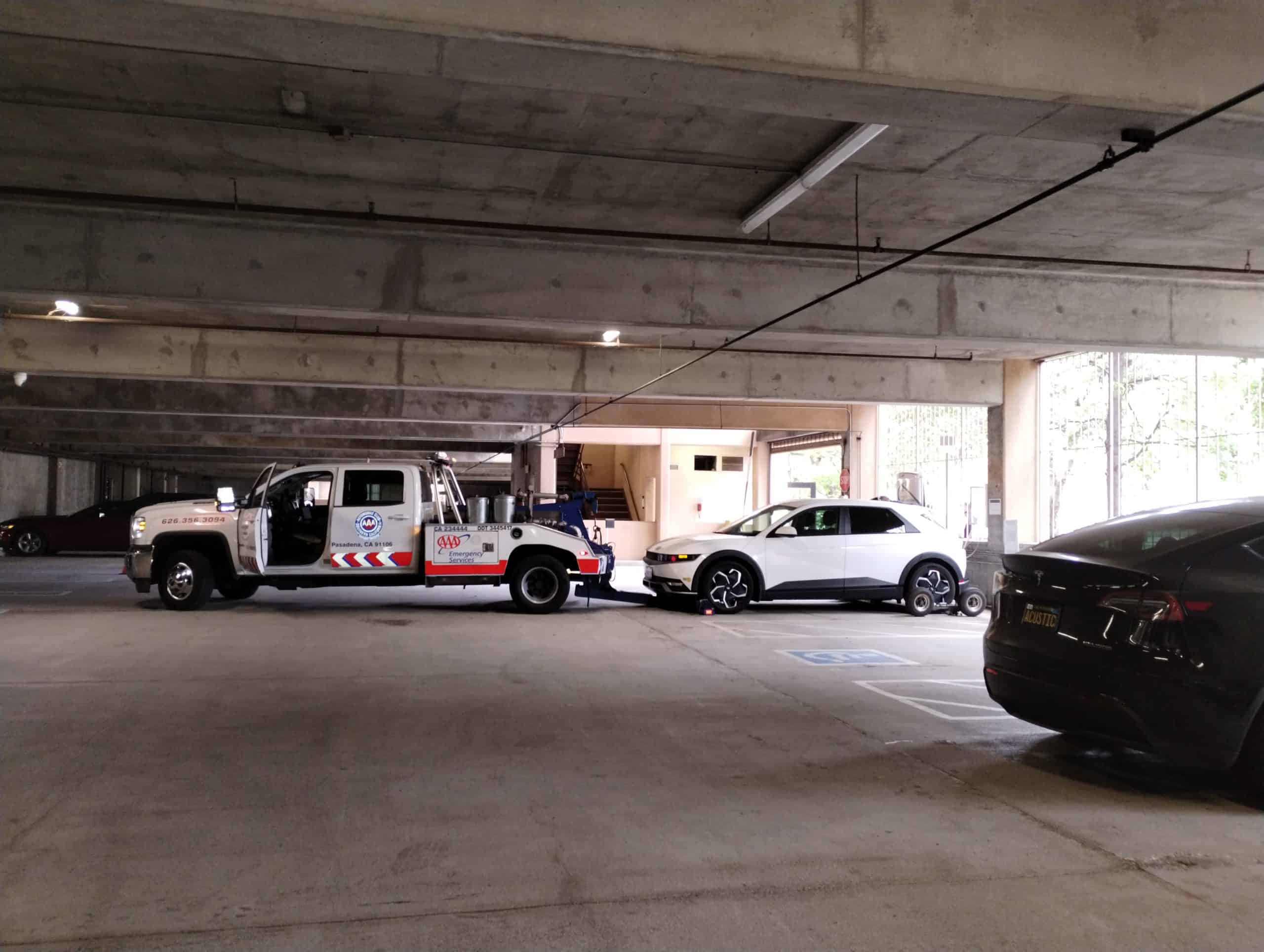
The lawsuit targets the core premise of the recall: that replacing the ICCU with a new unit, and updating its software, resolves the underlying defect. One plaintiff, the suit alleges, watched his leased 2025 EV6 enter limp mode after a loud bang — requiring a tow — even though his vehicle was a model year that followed the original recall’s coverage window.
The implications are significant. If replacement units are themselves susceptible to thermal cycling damage and voltage spikes, the problem is not a manufacturing defect in a specific batch of parts. It may be a design flaw in the ICCU architecture itself — one that would require a fundamental engineering fix, not a module swap.