Electric vehicle apps are finally getting good reviews, however, owners want more.
A new J.D. Power study finds EV app satisfaction has surged and user abandonment has nearly vanished — but automakers face a harder test as expectations rise with engagement.
For years, the smartphone apps that automakers bundled with electric vehicles were something owners used reluctantly and abandoned quickly. Clunky interfaces, spotty connectivity, and features that seemed more like afterthoughts than essentials left many EV owners treating the apps as an optional accessory rather than a core part of ownership.
That picture is changing, and changing fast.
A new study from J.D. Power, released Tuesday, found that satisfaction with automaker EV apps has climbed sharply over the past two years, reaching a score of 7.7 out of 10 among mass market users — up from 6.1 in 2025 and 5.5 in 2024. More striking, the share of users who abandon their apps within the first year has collapsed to 4.5 percent, down from 22 percent as recently as 2023.
The findings, drawn from the firm’s 2026 U.S. OEM EV App Report, suggest that automakers have finally begun to deliver the digital experience that electric vehicle buyers expect. But the report also carries a cautionary note: as owners use the apps more, they are becoming less forgiving of the places where those apps still fall short.
“With 51 percent of our respondents new to vehicle apps, OEMs have a clear opportunity to set the standard,” said Violet Allmandinger, a senior principal of OEM solutions at J.D. Power. “However, inconsistent connectivity continues to hold the experience back.”
Tesla Leads, but the Gap Is Narrowing
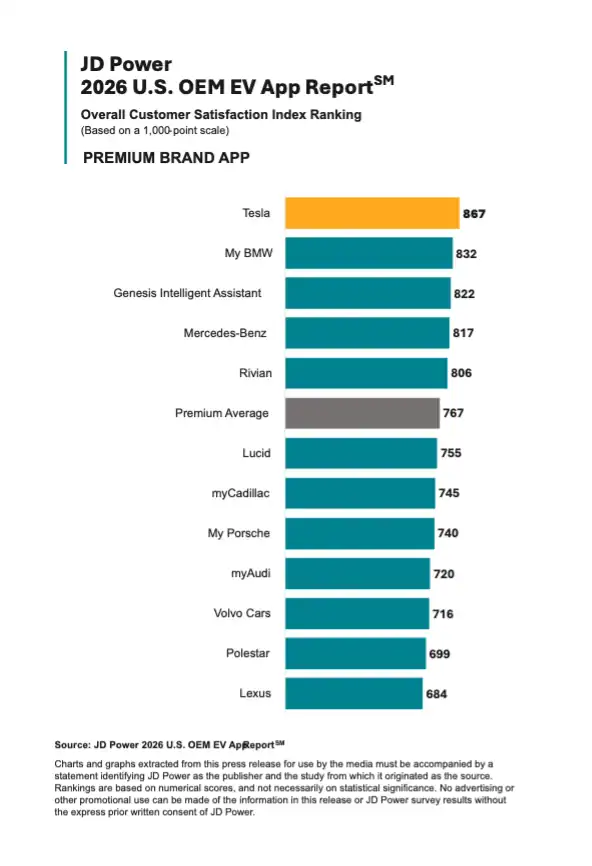
Tesla, whose app has long been considered the benchmark for the industry, ranked highest overall among both premium and mass market brands, scoring 867 on a 1,000-point scale. My BMW ranked second among premium apps with a score of 832, followed by Genesis Intelligent Assistant at 822.
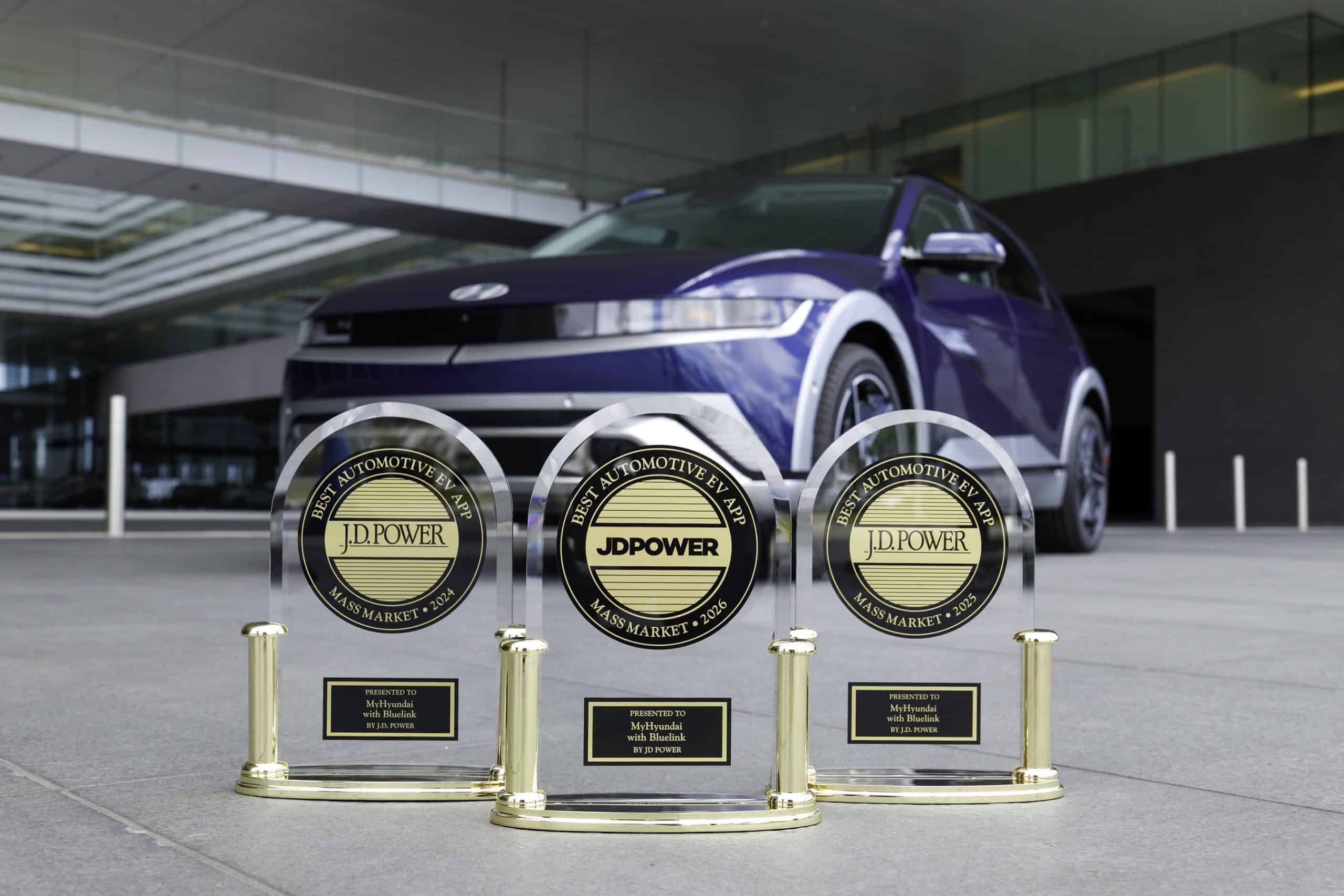
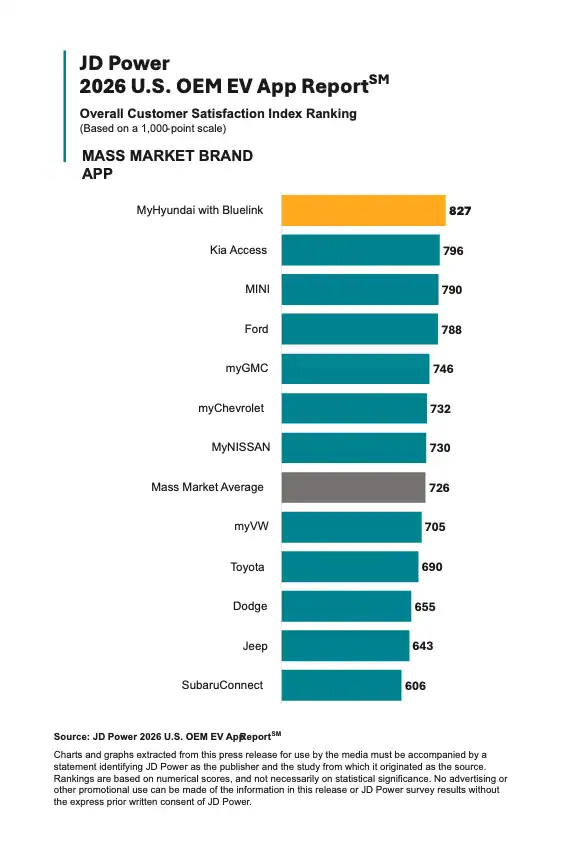
In the mass market segment, MyHyundai with Bluelink led the field with a score of 827. Kia Access ranked second at 796, and MINI came in third at 790.
The competitive clustering among non-Tesla brands reflects years of investment in app development across the industry, as automakers have come to recognize that the in-pocket experience has become inseparable from the in-vehicle one.
Speed Above All
If there is a single lesson automakers should draw from the study, it may be this: owners will not wait.
The report found that app response speed has emerged as the single greatest driver of overall satisfaction, accounting for 25 percent of the satisfaction score — more than any other factor, including charging functionality or the breadth of available services. Nearly three in four users said they consider one to five seconds the maximum acceptable wait time; satisfaction drops sharply once that threshold is crossed.
The finding underscores a shift in how EV owners relate to their apps. In the early years of the market, owners may have tolerated sluggish performance because they were using the apps infrequently. Now, with 55 percent of non-Tesla EV app users describing themselves as frequent users — up from 48 percent in 2025 — the calculus has changed. Slow apps are no longer a mild annoyance; they are a daily frustration.
More Features, Not Just Better Ones
Speed matters, but it is not the whole story. When asked what would most increase their app usage, 36 percent of owners cited a desire for more useful features — far outpacing those who wanted faster performance (17 percent) or better design (11 percent).
The appetite for advanced functionality is also growing. Interest in plug-and-charge capability at public charging stations rose by 4.2 percentage points compared with the prior year. Geofencing and valet alerts each climbed by 4.6 percentage points. Even so, the basics remain non-negotiable: features like vehicle status monitoring, over-the-air software updates and onboard diagnostics are desired by more than 90 percent of EV app users.
The data paints a picture of an ownership base that has moved beyond novelty. These are users who know what they want, use their apps routinely, and have little patience for experiences that feel incomplete.
The Dealership Moment
One finding in the report carries particular weight for automakers thinking about how to build long-term engagement: 86 percent of active app users said they received setup guidance or help at vehicle delivery, making the dealership handoff the most consistent and consequential early moment in the app experience.
Satisfaction was measurably higher among users who received that support — 7.7, compared with 7.0 among those who did not. Forty-three percent of users said the dealership was where they first learned the app existed.
For an industry that has long wrestled with the tension between digital-first retailing and the traditional dealer network, the finding is a reminder that the human handoff still matters, even in an era of over-the-air updates and always-on connectivity.
The Monetization Puzzle
Automakers looking to generate subscription revenue from their apps face a stubborn obstacle. The study found that 64 percent of EV owners said they would not pay a fee for app access — even as a majority acknowledged that the app played a meaningful role in their vehicle purchase decision.
The tension is unlikely to resolve itself quickly. More than half of current EV app users are first-timers who have no prior frame of reference for what a vehicle app should cost. That makes it difficult for automakers to establish a price anchor, and it puts a premium on demonstrating clear, ongoing value before asking owners to open their wallets.
Connectivity, meanwhile, remains an unresolved challenge. One in three app users still reported experiencing connectivity issues — a share that has improved but has not yet reached the threshold where it stops being a significant drag on satisfaction.
The J.D. Power U.S. OEM EV App Report, now in its sixth year, surveyed 1,610 owners of model year 2024 to 2026 battery electric and plug-in hybrid vehicles across 24 brands in March and April of this year. It also included an expert evaluation of apps from 24 U.S. award-eligible brands.