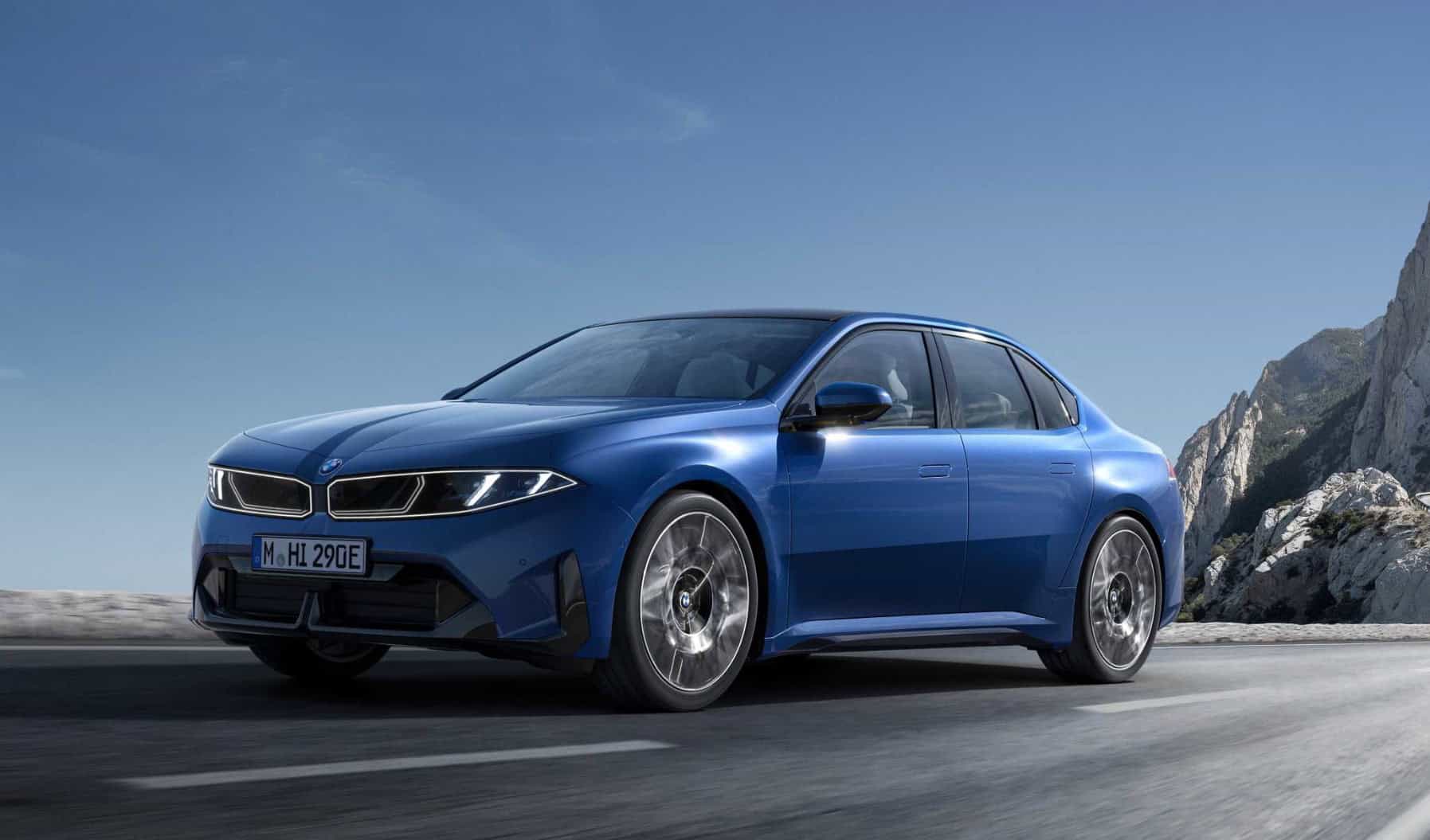
The company unveiled the new BMW i3, the first fully electric version of its most iconic model and the second vehicle in its ambitious Neue Klasse platform, which represents the most fundamental redesign of the brand in a generation. The announcement, made at BMW’s North American headquarters in Woodcliff Lake, N.J., signals the company’s most consequential bet yet that drivers who have long prized the 3 Series for its precise handling and driver-focused cockpit will embrace the same qualities delivered entirely by battery power.
A Leap in Range and Charging Speed
The numbers BMW is putting forward are striking. The new i3 50 xDrive — the launch variant, with electric motors on both axles — is projected to travel up to 440 miles on a single charge, a figure the company says is based on preliminary internal testing using the Environmental Protection Agency’s standards. That would place it among the longest-range electric sedans on the market. The company also says the car’s 800-volt electrical architecture enables DC fast charging at up to 400 kilowatts, a speed that could add substantial range in a matter of minutes.
Combined output from the dual motors stands at 463 horsepower and 476 pound-feet of torque. At the heart of the system is what BMW calls “Gen6 eDrive” technology, a sixth-generation platform that the company says delivers 30 percent more range and charges 30 percent faster than its predecessor. The rear axle uses an electrically excited synchronous motor, a design that allows the magnetic field to be adjusted in real time — reducing losses under light loads and maximizing torque under hard acceleration.
A Cockpit Rebuilt Around the Driver
Inside, BMW has stripped away the conventional instrument cluster behind the steering wheel entirely. In its place, driving data is projected directly onto a specially coated strip at the base of the windshield, stretching from one A-pillar to the other — a system the company calls BMW Panoramic Vision. A large, 17.9-inch central display, angled toward the driver and equipped with a resolution of 3,340 by 1,440 pixels, handles navigation, media, and vehicle settings. An optional 3D head-up display layers additional information, including navigation prompts, directly into the driver’s line of sight.
The steering wheel has been redesigned for the first time in 3 Series history to include a center spoke in the upper section, along with touch-sensitive controls that illuminate only when their corresponding functions are available — a concept BMW calls Shy Tech.
Amazon’s Alexa+ artificial intelligence has been integrated into BMW’s voice assistant, allowing drivers to issue conversational commands, stream music, and access real-time information without defined voice prompts.
Design: Familiar Silhouette, New Face
Visually, BMW has been careful not to alienate the loyalists. The i3 retains the classic 2.5-box sedan proportions that have defined the 3 Series for generations — long wheelbase, short overhangs, and the steeply raked greenhouse. The flared wheel arches, which BMW says emphasize the car’s wide stance, are more pronounced than ever.
The front end has been significantly reworked. The traditional kidney grille and twin headlights have been merged into a single horizontal geometry-and-light element that spans nearly the full width of the nose. At the rear, new L-shaped lights stretch deep into the shoulders of the car, reinterpreting a BMW design signature in abstract form.
Eleven exterior colors will be available at launch, including a new exclusive shade called M Le Castellet Blue, named after the French motorsport circuit.
A New Kind of Driving Assistance
BMW is also introducing what it calls BMW Symbiotic Drive, a Level 2+ driver assistance system designed around what the company describes as cooperation rather than takeover. The system allows drivers to accelerate, steer, or brake even while assistance is engaged, without instantly disabling it — a deliberate departure from systems that treat any driver input as a signal to disengage.
The underlying computing architecture relies on four high-performance processors, which BMW calls “superbrains,” each assigned to a specific domain: driving dynamics, automated driving, infotainment, and comfort functions. The driving dynamics processor, branded as the Heart of Joy, responds ten times faster than the systems it replaces.
Sustainability Built In
BMW says roughly 30 percent of the i3’s total material content comes from recycled sources, including 80 percent secondary aluminum in certain suspension components and recycled marine plastic — drawn from used fishing nets — in the engine compartment cover. The company says it reduced the carbon footprint of the battery cell supply chain by approximately 33 percent compared to the previous generation.
Production and Availability
The i3 will be manufactured at BMW’s home plant in Munich, where production is scheduled to begin in August 2026. The first deliveries are expected in autumn of this year. BMW says that within a year of the i3’s launch, the Munich plant will transition to producing exclusively electric vehicles under the Neue Klasse platform.
Whether the i3 can carry the emotional weight of the 3 Series name — a car that generations of driving enthusiasts have considered their benchmark — into the electric age remains the central question. BMW, for its part, is betting that the answer is yes.