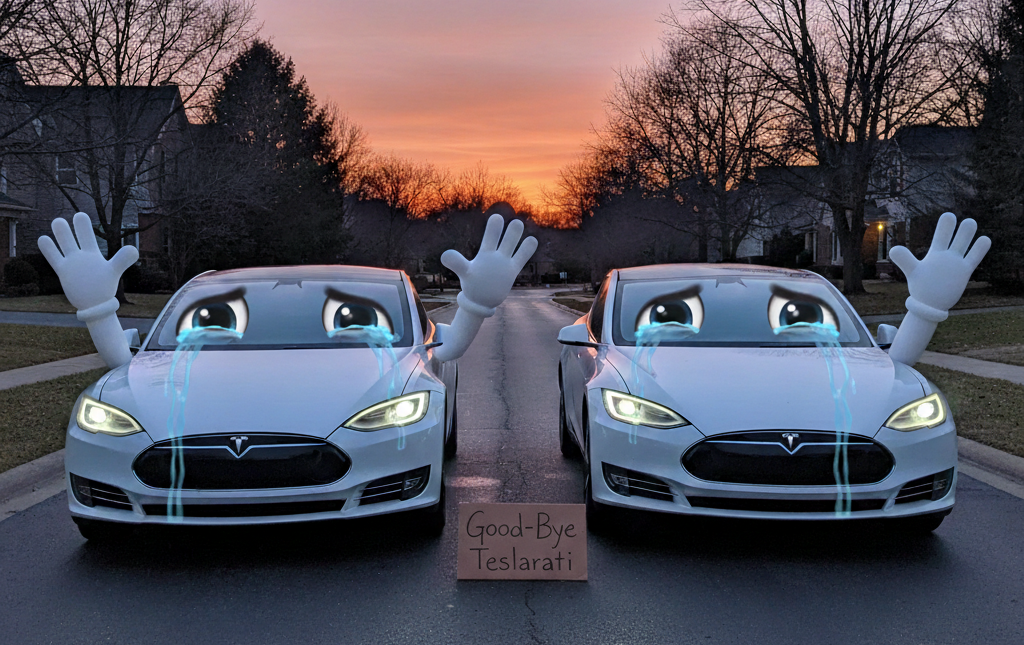
 Elon Musk announced that Tesla is ending production of its flagship Model S sedan and Model X SUV, marking the close of a defining chapter in the company’s history as it shifts focus toward autonomy, artificial intelligence, and robotics. The decision reflects Tesla’s evolving strategy, as the company prioritizes technologies it believes will define its next phase of growth rather than continuing to invest in low-volume premium vehicles. Production of both models is expected to wind down by the second quarter of 2026.
First introduced in 2012, the Model S plays a critical role in establishing Tesla as a serious automaker and proving that electric vehicles can deliver long range, high performance, and advanced software features. The Model X, introduced in 2015, brings similar technology to the SUV segment with distinctive falcon-wing doors and a strong emphasis on safety. Together, the two vehicles help build Tesla’s brand, attract early adopters, and push the broader auto industry toward electrification.
Over time, however, demand for the Model S and Model X steadily declines as Tesla’s business shifts toward higher-volume, lower-cost vehicles. The Model 3 and Model Y dominate Tesla’s global sales, offering broader market appeal and significantly better manufacturing efficiency. By contrast, the S and X require more complex production processes and generate a smaller share of revenue, making them less aligned with Tesla’s long-term manufacturing and margin goals.
The move to end the two models also aligns with Tesla’s broader pivot toward what its leadership describes as a “physical AI” future. Resources, factory space, and engineering focus increasingly redirect toward autonomous driving systems, robotaxis, and the Optimus humanoid robot program. The Fremont factory, long associated with Model S and X production, now plays a key role in supporting these next-generation initiatives.
Tesla emphasizes that existing Model S and Model X owners continue to receive service, software updates, and parts support, reassuring customers that the vehicles remain fully supported. While the end of production marks the conclusion of two iconic nameplates, it underscores how far Tesla’s priorities have evolved. The discontinuation symbolizes Tesla’s transition from a premium electric car pioneer into a company betting its future on autonomy, robotics, and large-scale AI-driven platforms.