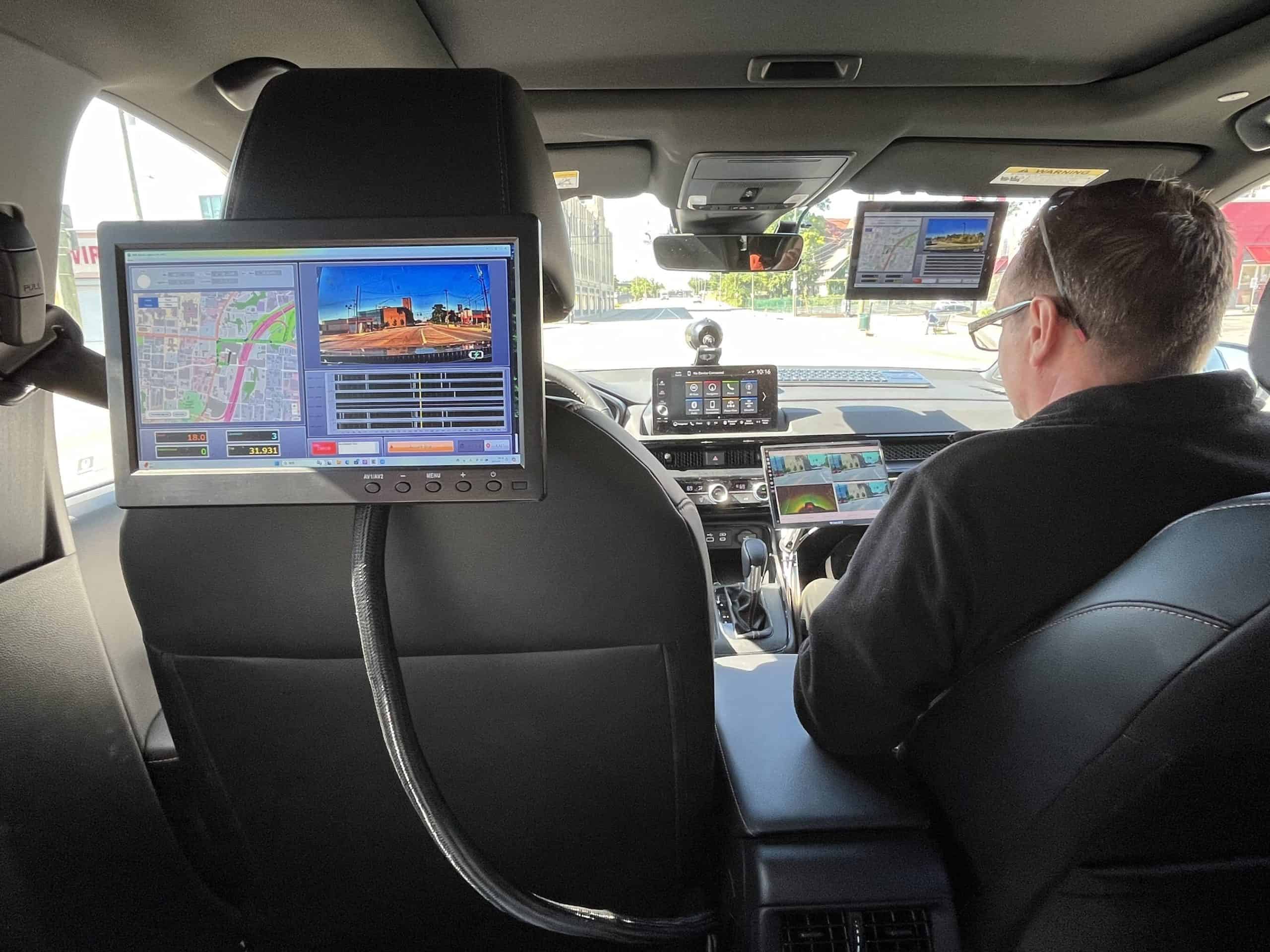
On a stretch of highway outside Columbus, Ohio, a Honda test vehicle glided over pavement scarred by winter wear. To a passing driver, it looked unremarkable. But inside the car, cameras, sensors and software were quietly at work, scanning the road surface, reading faded lane markings and spotting damage that would normally take human inspectors weeks or months to log.
That effort is part of a two-year pilot project led by Honda and funded by the Ohio Department of Transportation, a collaboration that state officials say could change how roads are maintained — and how quickly problems are fixed — across the country.
Working with DriveOhio, the state’s smart-mobility hub, and technology partners i-Probe Inc., Parsons Corporation and the University of Cincinnati, Honda has developed a prototype Proactive Roadway Maintenance System that uses real-time vehicle data to identify roadway deficiencies automatically. The system, recently tested on about 3,000 miles of roads in central and southeastern Ohio, demonstrated that ordinary vehicles equipped with advanced sensors can serve as rolling inspectors, continuously monitoring public infrastructure.
The idea is deceptively simple: as cars travel their normal routes, they collect data on road conditions and roadside assets. That information is then analyzed and sent to transportation officials, who can see emerging problems almost as soon as they appear.
During the pilot, Honda test vehicles equipped with vision cameras and LiDAR sensors drove on highways, rural roads and city streets, in daylight and darkness, rain and clear weather. The system detected potholes, rough pavement, damaged guardrails, obstructed or worn road signs, insufficient lane striping and even hazardous shoulder drop-offs — issues that can take time to catch through traditional visual inspections.
The results were striking. According to project data, the system identified damaged or obstructed signs with 99 percent accuracy and damaged guardrails with 93 percent accuracy. Pothole detection averaged 89 percent accuracy across most road types. For state transportation agencies accustomed to labor-intensive inspections, those figures suggest a potentially transformative tool.
“This technology allows us to see problems sooner and fix them before they become bigger and more expensive,” said Pam Boratyn, director of the Ohio Department of Transportation. She added that reducing the need for workers to stand near live traffic during inspections could also improve safety for maintenance crews.
The cost implications are significant. Project estimates suggest that automated road condition detection could save Ohio more than $4.5 million a year by reducing manual inspection time, improving maintenance scheduling and preventing costly repairs that result from deferred action.
Behind the scenes, the system relies on a layered data pipeline. Information collected by vehicle sensors is processed using edge artificial intelligence, transmitted to a Honda cloud platform and integrated into Parsons’ asset-management software. The system can automatically generate and prioritize maintenance work orders, grouping them by severity and location to streamline field operations.
For transportation officials, the value lies not just in spotting damage, but in understanding trends. Data from the pilot indicated that only a small percentage of roads suffered from inadequate lane markings, suggesting that restriping schedules could be refined rather than applied uniformly. Sensor data also provided consistent measurements of road roughness, offering planners another tool to guide long-term maintenance decisions.
Honda engineers began developing the prototype system in 2021, drawing on technology originally designed for vehicle safety and driver-assistance features. The company says this project reflects a broader shift in how automakers see their role in public safety.
Under its global “Safety for Everyone” initiative, Honda has pledged to eliminate traffic fatalities involving its vehicles by 2050. While advanced airbags and collision-avoidance systems remain central to that goal, the company is increasingly looking beyond the car itself — toward the roads those cars travel on.
Sue Bai, a chief engineer at American Honda Motor Company, said the pilot shows how vehicle data can help communities, not just drivers. “By using real-time vehicle data to detect road hazards and infrastructure issues, we’re demonstrating how smarter, adaptive solutions can improve safety and reduce costs,” she said.
The project also highlights the growing role of partnerships in transportation innovation. Researchers at the University of Cincinnati helped integrate sensors into the vehicles and led development of detection features for potholes and roadside damage. i-Probe contributed data validation and analysis expertise, while Parsons focused on turning raw data into actionable maintenance workflows.
Looking ahead, the team is exploring how the system could be scaled for real-world deployment. One possibility is crowd-sourced data: anonymized information collected from customer vehicles, rather than dedicated test cars, could give transportation agencies a near-continuous picture of road conditions.
If that vision becomes reality, drivers could play a quiet but meaningful role in keeping roads safer — not by filing complaints, but simply by driving.
For now, the Ohio pilot stands as a glimpse of what that future might look like: a transportation network where the cars themselves help care for the roads beneath their wheels.