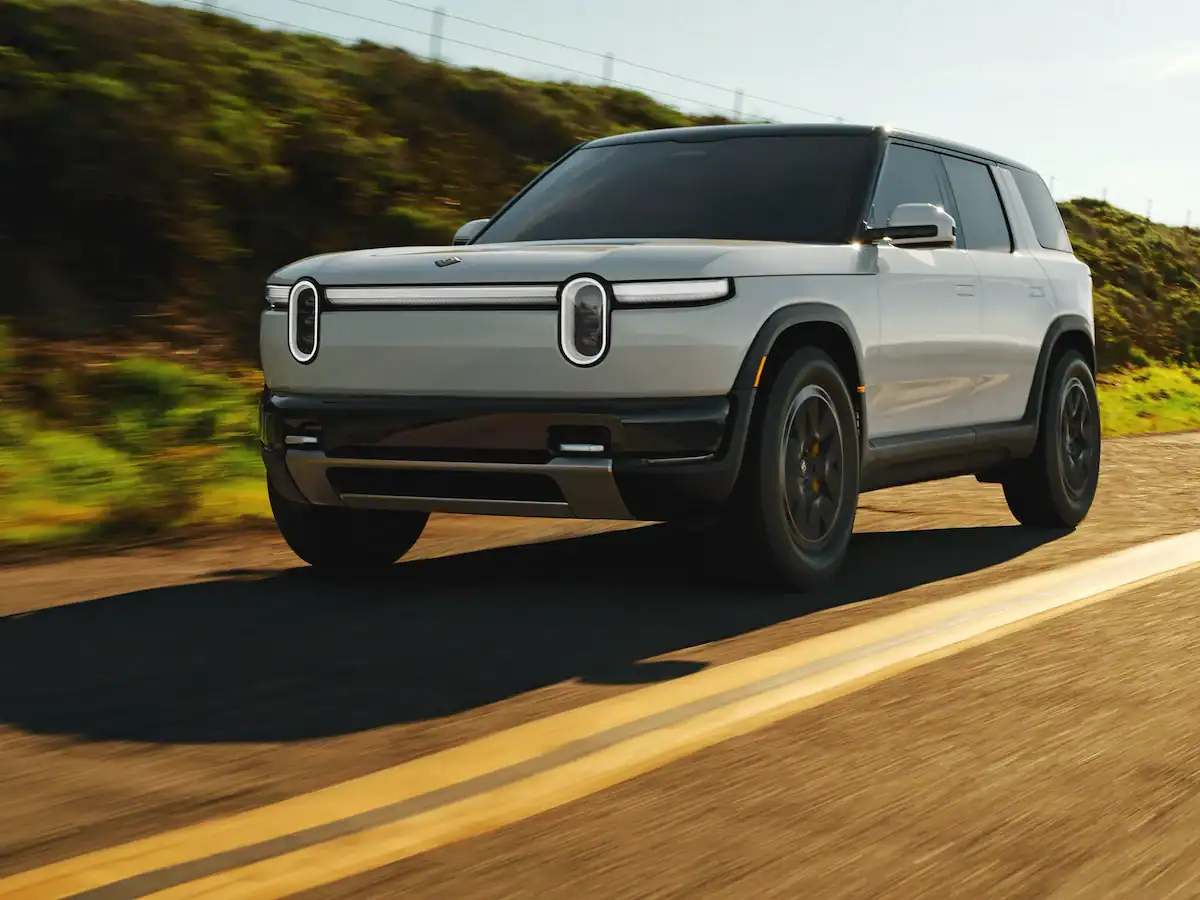
The company revealed the R2 in March 2024 at a theater event in Laguna Beach, Calif., where the announcement generated considerable attention among electric vehicle enthusiasts eager for a Rivian at a lower price point than the brand’s existing trucks and large SUVs. Since then, engineers and designers have subjected the vehicle to an extensive testing regimen spanning some of the harshest environments in the country, from the frozen tundra of Alaska to the scorching desert heat of Arizona, refining the user interface, final design and driving dynamics along the way.
Now, the camouflage-wrapped prototypes that have long populated the Normal facility are giving way to vehicles intended for paying customers.
“We are really excited to be producing R2 for our customers,” said RJ Scaringe, Rivian’s founder and chief executive. “The vehicle is incredible — it’s the result of all the hard work and dedication of the Rivian team.”
The start of customer production signals that Rivian’s manufacturing and quality-verification processes for the model are substantially complete. Every weld, software system and interior material has been reviewed against the company’s internal standards, according to the company.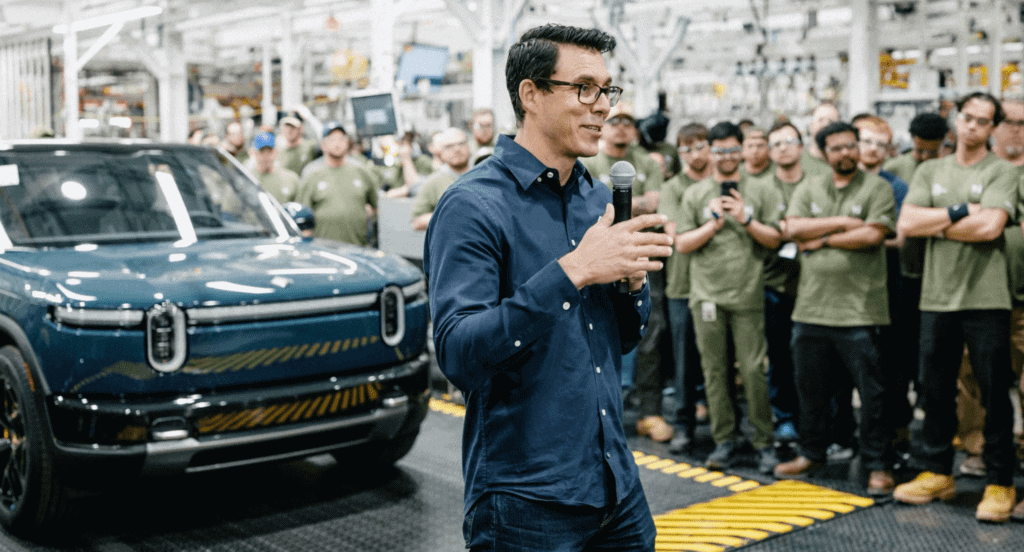
Javier Varela, Rivian’s chief operating officer, said the R2 program represents a step forward in the company’s manufacturing efficiency and cost structure. “Building R2 represents a major advance in engineering excellence and manufacturing efficiency, driving meaningful improvements in cost and quality that position Rivian as a leader in the future of transportation,” he said.
Rivian said the first vehicles are now undergoing final quality and validation checks and that it remains on track to begin deliveries to customers later this spring. The company is also offering demo drives in select markets as the delivery date approaches.
The R2 has been closely watched as a test of whether Rivian, which has struggled with production costs and losses on its larger vehicles, can build a more accessible product that broadens its customer base and improves its financial profile.
The company has structured the R2 rollout across three trim levels and a multiyear delivery schedule. The Performance trim, which starts at $57,990 with a limited-time Launch Package, is the first to reach customers this spring. It is powered by a dual-motor all-wheel-drive system producing 656 horsepower and 609 pound-feet of torque, with a zero-to-60-miles-per-hour time of 3.6 seconds and an EPA-estimated range of up to 330 miles. Standard features include a semi-active suspension, Matrix LED headlights, a 975-watt premium audio system and a rear drop glass that lowers fully into the liftgate — a feature Rivian says makes it easier to load long cargo such as surfboards.
Launch Package buyers also receive lifetime access to Rivian’s Autonomy+ driver assistance subscription, which the company otherwise prices at $49.99 a month or $2,500 as a one-time purchase. The system supports hands-free driving on approximately 3.5 million miles of roads across the United States and Canada.
A mid-tier Premium trim, starting at $53,990, is expected to follow in late 2026, offering 450 horsepower and the same 330-mile range estimate but without the semi-active suspension. A Standard rear-wheel-drive trim, starting at $48,490, is slated to arrive in the first half of 2027, with an estimated range of up to 345 miles. Rivian said a lower-cost Standard variant starting around $45,000 would arrive in late 2027, though it offered few additional details.
Built on an all-new mid-size platform, the R2 is nearly 2,000 pounds lighter than Rivian’s larger R1 models and sits on a shorter wheelbase of 115.6 inches, which the company says improves maneuverability in urban settings without sacrificing the off-road capability central to Rivian’s brand identity. The vehicle offers 9.6 inches of ground clearance, a 25-degree approach angle and a 26-degree departure angle — figures Rivian describes as best-in-class for the segment.
The R2 carries a native NACS charge port, giving it access to Tesla’s Supercharger network, along with CCS adapter support for other charging networks.
On the technology front, Rivian has outfitted the R2 with what it describes as an AI-ready architecture, built around 11 high-dynamic-range cameras, five radar units and onboard edge computing hardware capable of handling complex tasks without a cellular connection. The company said it plans to introduce a voice assistant, called Rivian Assistant, that can operate locally on the vehicle even when offline. A redesigned steering wheel features haptic dial controls the company calls “halo wheels,” designed to give drivers tactile feedback for audio, navigation and other functions without requiring them to look away from the road. All new R2 deliveries include a 60-day trial of Autonomy+.
Rivian is also introducing three new exterior colors with the R2: Catalina Cove, a metallic finish it describes as shifting between Pacific blue and translucent green; Esker Silver, inspired by glacial ridgelines; and Half Moon Grey, drawn from the coastal cliffs of the Northern California coastline. Interior options for the upper trims include two nature-themed environments featuring upcycled birch wood accents.
The company said reservations are open now with a $100 refundable deposit at rivian.com/r2.