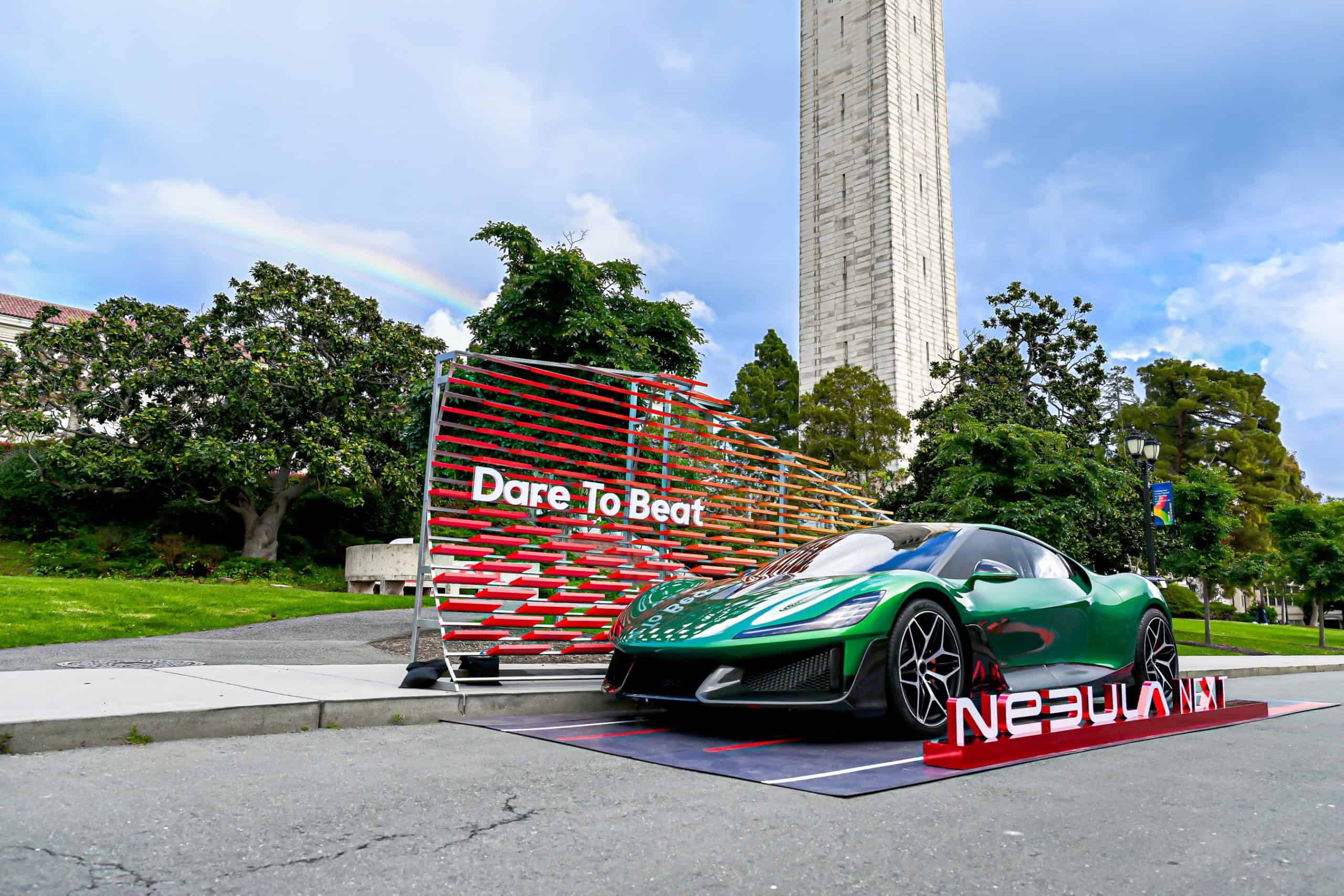
BERKELEY, Calif. — In a move that reflects a longer view of the automotive industry’s technological future, Dreame Nebula NEXT Auto has expanded its collaboration with academic researchers, including those at University of California, Berkeley, as it pushes deeper into the development of autonomous systems and artificial intelligence–driven vehicles.
The company said the engagement brings its engineers and executives into closer dialogue with specialists in autonomous control, machine learning and intelligent transportation systems. The aim, executives indicated, is not merely to explore theory but to translate research into deployable vehicle technologies, with particular attention to safety, control architectures and the integration of full-stack A.I.
“We aren’t building a car,” Jake Ma, an executive at Dreame Nebula NEXT Auto, said in a statement. “We are building a new brain for the physical world.” He described the automobile as uniquely suited to house the computing power required by large-scale A.I. models, calling it “the only physical mothership capable” of doing so.
The collaboration is part of a broader strategy to root the company’s ambitions in academic partnerships, an approach that has become increasingly common as automakers and technology firms converge around software and data. By drawing on university research, Nebula NEXT is seeking to strengthen its capabilities in autonomous driving and system-level engineering, areas widely seen as critical to the next phase of mobility.
The company’s efforts build on the engineering and A.I. foundations of its parent, Dreame Technology, and signal a shift in emphasis from so-called software-defined vehicles to what it describes as “A.I.-defined” systems — vehicles in which intelligence permeates everything from perception and decision-making to chassis dynamics and powertrain control.
That vision includes continuous learning systems, multi-agent architectures and high-performance computing platforms designed to process complex driving environments in real time. Such ambitions place the company among a growing cohort of entrants attempting to redefine the automobile as a computing platform as much as a mode of transportation.
Nebula NEXT first drew wider attention earlier this year at the Consumer Electronics Show, where it introduced the Nebula NEXT 01, a four-door electric hyper-sedan concept with supercar-level performance claims. The company later amplified its profile with a high-visibility appearance during the Super Bowl broadcast, signaling its intent to compete for attention in the North American market.
Even so, executives have emphasized that performance is only one part of the equation. The company’s underlying architecture, they say, combines A.I.-native operating systems with zonal electrical design and dense computing hardware, an approach intended to support scalable, intelligent vehicle platforms.
Nebula NEXT is now entering what it describes as a phase of execution, focused on translating its technological ambitions into manufacturable systems. It plans to present further developments at an event in Silicon Valley later this month.
The deeper engagement with academic institutions, coupled with its push into advanced engineering, suggests a company attempting to position itself at the center of a rapidly evolving industry — one in which the boundaries between carmaker, software developer and research lab are increasingly difficult to distinguish.