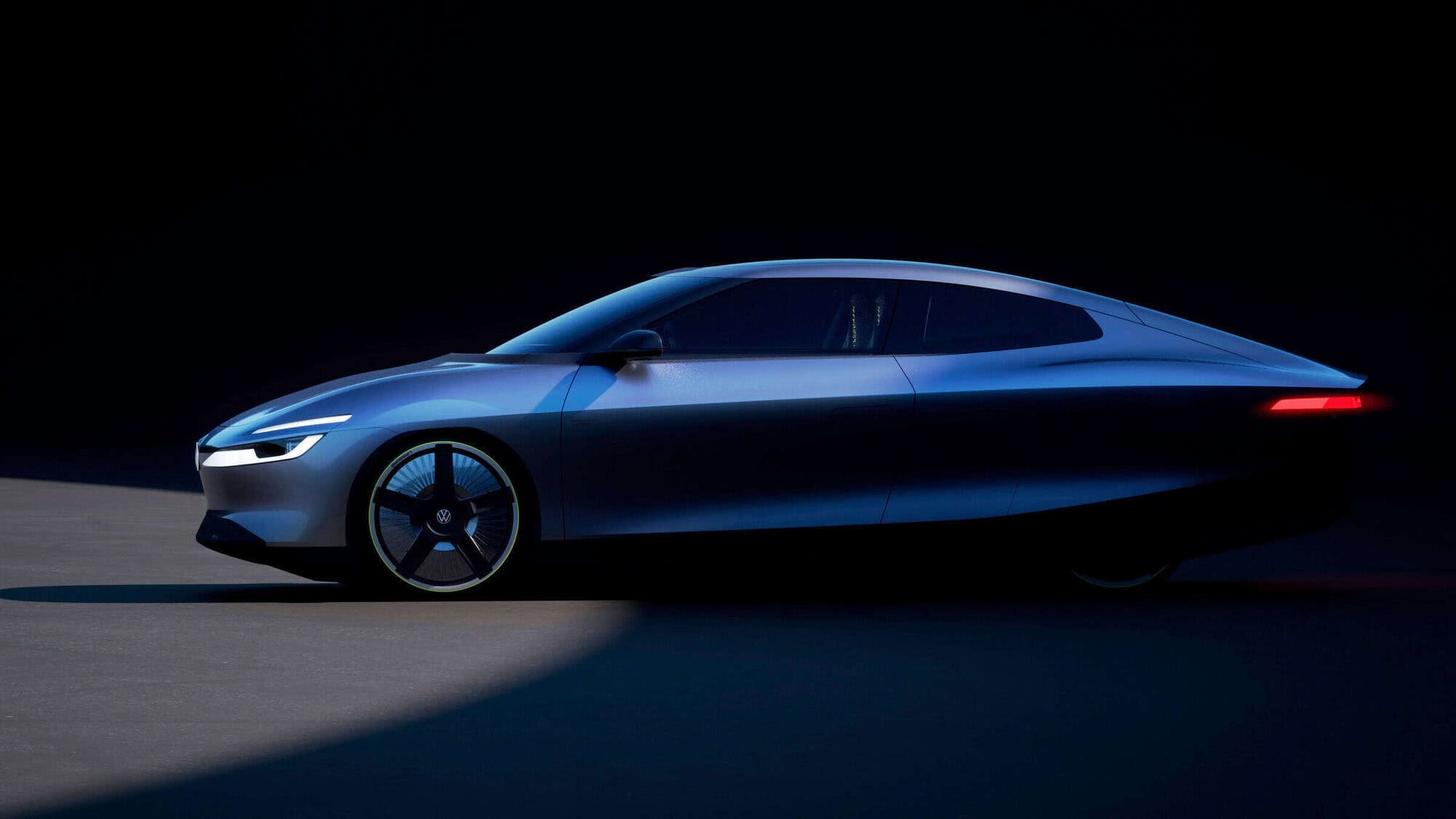
The Numbers Behind the Records
Germany’s Record Institute certified the Mission Efficiency in the category of near-production, everyday-usable four-seat electric vehicles, and the figures it produced are striking even by the standards of a industry that has spent a decade chasing efficiency gains. The car recorded a drag coefficient of 0.158, the lowest ever measured on a road-legal automobile. During an actual road trip of 1,278 kilometers, or roughly 794 miles, from Wolfsburg to Vienna by way of Poland and the Czech Republic, the Mission Efficiency averaged 6.89 kilowatt-hours of energy per 100 kilometers traveled. A separate, more controlled test held at a steady 68 kilometers per hour pushed consumption down even further, to 6.48 kilowatt-hours per 100 kilometers, the third of the car’s three records.
To put those numbers in context, a typical compact electric car on the road today consumes somewhere close to double or triple that amount of energy to cover the same distance, which means the Mission Efficiency is not simply incrementally better than its competition but working from an entirely different aerodynamic and energy budget.
Borrowing From the Production Line, Not a Lab
What distinguishes the Mission Efficiency from most efficiency-record prototypes is where its components come from. Rather than build a bespoke, low-volume powertrain purely for the sake of a record run, Volkswagen pulled its motor and battery straight from the production ID. Polo. The car uses a 99-kilowatt motor, equivalent to about 135 horsepower, and a 54.9-kilowatt-hour battery pack that is slightly larger than the 52-kilowatt-hour unit found in the standard ID. Polo. Volkswagen has also said the car shares front suspension components with that same production model.
The lineage the company is most eager to invoke, though, is older than the ID. Polo. Volkswagen has openly described the Mission Efficiency as a spiritual successor to the XL1, the tiny diesel-hybrid hypermiler the automaker built in extremely limited numbers more than a decade ago to demonstrate how far obsessive attention to aerodynamics could stretch a gallon of fuel. The Mission Efficiency swaps that car’s combustion engine for an electric motor, but keeps its central premise: that the shape and weight of a car matter just as much as what powers it.
Engineering Around the Wheels
Much of the Mission Efficiency’s advantage comes from parts of the car that most drivers never think about. Volkswagen’s engineers have said that wheels alone can account for roughly a quarter to nearly a third of a vehicle’s total aerodynamic drag, which is why the Mission Efficiency devotes unusual attention to them. The rear wheels are almost entirely enclosed behind bodywork, the front wheel arches wrap tightly around the tires, and the car rides on specially developed low-rolling-resistance rubber based on Continental’s EcoContact 7, with sidewalls tuned for aerodynamic efficiency rather than grip alone.
In one decision that runs against a broader industry trend, Volkswagen kept conventional glass side mirrors on the Mission Efficiency rather than switching to camera-based systems, which have become fashionable on concept cars chasing every last fraction of drag reduction. The company’s own testing found that the efficiency gained from cameras would not offset the added cost and power draw of running small displays inside the cabin, a rare example of a manufacturer talking itself out of a flashier solution.
Built to Look Usable, Not Just Slippery
Unlike many hypermiling concept cars, which tend to sacrifice everything to the wind tunnel, the Mission Efficiency was designed with at least a passing nod toward daily practicality. It seats four in a two-plus-two arrangement, a departure from the strictly two-seat XL1, and includes a double-bubble roof that helps preserve headroom despite the car’s low, narrow profile. The rear hatch opens onto 481 liters of luggage space, with additional small storage compartments tucked behind the rear wheel covers, including a dedicated space for a charging cable. Rear-seat accommodations are limited to passengers around five feet three inches tall or shorter, but Volkswagen has said the packaging could theoretically work for a young family of four.
The prototype has already received European road approval and meets standard crash and safety requirements, a detail Volkswagen has emphasized to distinguish the Mission Efficiency from a pure styling exercise. The company has stopped short of promising that the car, in this exact form, will reach production. But by building it almost entirely from components already running down an assembly line for the ID. Polo, Volkswagen is making the case that the aerodynamic lessons learned here will not stay confined to a single record-setting prototype.