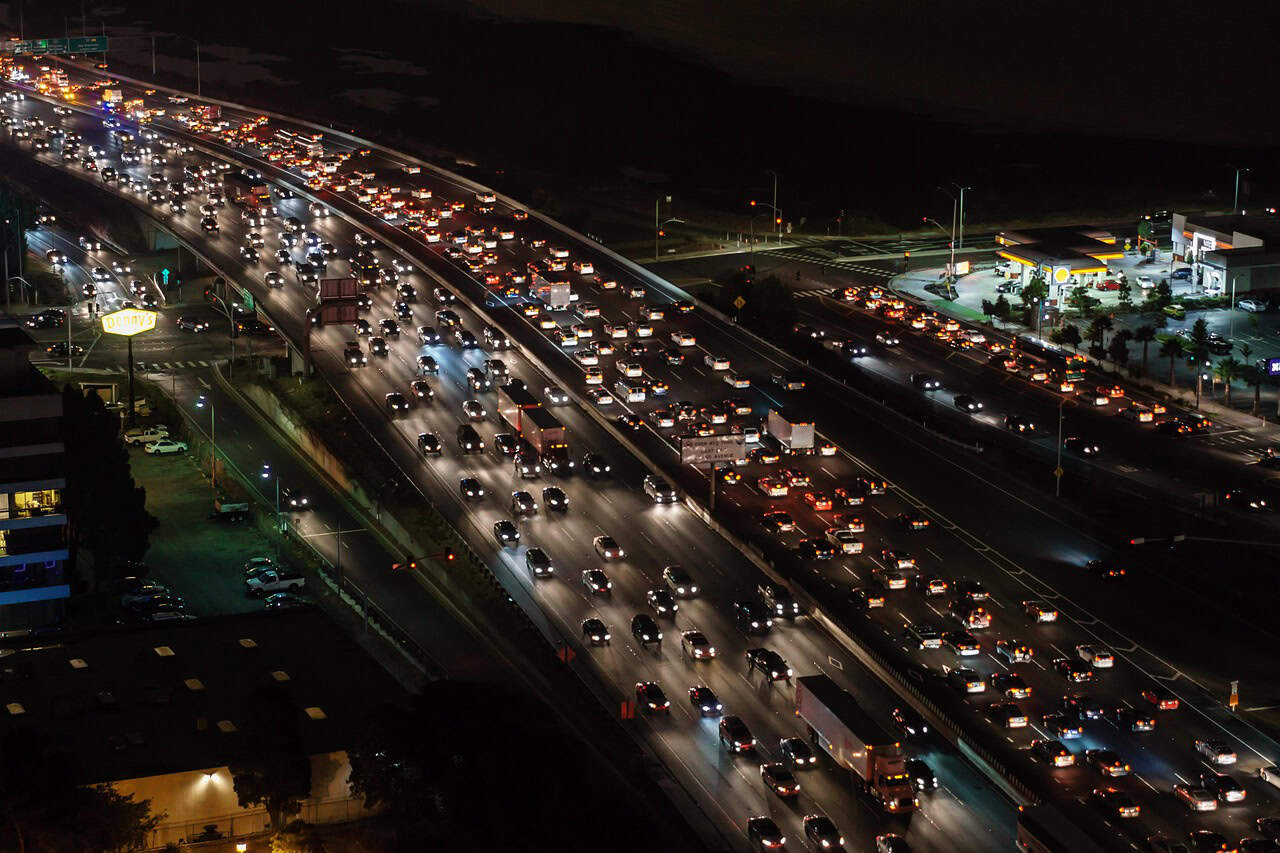
In the comprehensive study Navigating the Future of Transportation, researcher Farah Naz and Dr. Stephen P. Mattingly synthesize data from 26 empirical studies to quantify the “rebound effect” of automation. Their findings indicate a projected baseline increase of 6% in total VMT directly attributable to the adoption of SAE Level 4 and Level 5 systems. This rise is not merely a statistical anomaly but a fundamental shift in how humans perceive and utilize automotive travel when the burden of driving is removed.
The core driver of this VMT surge is the reduction in the value of travel time (VTT). Historically, the “cost” of a commute included the cognitive load and physical tedium of operating a vehicle. When a passenger can instead work, sleep, or consume media, the perceived cost of spending time in a car drops precipitously. The UTA research demonstrates that this leads to “induced demand”—a phenomenon where improved travel conditions encourage more frequent and longer trips.
For example, a worker who previously limited their commute to 30 minutes may now tolerate 60 minutes if that time is spent productively. This expansion of the “commuteshed” facilitates urban sprawl, pushing residential boundaries further from city centers and increasing the total mileage driven across the network.
Beyond individual behavior changes, the operational realities of robotaxi fleets introduce significant technical inefficiencies. “Deadheading”—the practice of vehicles traveling without passengers to reach a pickup point, return to a hub, or find a charging station—is a primary contributor to road occupancy.
Data from late 2025 operations in the San Francisco Bay Area reveals that nearly half of all miles driven by leading autonomous fleets were empty miles. The UTA study warns that without stringent management, these zero-occupancy miles will compete for finite road space during peak hours, exacerbating the “iron law of congestion.” This principle dictates that any gains in traffic flow or road capacity are quickly offset by new drivers entering the system, eventually returning the network to a state of equilibrium—usually gridlock.
The socio-economic implications of this shift are equally concerning. The UTA research highlights a potential modal shift away from space-efficient transportation such as heavy rail, buses, and cycling. If the convenience and privacy of an AV become affordable, even at a 10% premium, transit agencies—which rely on high density to maintain efficient service—face a “death spiral” of declining ridership and reduced funding. This creates a widening gulf between affluent AV users, who can bypass the frustrations of traditional transit, and lower-income populations who remain dependent on a degraded public system. Furthermore, the resulting urban gridlock hampers regional economic productivity by narrowing labor pools; businesses lose access to specialized workers who are unwilling to navigate a paralyzed transit network.
To counter these systemic externalities, Naz and Mattingly argue that traditional infrastructure solutions, such as roadway widening, are functionally obsolete. Adding lanes in dense urban environments is financially prohibitive and environmentally damaging, and it ultimately fails to address the root cause of induced demand.
Instead, the research advocates for a policy-driven approach centered on road pricing and dynamic congestion fees. By internalizing the costs of deadheading and peak-hour usage, municipal regulators can force AV operators to optimize their fleets for efficiency rather than just availability. Implementing higher fees for zero-occupancy miles would incentivize companies to utilize “virtual stands” or staged parking rather than continuous cruising, thereby preserving road capacity for high-occupancy vehicles and essential services.
The UTA study also explores the role of shared automated vehicles (SAVs) as a potential balancing force. While private AV ownership is predicted to cause the highest spike in VMT, a shift toward shared, right-sized autonomous fleets could theoretically mitigate some of the damage. However, the researchers emphasize that “sharing” must go beyond the vehicle itself to include “ride-sharing” (pooling multiple passengers in one trip) to achieve a net reduction in congestion. Without such pooling, a fleet of individual robotaxis simply replaces private cars with higher-utilization vehicles that drive more miles per day. The study concludes that the “wisest time to enact such reforms is now,” before the infrastructure becomes inextricably committed to an autonomous-first model that the environment and economy cannot sustain.
If the industry prioritizes user convenience over network efficiency, the promised “utopia” of silent, flowing robotaxis may instead manifest as a permanent, high-tech traffic jam.