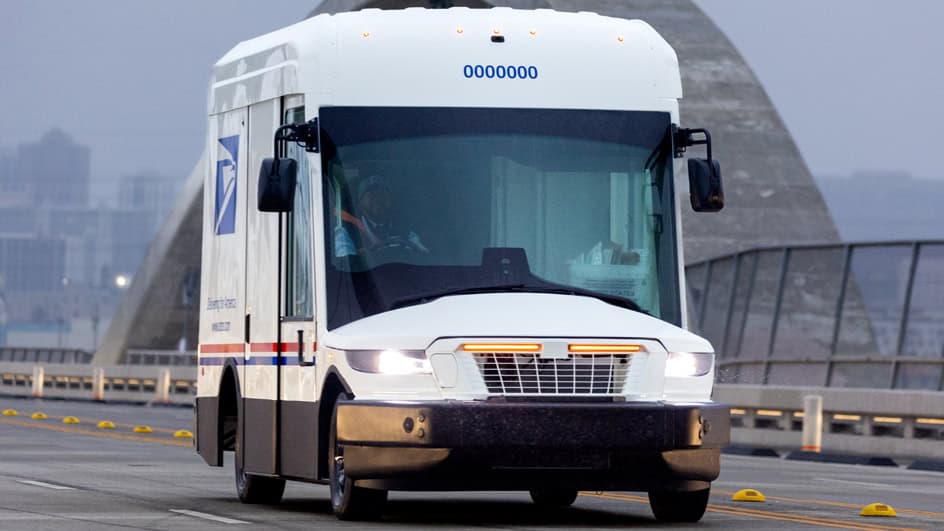
 The U.S. Postal Service says it is entering the 2025 holiday season with a modernized network, expanded automation, one of the largest deployments of new electric delivery trucks in federal history which may be cleaner that Santa’s magic oats, cookie, stardust and carrot fed reindeer….
The United States Postal Service, which has spent nearly $20 billion over the past four years upgrading facilities and package-processing capabilities, said it has now received nearly 29,000 new vehicles this year alone. More than 24,000 of them are already on the road, ferrying letters and parcels across neighborhoods preparing for the holidays. Over the coming years, the Postal Service expects to add 106,480 new vehicles, including 66,000 battery-electric trucks, marking one of the most significant fleet upgrades in the agency’s history and a major shift toward a cleaner and more efficient delivery system.
The New Electric Trucks Replacing an American Icon
Developed by Oshkosh Corporation, the Next Generation Delivery Vehicle comes in both gasoline and battery-electric versions that share nearly all major components, making it easy for carriers to switch between them. The shift to electric befits a system increasingly built around parcel delivery rather than letters.
The battery-electric NGDV includes a 94-kilowatt-hour battery, a 201-horsepower motor, and an estimated range of about 120 miles, enough for most daily routes. The vehicle’s tall, “duckbill” nose and panoramic visibility are designed for safety, while a cavernous 330-cubic-foot cargo bay — more than double that of the aging LLV — accommodates the surge in e-commerce packages. Postal carriers can stand upright inside, and a redesigned hood and lower sightlines help them spot children, pets, and roadside obstacles.
Inside, the trucks are intentionally utilitarian: hard plastics, rubberized floors, oversized knobs, and a simple, right-hand-drive cabin meant for durability. But they also add amenities long absent from postal vehicles. Modern safety systems — automatic braking, pedestrian detection, and a high-resolution backup camera — address decades-old blind spots. And for USPS workers, the most welcome upgrade may be the most ordinary: air conditioning, a feature the LLV never offered. Oshkosh executives said one test driver was moved to tears when experiencing the cooler cabin for the first time.
Despite the NGDV’s size — more than two feet taller and five feet longer than its predecessor — the electric version maneuvers easily at low speeds, aided by smooth power delivery and gentle regenerative braking. Designed to eliminate “idle creep” for safety, the truck requires the driver to fully depress the brake during hundreds of stops each day.
The first units will reach neighborhoods over the next several years, replacing LLVs that now average more than $10,000 a year in maintenance and whose youngest examples are from the early 1990s. These next-generation electric trucks offer quieter operation, better cargo capacity and the ability to handle the surging package volume that has come to define modern holiday shopping. Many are being paired with upgraded charging infrastructure at newly modernized facilities across the country.
Beyond the Fleet: A System-Wide Transformation
“We are well prepared and ready to deliver for the American public,” said Postmaster General David Steiner, noting that the agency has steadily gained package-delivery market share in recent years. With more Americans turning to online shopping, he said, USPS expects that trend to continue “through the holiday period and beyond.”
The service says its readiness stems from a series of large-scale operational improvements:
Processing muscle: Daily package-handling capacity has climbed to 88 million, up from 60 million, in part due to the installation of 614 new sorting machines. Many of these devices can process larger parcels than their predecessors and feed real-time tracking data into the system.
A more stable workforce: Since 2020, USPS has converted nearly 232,000 pre-career workers into full-time employees, reducing its dependence on seasonal hires. This year’s temporary staffing goal — 14,000 workers — is roughly a third of what the agency once required.
Faster local service: Updates to service standards have expanded the Postal Service’s “turnaround service,” allowing more mail to be collected, processed and delivered within the same region in a matter of days.
A modernized footprint: Dozens of new facilities have opened in recent years, including regional processing centers, transfer hubs, local processing centers and sorting and delivery centers, giving the postal network added space and efficiency ahead of peak season.
Sharper planning: A newly appointed chief performance officer is overseeing targeted operational improvements, with a focus on aligning customer needs and system capabilities.
To meet holiday demand, the agency will again rely on morning parcel delivery, extended retail hours at high-traffic Post Office locations and enhanced scanning technology to give customers better visibility into their packages’ movements.
For all the investment, the fleet transformation — especially the sweeping adoption of electric delivery trucks — is emerging as the most visible symbol of change. By the end of its procurement cycle, USPS is expected to operate one of the largest EV fleets in the United States, a shift that postal officials say will help stabilize operations, reduce long-term fuel costs and modernize a service that touches every address in America.
With its distinctive profile and electric drivetrain, the NGDV is set to become the Postal Service’s next widely recognized silhouette — an updated icon for a modernized USPS ready, at last, for the demands of modern commerce.This holiday season will tell if the new vehicles beat Santa’s reindeer and sleigh….