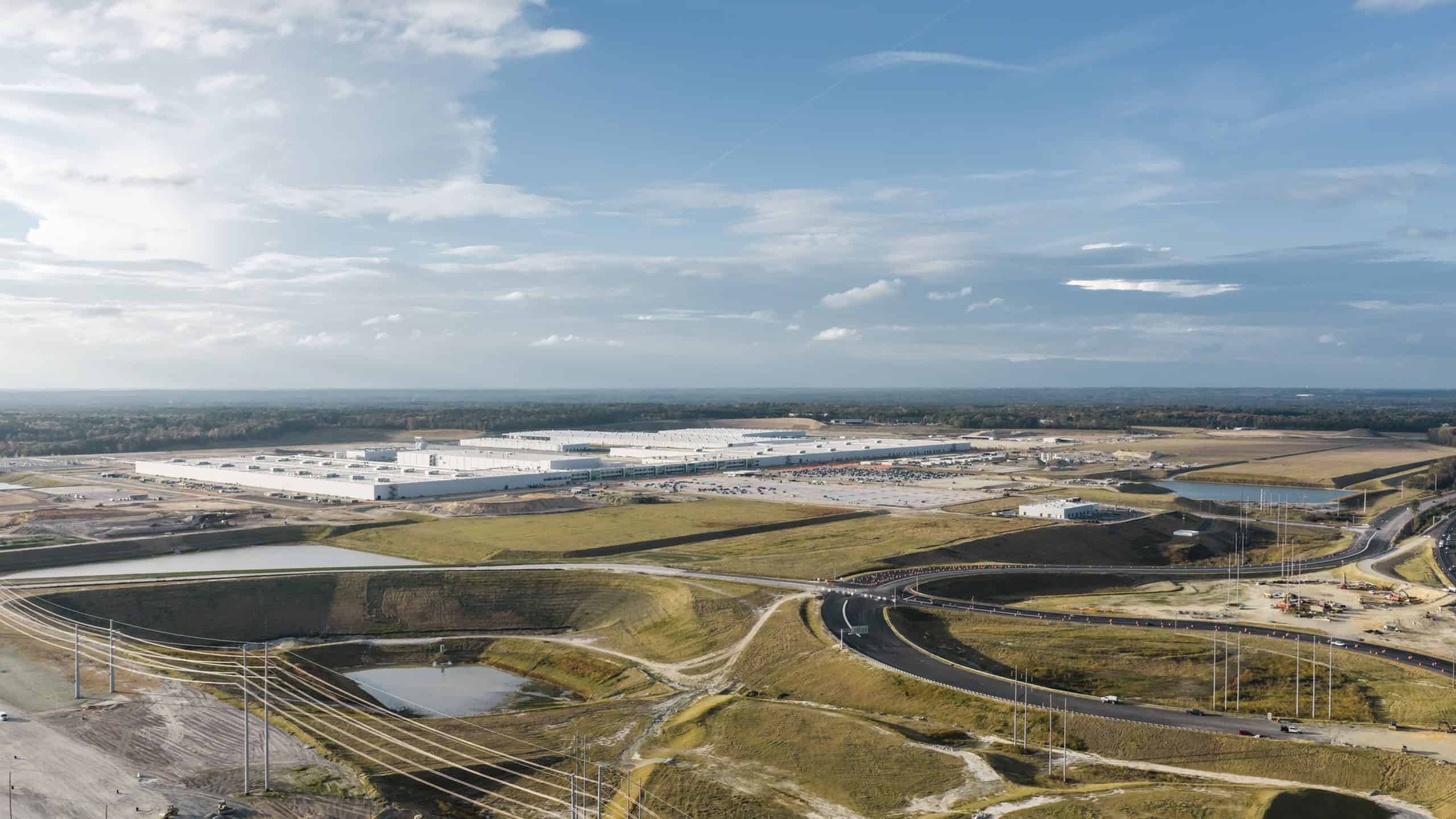
BLYTHEWOOD, S.C. — Two and a half years after groundbreaking, a site that began with cleared land and moved earth is now turning out vehicles. Scout Motors announced November 12 that it is welding, painting and assembling validation vehicles at its Production Center in Blythewood, a step toward production of the Scout Traveler SUV and Scout Terra truck.
Construction at the facility is in its final phase, and most manufacturing equipment has been installed. The early builds are intended to validate vehicle engineering, buildability and parts maturity, and to confirm that the newly installed equipment is set up and functioning as expected. The work also gives manufacturing teams hands-on experience ahead of later stages of process validation and production ramp-up.
Scout Motors Leadership Points to Progress Visible on the Factory Floor
Scott Keogh, Scout Motors president and chief executive officer, said the project is “no longer a promise on paper,” describing equipment coming to life and teams building the first validation vehicles on site. He framed the milestone as progress for customers awaiting a new Scout SUV or truck and as the result of South Carolina workers bringing a new American automotive factory to life.
Oliver Wollinsky, the company’s chief production officer, drew a distinction between installing equipment and operating it. Putting the equipment to work and learning from it, he said, is the progress underway in Blythewood, and one the company intends to build upon in the months and years ahead.
Scout Motors Body Shop Pairs Robots With AI-Supported Weld Monitoring
Across the Body Shop, Paint Shop and Assembly Shop, advanced automation works alongside employees. Robots handle tasks that demand precision and repeatability, while team members oversee operations, evaluate quality and assess how the equipment performs as vehicles move through the plant.
In the Body Shop, approximately 160 individual parts come together to form a complete vehicle body, supported by more than 750 robots. Each finished body contains approximately 5,000 weld points. AI-supported weld monitoring and advanced measurement systems help teams evaluate weld performance and dimensional accuracy, with the aim of identifying issues, verifying that bodies meet engineering specifications and capturing lessons for future manufacturing processes.
A metrology system adds another quality checkpoint. Sample vehicle bodies will undergo thousands of measurements against engineering specifications before moving on to Paint and Assembly. At full capacity, the Body Shop is designed to process approximately 40 vehicles per hour. For now, teams are confirming that equipment is functioning as expected, with process validation and scaling to production speed to follow as manufacturing readiness progresses.
Scout Motors Paint and Assembly Shops Complete the Line
The Production Center includes an electrified automotive Paint Shop, where bodies pass through cleaning, coating, corrosion protection, painting, drying and inspection, with quality checks throughout. The facility was designed with carbon dioxide emissions reduction in mind.
From there, vehicles advance to Assembly, where painted bodies and chassis are joined and team members install components ranging from wiring and windows to flooring, seats, steering wheels and tires.
Scout Motors Hiring Ramps Up Across a 4,000-Job Plan
Scout Motors is investing more than $2 billion in the Production Center, which is expected to create more than 4,000 jobs. Hiring is ramping up as the company builds its manufacturing workforce. Located less than 20 miles north of Columbia, the site connects the company to regional talent and to colleges and universities focused on automotive engineering and technology. Onsite training and career development are preparing employees to operate advanced equipment and solve problems.
Todd Johnson, Scout Motors vice president of manufacturing, said the factory represents the chance to build a career and something to be proud of, adding that the team is putting its skills to work on vehicles that will carry the Scout name forward.
Scout Motors Supplier Park Extends the Economic Footprint
The Production Center is also drawing activity beyond its walls. In 2025, Scout Motors announced an additional $300 million investment to build an onsite Supplier Park, expected to support approximately 1,000 supplier jobs and attract $368 million in additional supplier investment, strengthening South Carolina’s manufacturing base.
What Comes Next for Scout Motors
Validation builds will continue and mature into 2027 as the company prepares for its next phase of pre-production vehicle builds. The manufacturing team will progress from equipment setup and functionality to proving manufacturing processes and, ultimately, scaling toward production speed. Customer deliveries of new Scout vehicles are expected to begin in 2028.
The Scout was originally produced by International Harvester from 1961 to 1980 and was one of the world’s first utility vehicles capable of both off-road adventure and family duty.