The event, titled Advancing Sleep Health to Reduce Impaired Driving, served as the centerpiece of the organization’s expanded, year-round Drowsy Driving Prevention Program. Participants reached broad agreement on three points: drowsy driving is common, it is preventable, and it remains under-recognized as a potentially fatal form of impaired driving. They also concluded that reducing crashes will require coordinated action from every sector that influences how Americans drive.
National Sleep Foundation Unveils Its 2026 Drowsy Driving Report
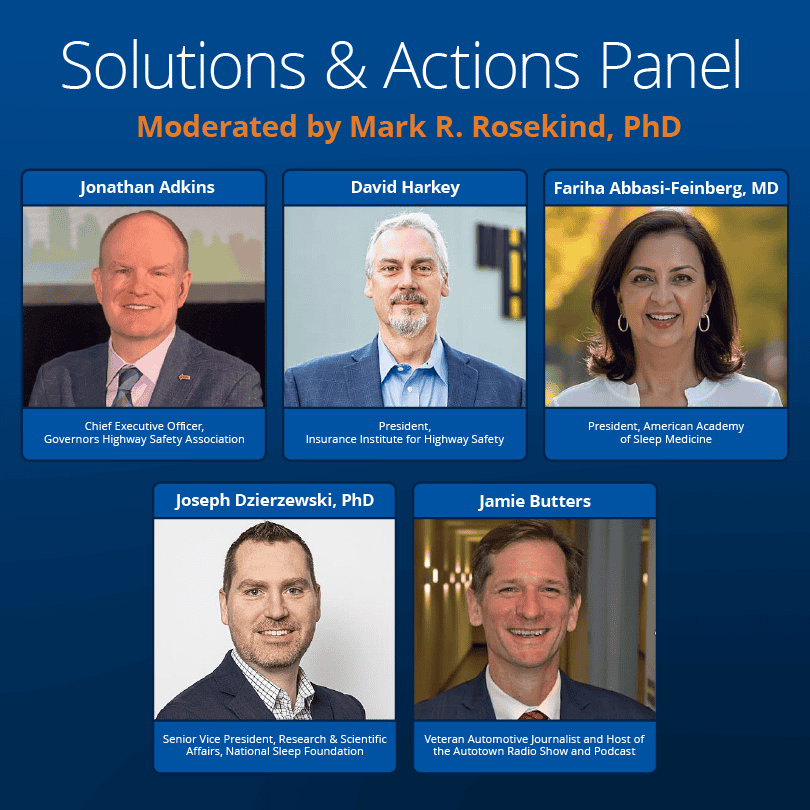
The Solutions & Actions Panel opened with the first public presentation of findings from the National Sleep Foundation’s 2026 Drowsy Driving Report, the source of the 61% figure. Joseph Dzierzewski, PhD, the foundation’s senior vice president of research and scientific affairs, joined the panel to discuss how the evidence could be translated into practice.
Also on that panel were Jonathan Adkins, chief executive officer of the Governors Highway Safety Association; David Harkey, president of the Insurance Institute for Highway Safety; Fariha Abbasi-Feinberg, MD, president of the American Academy of Sleep Medicine; and Jamie Butters, a veteran automotive journalist and host of the Autotown radio show and podcast. Panelists focused on the collaboration needed to put evidence-based strategies to work.
NHTSA, NTSB and the Alliance for Automotive Innovation Lead the Discussion
The Leadership Panel addressed national priorities, emerging roadway safety challenges and ways to reduce crashes attributed to drowsy driving. Speakers were Jonathan Morrison, administrator of the National Highway Traffic Safety Administration; Thomas Chapman, a member of the National Transportation Safety Board; and John Bozzella, president and chief executive officer of the Alliance for Automotive Innovation.
Mark R. Rosekind, PhD, moderated the forum. Rosekind chairs the board of the National Sleep Foundation and previously served as NHTSA administrator and as an NTSB member. In remarks released after the event, he said the forum brought together, for the first time, the leaders who regulate roads, investigate crashes, build vehicles and advocate for sleep, all speaking the same language about the need to do more. “The science is strong and the public is asking for more to be done,” Rosekind said, adding that the task ahead is to turn the conversation into lifesaving action.
John Lopos, chief executive officer of the National Sleep Foundation, described drowsy driving as impaired driving with catastrophic effects and said the forum showed that the nation’s roadway safety leaders understand the problem and are positioned to do more. The foundation convened the group as part of a call to action, Lopos said, and remains committed to the message that adequate sleep is the first and best way to stay alert behind the wheel.
National Sleep Foundation Announces a Video Series and Resource Site
Two new projects were announced at the forum. The first is a Drowsy Driving Forum video series: recordings of both panels will be released in early 2027, allowing safety professionals, policymakers, educators and the public to watch the full discussions on demand at theNSF.org.
The second is a new Drowsy Driving Resource Site, a central hub of evidence-based materials on the foundation’s website. It will include the 2026 Drowsy Driving Report, the foundation’s Drowsy Driving Position Statement, shareable infographics and the participation toolkit for Drowsy Driving Prevention Week. It will also offer guidance for teen drivers, parents, shift workers and employers. The report and related resources can be downloaded at thensf.org/drowsy-driving-prevention.
Waymo, Mazda and Zoox Back Drowsy Driving Prevention Week
The forum served as a springboard for the foundation’s annual Drowsy Driving Prevention Week, held November 1 through 7, 2026. The week coincides with the end of Daylight Saving Time, a seasonal shift the foundation notes can disrupt sleep and create safety risks. This year’s campaign theme was Sleep First. Drive Alert.
Sponsors of the 2026 campaign were Waymo, Mazda, WHG, Zoox, Higi and the National Road Safety Foundation. Collaborators included the Governors Highway Safety Association, the American Academy of Sleep Medicine, MADD, the Autonomous Vehicle Industry Association, PAVE and Responsibility.org, among others.
About the National Sleep Foundation
Founded in 1990, the National Sleep Foundation is an independent nonprofit organization dedicated to improving health and well-being through sleep education and advocacy. Over more than 35 years, it has promoted sleep health through expert recommendations, consensus guidelines, technology standards and evidence-based tips and tools. More information is available at theNSF.org and SleepHealthJournal.org.