Caribou Survey Shows Nearly Every Driver Has Changed Habits Over Fuel Costs
According to Caribou, nearly every driver surveyed has altered their behavior because of fuel costs in the past six months. Most of those changes began at the pump. The most common measures were finding cheaper gas stations, reported by 43 percent of respondents, followed by driving less at 42 percent and using fuel discounts or memberships at 40 percent.
Some of the adjustments reached further into household budgets. Twenty-six percent of drivers, more than one in four, said they have cut spending on groceries or household essentials to afford gas, and 22 percent said they have delayed vehicle maintenance or repairs.
Fuel prices also appear to be influencing what drivers want to buy next. Among owners of gas and diesel vehicles, 48 percent told Caribou that higher gas prices have increased their interest in a hybrid, compared with 38 percent who said the same of a fully electric vehicle.
Caribou Data Points to Slimmer Holiday Budgets and Altered Travel Plans
The survey release notes that gas prices have eased in recent weeks but remain high for this time of year, and the effects are showing up in holiday plans. Forty-four percent of drivers said they are spending less on gifts this season, and 33 percent said they are buying for fewer people.
Travel is shifting as well. Seventy-one percent of respondents are adjusting their holiday travel plans in some way. Thirty-six percent are taking fewer trips, and 24 percent are skipping a trip they would normally take.
Caribou Respondents Rank the Car Ahead of Dining Out and Vacations
When asked to choose the word that best describes what their car means to them, drivers most often selected “necessity” at 40 percent. “Freedom” followed closely at 35 percent, and “self-expression” came third at 12 percent.
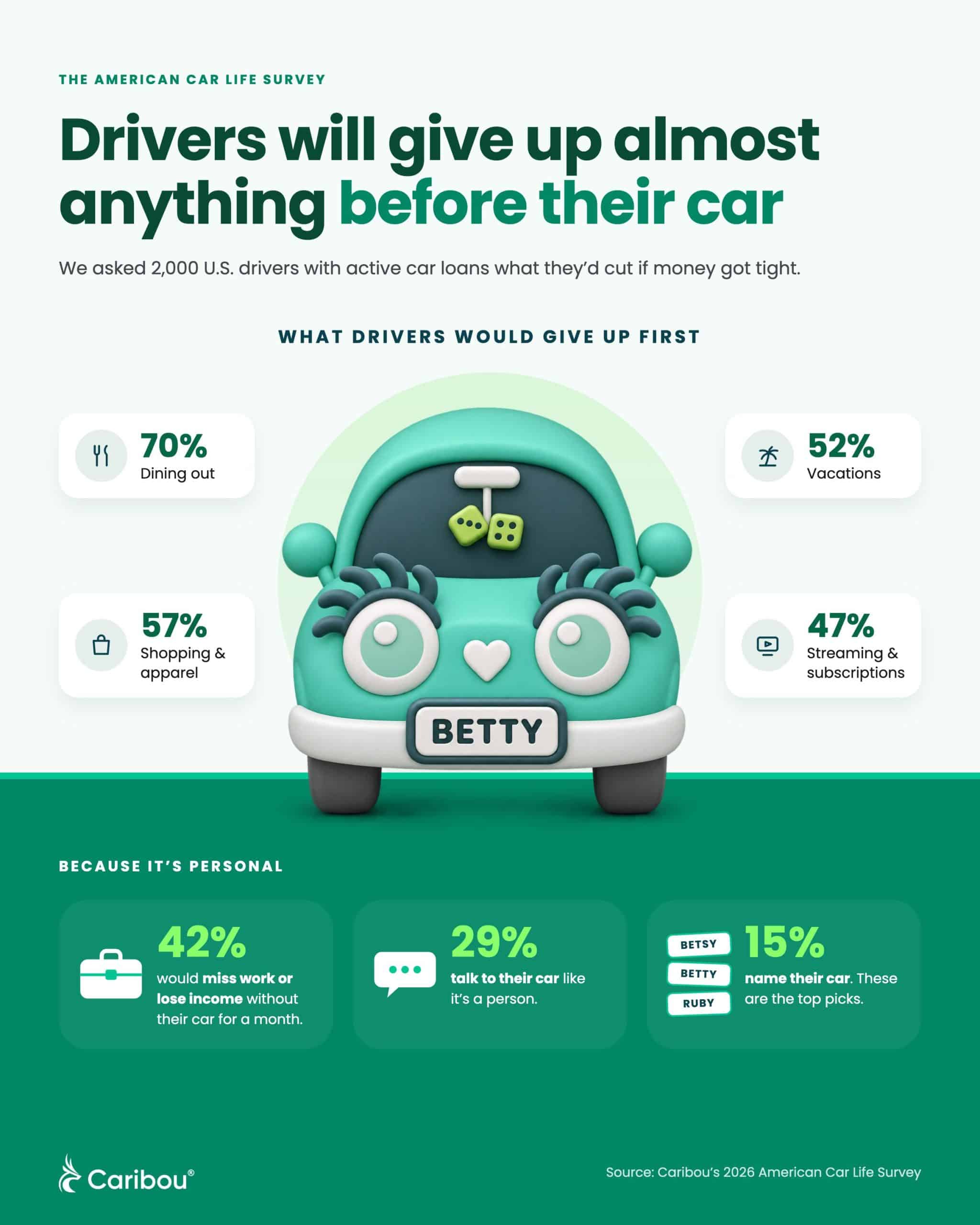
The willingness to give up other things before the car was pronounced. Asked what they would drop if they needed to reduce monthly expenses, 70 percent said they would give up dining out and takeout before their vehicle, and 52 percent said they would give up travel and vacations.
The survey also measured what losing access to a car would mean in practical terms. If they could not drive for a month, 47 percent of respondents said they would struggle to get groceries or other essentials, and 42 percent said they would miss work or lose income.
Simon Goodall, CEO of Caribou, framed the findings around that dependence. Goodall said a car is how most people get to work, bring children to school and carry groceries home, which makes giving it up “not a real option.” He described the respondents as families doing everything they can to stay on the road.
Caribou Findings Reveal the Personal Bonds Drivers Form With Their Cars
The survey also explored the emotional side of ownership. Twenty-nine percent of drivers said they talk to or about their cars as though they were people, and 15 percent have given their vehicle a name. Betsy, Betty and Ruby were among the most popular choices.
Style plays a notable role in how drivers choose their vehicles. When asked what mattered most in picking a color, 44 percent cited personal style, ahead of cost at 27 percent and resale value at 18 percent.
Personalization is common, too. Forty-three percent of respondents keep accessories or decorations in their cars, and 22 percent have customized or modified their vehicles. Younger drivers lead on that measure: 30 percent of Gen Z drivers have customized or modified their vehicle, compared with 16 percent of Gen X and 7 percent of Boomers.
Caribou Survey Finds Drivers Willing to Pay More for Connected Features
Even as they trim spending elsewhere, many drivers indicated they would pay for technology that makes driving more convenient, connected and secure. Thirty percent of respondents said they want as much in-car technology as possible, including optional upgrades and the latest features.
Subscriptions appear to be an accepted model for that technology. Seventy-two percent of drivers said they would pay a monthly fee for at least one vehicle feature, with in-car Wi-Fi, remote start or locking, and stolen-vehicle tracking among the most popular options named.
Caribou Points to Auto Loan Refinancing as One Option
Goodall noted in the company’s announcement that the car loan is often a bill many drivers have not reviewed since leaving the dealership lot. He said refinancing may be one way to lower a monthly payment and ease some pressure without giving up the vehicle.
Caribou describes itself as a leading auto refinance marketplace that helps drivers find a better loan on a car they already own. According to the company, its AI-powered platform searches thousands of rates across its network of lenders in seconds to surface personalized options. Caribou says it is backed by QED Investors, Goldman Sachs and other investors.
About the Caribou Survey
The findings come from a survey commissioned and published by Caribou, a company that sells auto refinancing services. Respondents were limited to U.S. drivers with an active car loan on their primary vehicle, so the results reflect that group rather than all American drivers. Full findings from the 2026 American Car Life Survey are available at caribou.com.