A Free Feature With a Strategic Purpose
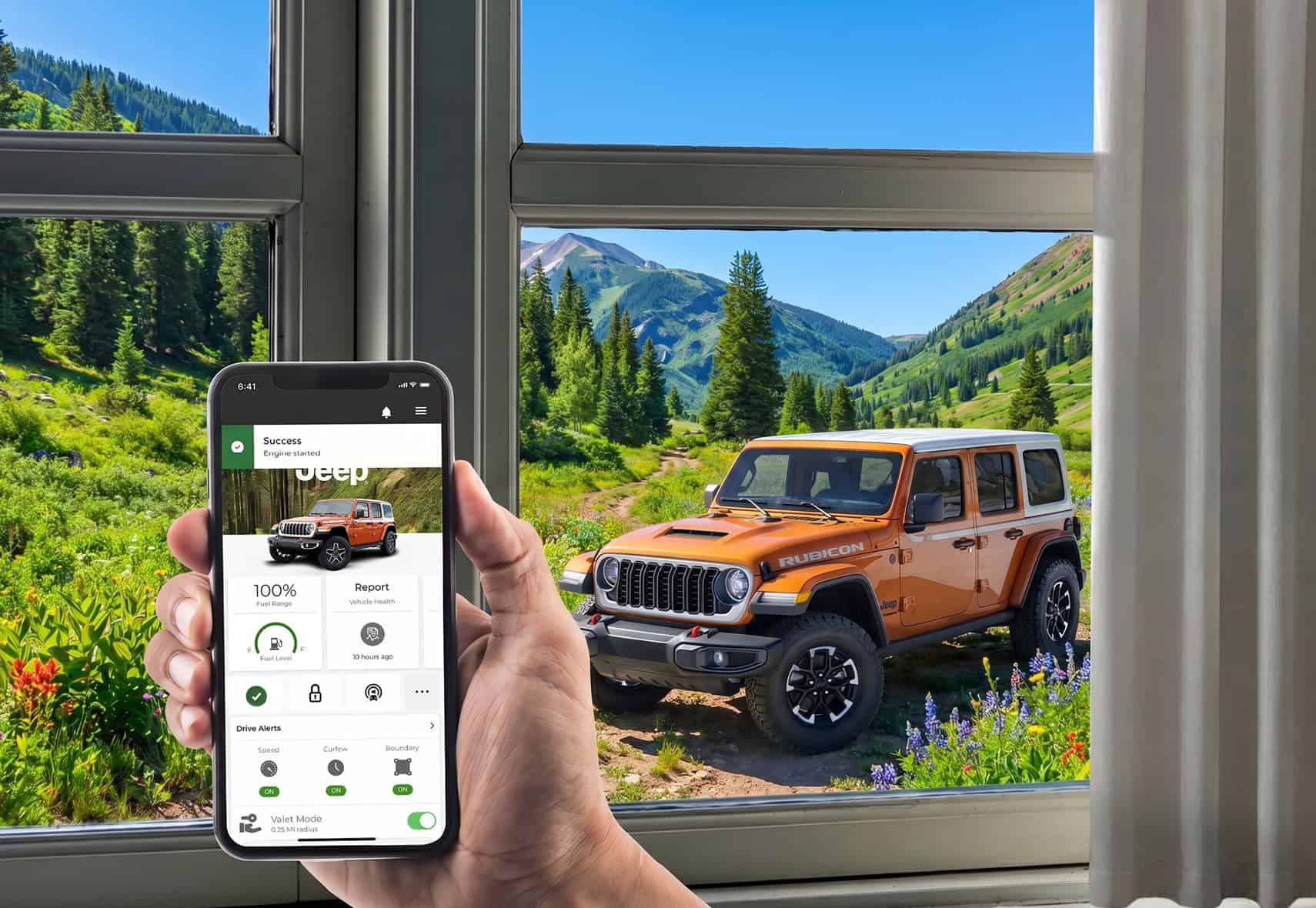
Connect One already provided a decade of remote lock and unlock, over-the-air software updates, monthly vehicle health reports, recall alerts, service scheduling and automatic crash notifications at no extra charge. Adding remote start to that free tier is a notable shift: it takes one of the most requested connected-car features and removes the paywall entirely, rather than reserving it for a premium add-on.
“Our customers told us they value connected services that matter in real life, and remote start is exactly that,” said Ricardo Stamatti, head of the Stellantis software business unit. “On a cold Minnesota morning or a hot Texas afternoon, being able to warm up or cool down your vehicle from your phone is not a gimmick; it is technology showing up when people need it.”
The remaining paid tier, Connect Wi-Fi Plus, still carries the features aimed at habitual use rather than emergencies: an unlimited-data hotspot for up to eight devices, remote horn and light activation, stolen vehicle assistance, and a suite of connected navigation tools including last-mile routing, parking and fuel finders, and speed camera alerts.
The move lands at a moment when automakers across the industry are recalibrating how they price connectivity. Consumer willingness to pay for connected car services has softened sharply industry-wide: S&P Global Mobility’s 2025 Connected Car Study found that only 68 percent of drivers said they would consider paying for connected car services, down from 86 percent the year before.
That decline has left automakers searching for a formula that avoids what industry analysts have taken to calling subscription fatigue — the sense among car buyers that too many once-standard features have quietly migrated behind a monthly toll. By making remote start free and permanent for a decade rather than metered, Stellantis appears to be trying to rebuild goodwill on features drivers already expect their vehicle to have, while concentrating its subscription revenue push on genuinely incremental services like unlimited data and advanced navigation.
The strategy also varies by nameplate. Buyers of the 2027 Jeep Grand Wagoneer, Wagoneer S and Alfa Romeo vehicles receive ten years of Connect One plus three years of Connect Plus at no extra charge, alongside a discounted or trial Wi-Fi hotspot rate. Jeep Compass and Dodge Durango, which run on the SiriusXM Guardian platform rather than the standard Stellantis stack, get their own bundle: ten years of safety and vehicle-performance services plus a three-month trial of assistance and navigation features.
Stellantis is also expanding factory-bundled satellite radio access. Dealers can now order 2027 vehicles with a three-year SiriusXM Extended Service Subscription built into the sticker price at a discount, and a new dealership finance-office program called FlexCare Sounds allows buyers to add that same three-year subscription for up to 75 days after purchase.
Connectivity as the New Baseline, Not the Upsell
The broader lesson embedded in Stellantis’s announcement is one the entire industry is still working out: which connected features count as a car simply doing its job, and which count as a service worth billing for. As over-the-air updates and embedded modems become standard equipment on nearly every new vehicle sold, automakers are drawing that line in different places. Stellantis, at least for now, has decided that a warm windshield on a January morning belongs on the free side of it.