The update, designated UX 3.6, arrives as the Newark, Calif.-based automaker continues its push to establish the Gravity as the benchmark for software-defined luxury electric vehicles. The package is available now for Gravity owners in the United States and Canada; international availability will be announced separately.
Hands-Free Drive Assist via DreamDrive 2 Pro
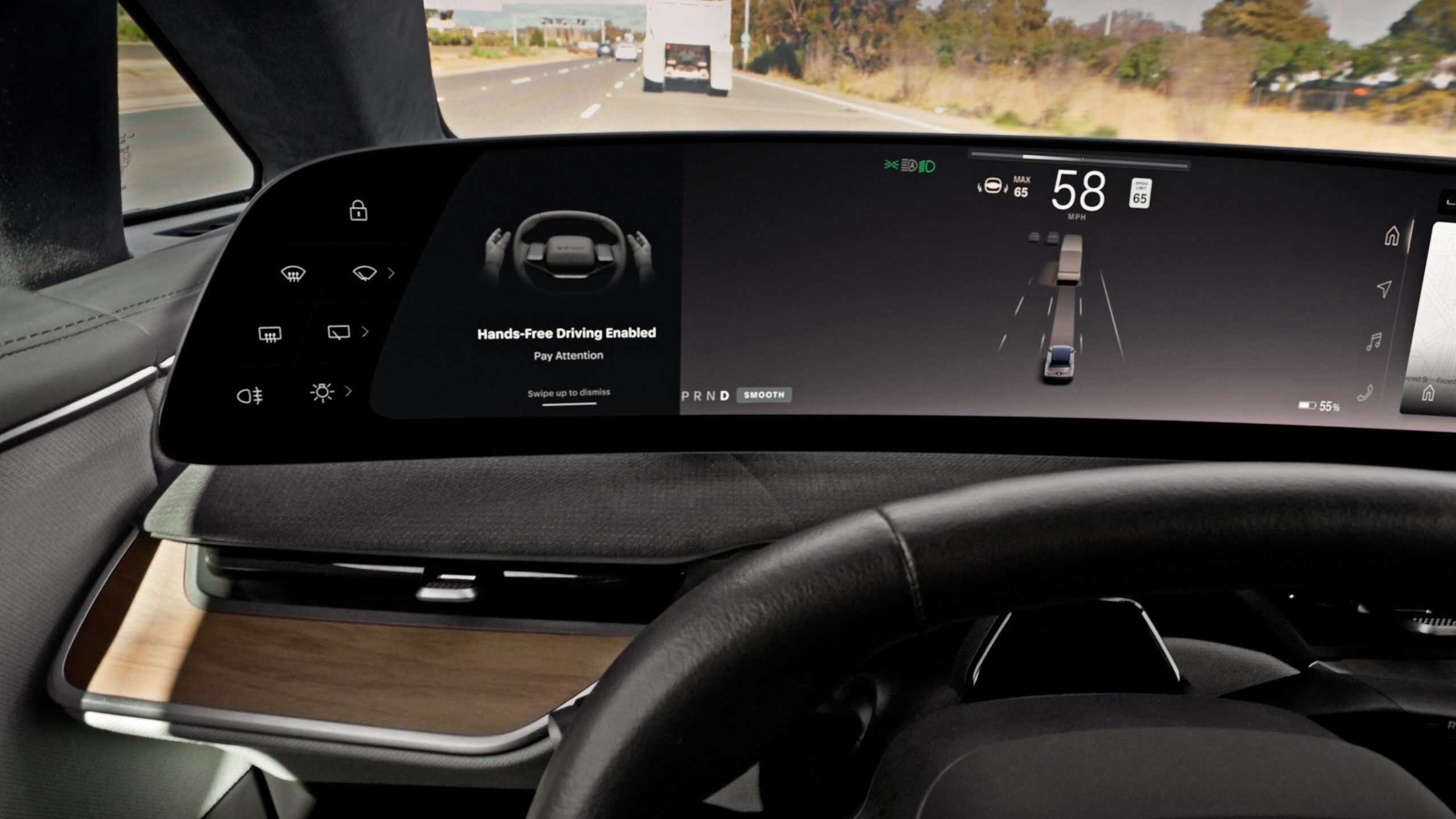
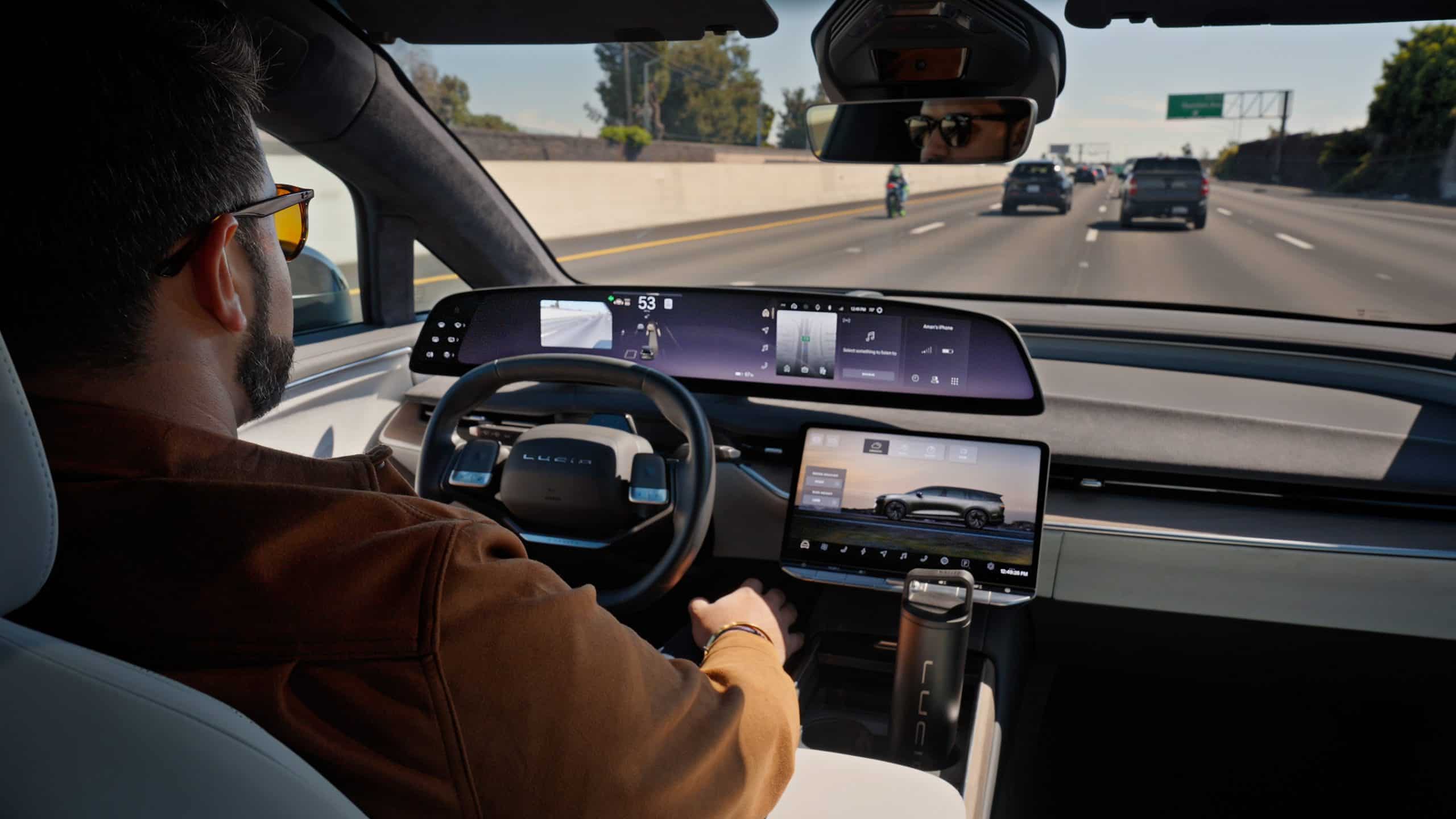
Hands-Free Drive Assist supports steering, acceleration, and braking on compatible highways.
The system allows drivers to take their hands off the wheel while keeping their attention on the road.
The update also introduces Hands-Free Lane Change, which can execute a lane shift into an adjacent gap when the driver signals, and Automatic Lane Change, which can initiate passing maneuvers around slower traffic without a driver prompt.
Lucid notes that DreamDrive 2 Pro is not a substitute for attentive driving; the system requires the driver to remain focused on the road and surroundings at all times.
Adaptive Driving Beam headlights—which maintain high-beam illumination while dynamically masking the light to avoid blinding oncoming drivers—are also part of this update. That feature is available on both DreamDrive 2 Premium, now standard on all 2027 Gravity trims, and DreamDrive 2 Pro.
Smarter Navigation Through Google Integration
Lucid Navigation now draws on the Google Maps Places API, enriching search results with business ratings, photos, and parking information. Charging station listings gain improved real-time availability data and recent imagery—a practical upgrade for owners planning longer trips.
Charging Transparency Before You Plug In
Two new features address battery management. Advanced Preconditioning View gives drivers a clearer picture of battery temperature status before arriving at a charger. Predictive Charging Power forecasts expected peak charge rates, helping owners time stops more efficiently. Together, the features extend Lucid’s existing preconditioning capability—which warms or cools the battery en route to a DC fast-charger—with a layer of upfront visibility that was previously unavailable.
Context: Where the Gravity Stands
The Gravity competes in a thinning field of long-range electric three-row SUVs. The 2027 Touring’s 337-mile EPA range and the Grand Touring’s 450-mile figure remain class-leading figures. With the Model X winding down production, the Gravity’s primary competition comes from the Rivian R1S and, at a lower price point, the Kia EV9.
On hands-free driving, Lucid currently holds a meaningful advantage over both. Rivian does offer a comparable feature—its Universal Hands-Free system, part of the Autonomy+ package—but the model differs. After a 60-day trial, R1S owners pay $49.99 per month or a one-time $2,500 fee tied to the vehicle’s VIN. The feature set is also still incomplete: Lane Change on Command is available, but Auto Parking and On-Ramp to Off-Ramp routing are not expected until later in 2026. Universal Hands-Free is also limited to second-generation R1 hardware (mid-2024 production and later). Lucid’s DreamDrive 2 Pro, by contrast, is a one-time $6,750 option, includes LiDAR, and delivers automatic lane changes—including unprompted passing maneuvers—at launch.
The Kia EV9 has not reached hands-free capability. Its Highway Driving Assist 2 is a hands-on system that uses a Hands-On Detection sensor to confirm the driver is maintaining contact with the wheel. Kia has not announced a hands-free feature for the EV9.
Full details on the UX 3.6 update are available at lucidmotors.com/stories/lucid-gravity-ux-3-6.