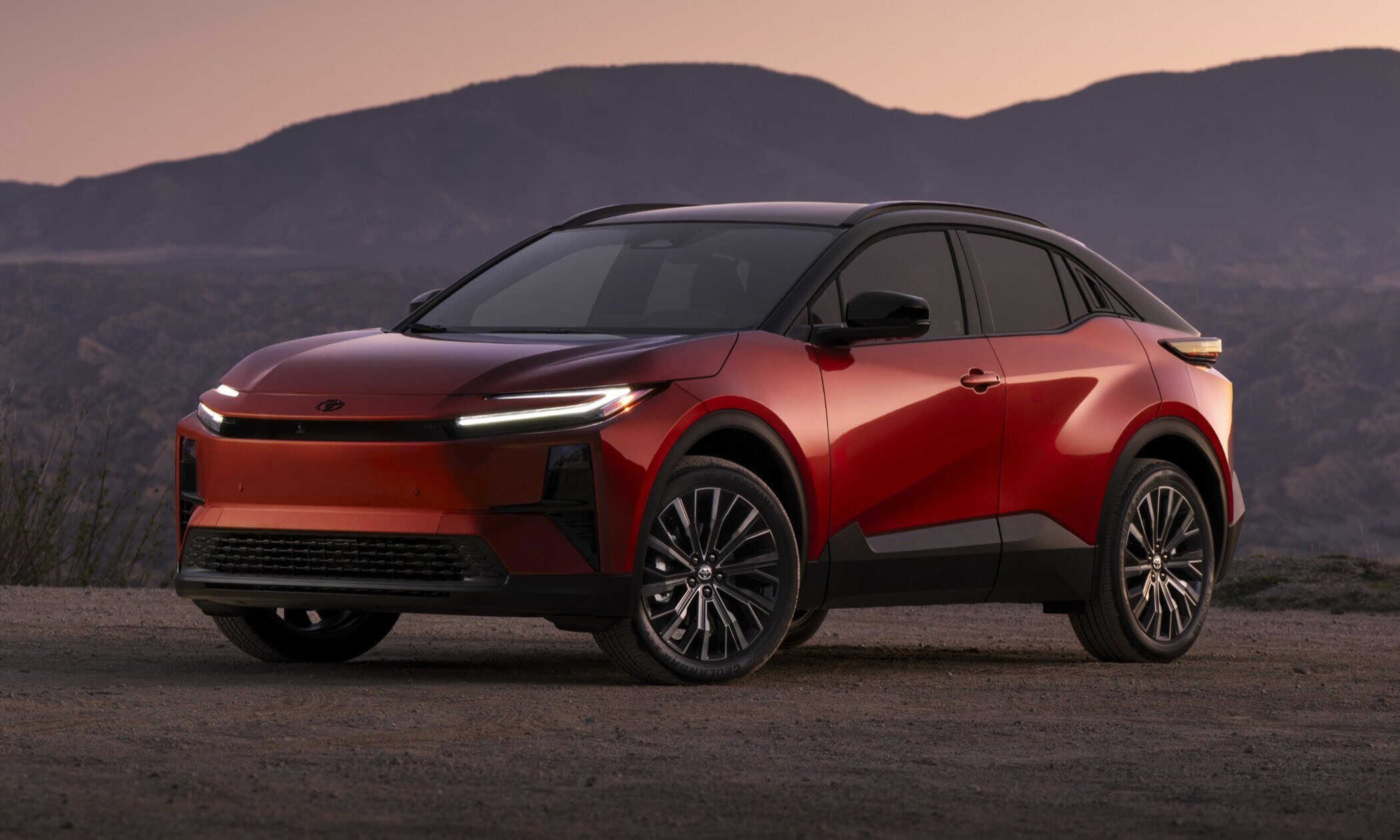
Toyota announced the return of the C-HR as an all-new battery electric vehicle launching in March 2026. Built on the e-TNGA dedicated BEV platform alongside the bZ4X and bZ Woodland, the compact SUV features standard dual-motor all-wheel drive delivering 338 net combined system horsepower. The powertrain enables a 0-60 mph acceleration time of 4.9 seconds, supported by a 74.7-kWh lithium-ion battery pack with rang of up to 287 miles, and a low center of gravity for enhanced vehicle rigidity and agility.
The 2026 C-HR is equipped with a North American Charging Standard charge port, facilitating 10-80 percent DC fast-charging in approximately 30 minutes. Range is EPA-estimated at 287 miles for the SE grade and 273 miles for the XSE. Interior specifications include a 14-inch touchscreen running Toyota Audio Multimedia, customizable ambient lighting, and up to 59.5 cubic feet of cargo volume. Pricing starts at $37,000, with standard safety features provided via Toyota Safety Sense 3.0.
Dedicated E-TNGA Architecture And Performance
The transition of the C-HR from a hybrid-focused global platform to the dedicated e-TNGA battery electric vehicle architecture marks a significant pivot in Toyota’s North American electrification strategy. By utilizing the e-TNGA platform, engineers placed the 74.7-kWh lithium-ion battery pack low within the chassis, encased in a cross-framing structure. This design increases overall vehicle rigidity while lowering the center of gravity, a critical factor for maintaining the athletic handling characteristics associated with the C-HR nameplate.
The dual-motor electronic all-wheel-drive system utilizes front and rear eAxles to manage power distribution dynamically. The combined system output of 338 horsepower and specialized torque ratings—198 lb.-ft. at the front and 125 lb.-ft. at the rear—provides the traction necessary for a sub-five-second 0-60 mph sprint. Beyond raw acceleration, the vehicle features steering wheel-mounted paddle shifters that allow drivers to modulate regenerative braking across four distinct levels, optimizing energy recovery during deceleration in urban environments.
Charging Infrastructure And Thermal Management
To address charging accessibility, Toyota has integrated the North American Charging Standard (NACS) port as standard equipment. This allows the C-HR to interface directly with high-speed DC fast-charging networks without the need for adapters in many scenarios. Under optimal conditions, the vehicle supports a 10-80 percent state-of-charge (SoC) replenishment in roughly 30 minutes.
Integrated Authentication And Thermal Management
The 2026 C-HR incorporates Plug & Charge capability, utilizing industry-standard protocols to streamline the DC fast-charging experience. This feature enables automatic identification, authentication, and authorization at compatible charging networks, effectively removing the requirement for secondary mobile applications or physical payment cards at the terminal. By centralizing the handshake process between the vehicle and the charging infrastructure, Toyota aims to reduce friction in the public charging ecosystem and improve session success rates for fleet and retail operators.
To optimize charging curves, the C-HR features a dedicated battery preconditioning system. This thermal management function prepares the lithium-ion cells for high-kilowatt intake by reaching an ideal temperature prior to arrival at a charging site. Users can initiate the preconditioning cycle manually via the vehicle’s system settings or allow the software to automate the process. When a fast-charging station is set as a destination in the cloud-based navigation system via an active Drive Connect subscription, the vehicle dynamically manages thermal loads to ensure the 10-80 percent SoC target is achieved within the specified 30-minute window.
Aerodynamics And Interior Ergonomics
The 2026 C-HR retains its signature “hammerhead” front-end aesthetic while adopting a more streamlined coupe-like silhouette to reduce aerodynamic drag. The wide stance is complemented by a short overall length of 177.9 inches and a wheelbase of 108.3 inches, optimizing cabin volume without expanding the exterior footprint. This configuration yields 25.3 cubic feet of cargo space behind the second row, expanding to nearly 60 cubic feet when the 60/40 split-folding seats are deployed.
The interior environment prioritizes digital integration, anchored by a 14-inch high-definition touchscreen. The system supports wireless Apple CarPlay and Android Auto, while the Toyota app enables Remote Connect features such as climate scheduling, rear hatch operation, and real-time charging status monitoring. The XSE grade further enhances the cabin with synthetic suede-trimmed seats, an 8-way power passenger seat, and an available 800-watt JBL premium audio system featuring nine speakers and an 8-channel amplifier.
Safety Systems And Driver Assistance
Standard across all grades is Toyota Safety Sense 3.0 (TSS 3.0), which utilizes an upgraded suite of sensors to provide Proactive Driving Assist (PDA) and Pre-Collision Systems with Pedestrian Detection. The PDA system offers gentle braking into curves and distance control between pedestrians or cyclists. Additional standard safety hardware includes Blind Spot Monitor (BSM) and Rear Cross-Traffic Alert (RCTA).
New to the C-HR is Safe Exit Alert, a system designed to detect approaching vehicles or cyclists from the rear to prevent “dooring” accidents. For higher-tier grades, Toyota includes Traffic Jam Assist and Lane Change Assist, which facilitate semi-autonomous maneuvers in congested highway conditions. These systems are supported by persistent 4G connectivity and a five-year trial of Safety Connect and Service Connect, ensuring owners have access to emergency assistance and vehicle health reports.
Market Positioning And Warranty
Starting at $37,000, the C-HR BEV positions itself as a premium entry in the compact electric crossover segment, slotting between the more rugged bZ Woodland and the standard bZ4X. The vehicle comes with a comprehensive warranty package, including an 8-year or 100,000-mile coverage for electric driving components and the traction battery. ToyotaCare also covers factory-scheduled maintenance for two years or 25,000 miles, emphasizing the manufacturer’s commitment to total cost of ownership in the burgeoning BEV market.