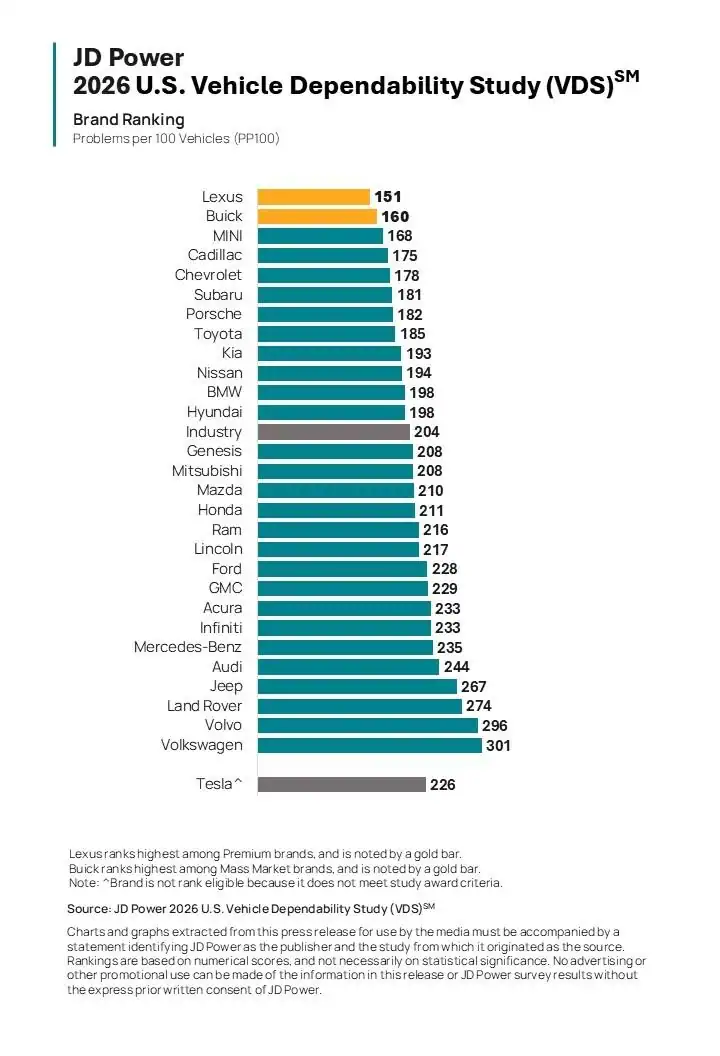
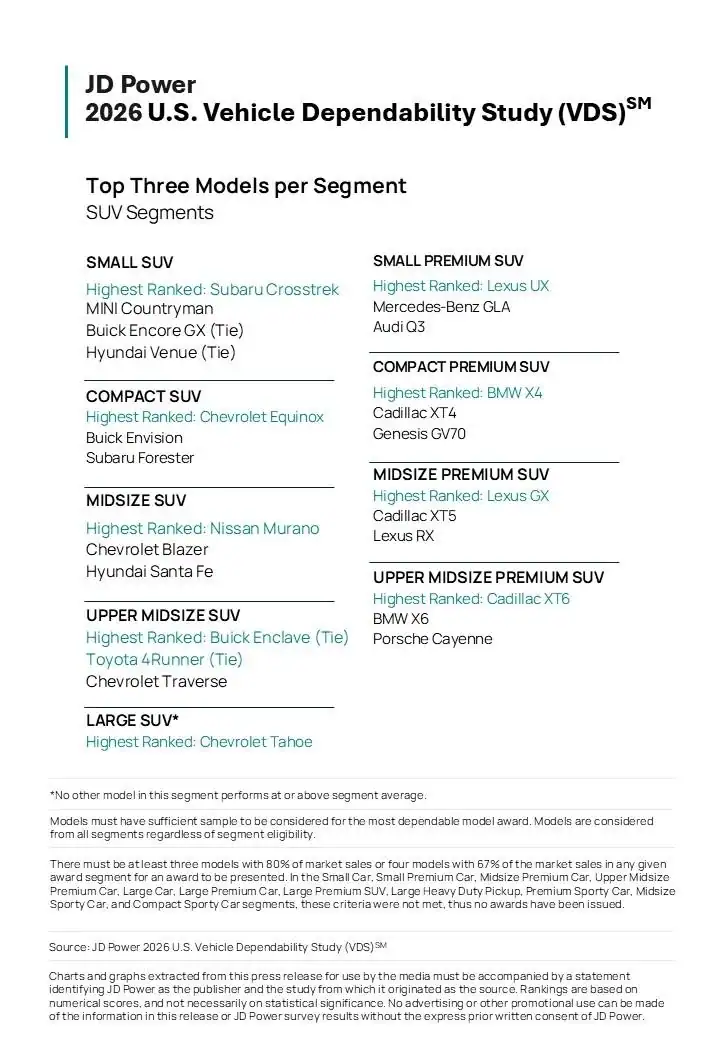
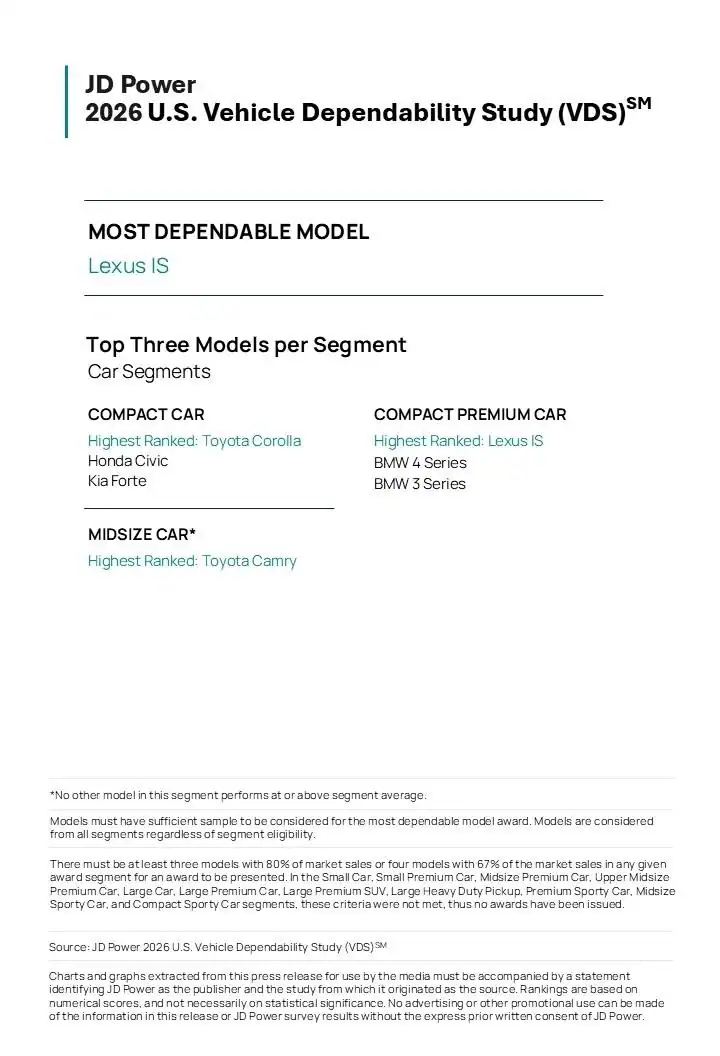
The J.D. Power 2026 U.S. Vehicle Dependability Study (VDS) indicates that long-term vehicle quality has reached its lowest point since the study’s significant redesign in 2022. The industry average has escalated to 204 problems per 100 vehicles (PP100), representing a 2-point increase over the 2025 results. This degradation in dependability is largely attributed to the increasing complexity of vehicle software and the integration of sophisticated infotainment systems. Historically, vehicle age was the primary predictor of failure, but modern code-heavy architectures have shifted the focus toward electronic stability and digital performance across the ownership lifecycle.
Infotainment remains the most significant category of failure, accounting for 56.7 PP100. Within this category, users continue to struggle with mobile phone integration, specifically Android Auto and Apple CarPlay connectivity, which remains the top industry-wide issue for the third consecutive year at 8.9 PP100. Secondary infotainment failures include built-in Bluetooth systems at 5.5 PP100 and wireless charging pads at 5.1 PP100. These hardware-software interface points are increasingly critical as consumers rely on seamless smartphone mirroring for navigation and media, making any disruption a major detractor from perceived reliability.
Communication Gaps Erode Consumer Confidence In Digital Updates
Together with OEM app connectivity issues, these technology-focused friction points represent nearly half of all infotainment-related complaints. Jason Norton, director of auto benchmarking at J.D. Power, suggests that the gap between technological implementation and owner satisfaction is widening, as software updates often fail to deliver perceptible benefits. Furthermore, many updates actually introduce new glitches that disrupt the long-term ownership experience. Automakers must prioritize meaningful improvements and clearly communicate the intended benefits of these digital interventions to avoid alienating a customer base that is increasingly wary of the software-defined vehicle (SDV) trend.
Premium Brands Lag Mass Market Counterparts In Technical Stability
The performance gap between premium and mass-market vehicles has widened to 17 PP100, with premium makes averaging a disappointing 217 PP100. This represents an 8-point year-over-year increase for high-end brands, which now underperform their mass-market counterparts in seven of nine major study categories. The most pronounced disparities appear in features, controls, and displays (FCD), where premium vehicles lag by 5.8 PP100, followed by the driving experience category with a 3.4 PP100 delta. Only the powertrain and seats categories show better performance among premium makes, highlighting a failure in the digital cabin experience.
Software-driven architecture is a primary culprit for this decline in the luxury segment. While 40% of owners reported receiving a software update in the past year, 63% of which were delivered over-the-air (OTA), the results were largely mixed. More than half of these owners perceived no noticeable improvement to their vehicle, and update-related problems actually rose by 14% this year. This data suggests that while OTA capabilities are intended to enhance vehicle life cycles and reduce dealership visits, they are currently contributing to owner frustration due to a lack of technical execution and poor user interface communication regarding update status.
Electrification Complexity Presents Major Dependability Hurdles
Powertrain electrification continues to present a significant hurdle for long-term reliability compared to traditional internal combustion engines. Plug-in hybrid electric vehicles (PHEVs) are the most problematic segment in the study, soaring 39 PP100 year-over-year to a total of 281 PP100. Battery electric vehicles (BEVs) and traditional hybrids also saw increases of 14 PP100 each, reaching 237 and 213 PP100 respectively. The complexity of managing dual propulsion systems in PHEVs appears to be the most volatile variable in current automotive engineering, leading to significantly higher failure rates than even pure electric models.
In stark contrast, gas-powered vehicles saw their dependability improve slightly to 198 PP100, making them the most reliable powertrain type in the current market. In terms of brand performance, Lexus retained its position at the top of the premium segment for the fourth year with 151 PP100, followed by Cadillac and Porsche. Buick led the mass-market segment for the second year with 160 PP100, ahead of MINI and Chevrolet. This year’s results underscore that simpler, established mechanical systems still outperform the latest high-voltage and high-compute configurations that are being rushed to market.
Toyota And GM Lead Individual Model Dependability Rankings
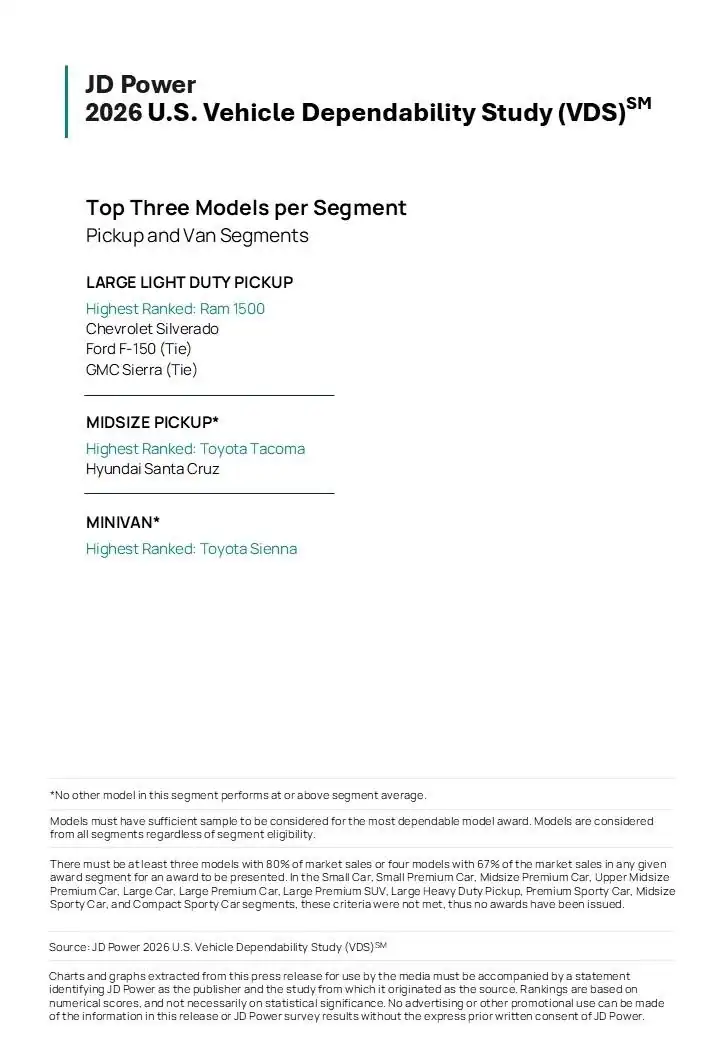
Toyota Motor Corporation dominated the model-level awards, with the Lexus IS earning the title of top overall model and the company receiving eight individual awards for vehicles including the Corolla, Camry, Tacoma, Sienna, and 4Runner. General Motors followed with four awards, including the Buick Enclave and Chevrolet Tahoe. Looking ahead, J.D. Power plans to enhance the 2027 study with year-round data collection and integrated verified repair data. This shift, beginning in April 2026, aims to help OEMs identify and mitigate these systemic software and powertrain regressions earlier, reinforcing trust and long-term brand loyalty in an era of rapid technological transition.
Manage Cookie Consent
To provide the best experiences, we use technologies like cookies to store and/or access device information. Consenting to these technologies will allow us to process data such as browsing behavior or unique IDs on this site. Not consenting or withdrawing consent, may adversely affect certain features and functions.
Functional
Always active
The technical storage or access is strictly necessary for the legitimate purpose of enabling the use of a specific service explicitly requested by the subscriber or user, or for the sole purpose of carrying out the transmission of a communication over an electronic communications network.
Preferences
The technical storage or access is necessary for the legitimate purpose of storing preferences that are not requested by the subscriber or user.
Statistics
The technical storage or access that is used exclusively for statistical purposes.The technical storage or access that is used exclusively for anonymous statistical purposes. Without a subpoena, voluntary compliance on the part of your Internet Service Provider, or additional records from a third party, information stored or retrieved for this purpose alone cannot usually be used to identify you.
Marketing
The technical storage or access is required to create user profiles to send advertising, or to track the user on a website or across several websites for similar marketing purposes.