A Decade of Cars Talking to Each Other
Volvo’s connected safety technology dates back to 2016, when the company began experimenting with a simple but powerful idea: cars equipped with sensors could share what they detect on the road with other cars nearby, effectively turning every vehicle into a moving sentinel for the ones behind it. A Volvo that hits a patch of black ice, for instance, can flag that hazard so that a following driver gets an early warning before reaching the same stretch of pavement. Over the years the system has grown quietly in the background of Volvo ownership, and the company says more than a million vehicles now have the feature active, each one contributing to what it describes as a collective safety effort among drivers who may never meet each other.
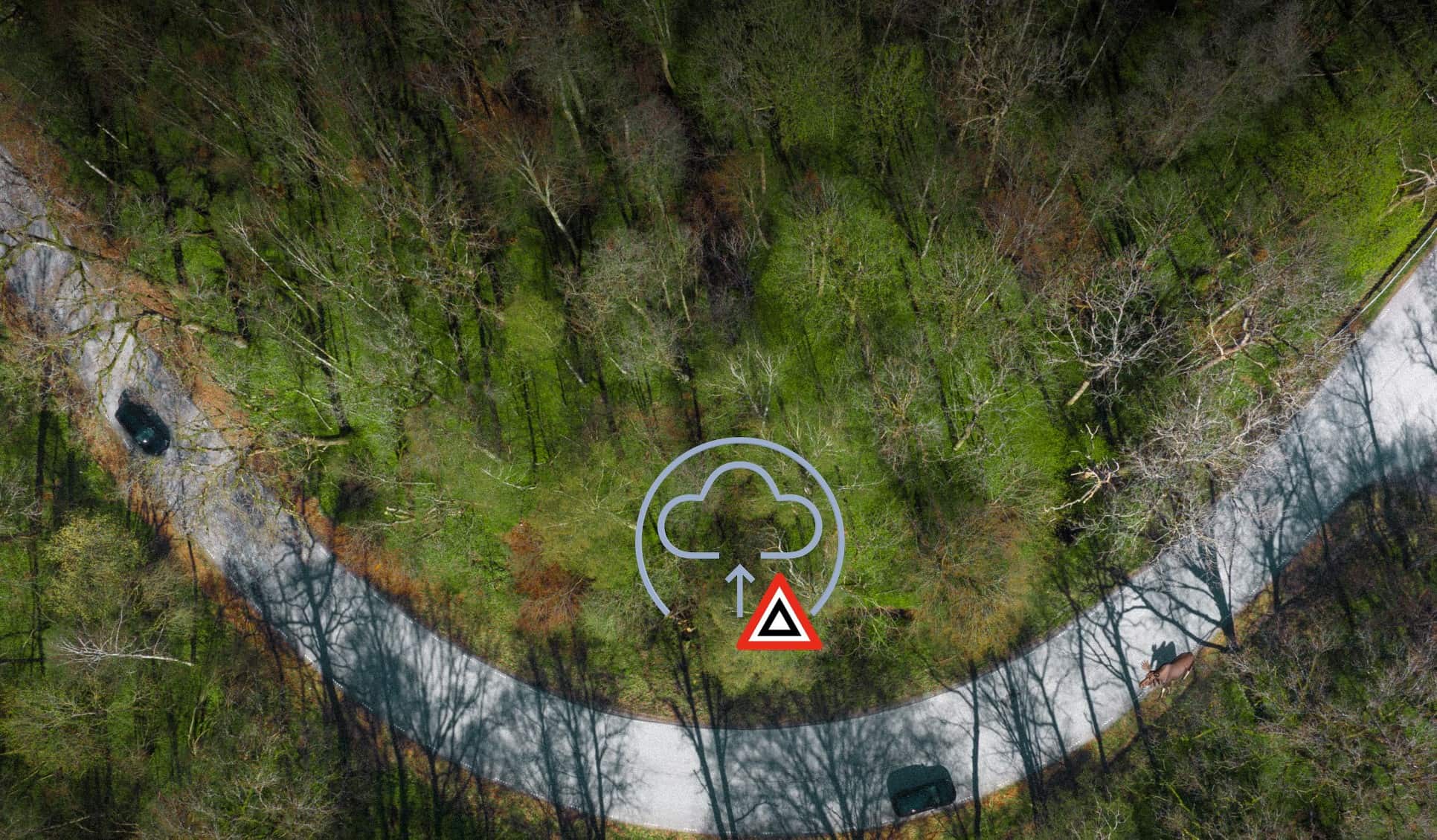
The latest update introduces four additions to that alert library. The Large Animal Alert can notify drivers when a large animal has been detected on or near the road ahead, a feature with particular relevance on rural highways where deer, elk, and other wildlife create sudden and often dangerous encounters. The Vulnerable Road User Alert extends similar early warning to pedestrians and cyclists spotted near highways, addressing one of the more persistent gaps in driver awareness on higher-speed roads. The Roadwork Alert flags construction zones before drivers reach them, and the Accident Ahead Alert draws on real-time data from both connected Volvo vehicles and traffic management centers to warn of collisions further down the road.
Each of the new alerts is designed to work alongside features that already exist in Volvo’s connected safety suite, including the Slippery Road Alert and the Hazard Light Alert. Together, Volvo says, the expanded system is meant to give drivers more time to adjust their speed, change lanes, or otherwise prepare for conditions they cannot yet see themselves, a benefit the company argues is especially meaningful on winding roads or in poor weather, where visibility is already compromised.
Åsa Haglund, head of the Volvo Cars Safety Centre, framed the update as an extension of the company’s broader safety philosophy. “Every time a Volvo car shares safety intelligence, it helps other drivers prepare earlier to avoid accidents and feel safer,” Haglund said.
Sharing Data Beyond Volvo’s Own Fleet
One detail that sets the update apart from a typical feature rollout is where the data goes once it leaves a Volvo vehicle. Through the European Data for Road Safety ecosystem, the hazard information collected by Volvo’s connected cars can be shared not just among Volvo owners but with vehicles from other manufacturers and with national traffic management centers. That cross-brand sharing arrangement reflects a broader trend in the auto industry, where automakers are increasingly willing to pool safety-relevant data even as they compete fiercely on nearly everything else, on the theory that a hazard warning is more useful the more cars it reaches.
The new alerts will roll out to the Volvo EX60, EX90, and ES90 in Europe, the United States, and Canada, though Volvo notes that the exact timing will vary by model.
A Richer Listening Experience for EX90 Owners
Alongside the safety additions, the same software update brings Spatial Audio support in Apple CarPlay to the Volvo EX90, powered by Dolby Atmos technology. The feature is enabled through the EX90’s optional Bowers & Wilkins premium sound system, which includes 25 speakers positioned throughout the cabin. Rather than simply playing music louder or clearer, Spatial Audio is designed to place individual instruments, vocals, and elements of a mix around the listener, creating a sense of depth that Volvo describes as more immersive than conventional stereo playback.
The company suggests the upgrade will be noticeable across a range of listening habits, whether a driver is streaming a favorite album, a live recording, or a podcast. Spatial Audio in CarPlay does require the Bowers & Wilkins system to deliver its fully immersive effect, an option available to buyers when ordering the EX60, EX90, or ES90.
Part of a Broader Software Strategy
Volvo has been positioning itself as a leader among established automakers in software-defined vehicle architecture, an approach in which cars are designed to receive substantial new capabilities after they have already left the factory, much like a smartphone receiving an operating system update. S&P Global Mobility recently recognized Volvo as the only legacy carmaker to reach Level 5 capability in software-defined cars, the highest tier in the research firm’s framework.
This latest update, spanning both a meaningful safety expansion and a premium audio enhancement, offers a concrete example of what that designation looks like in practice for owners: vehicles that continue to gain new functionality well after purchase, without requiring a trip to the dealership or a hardware change. For Volvo, the pairing of safety and entertainment improvements in a single release also underscores a strategy of using over-the-air updates not just to fix problems but to make the case that an EX90 or EX60 bought today will keep getting better tomorrow.