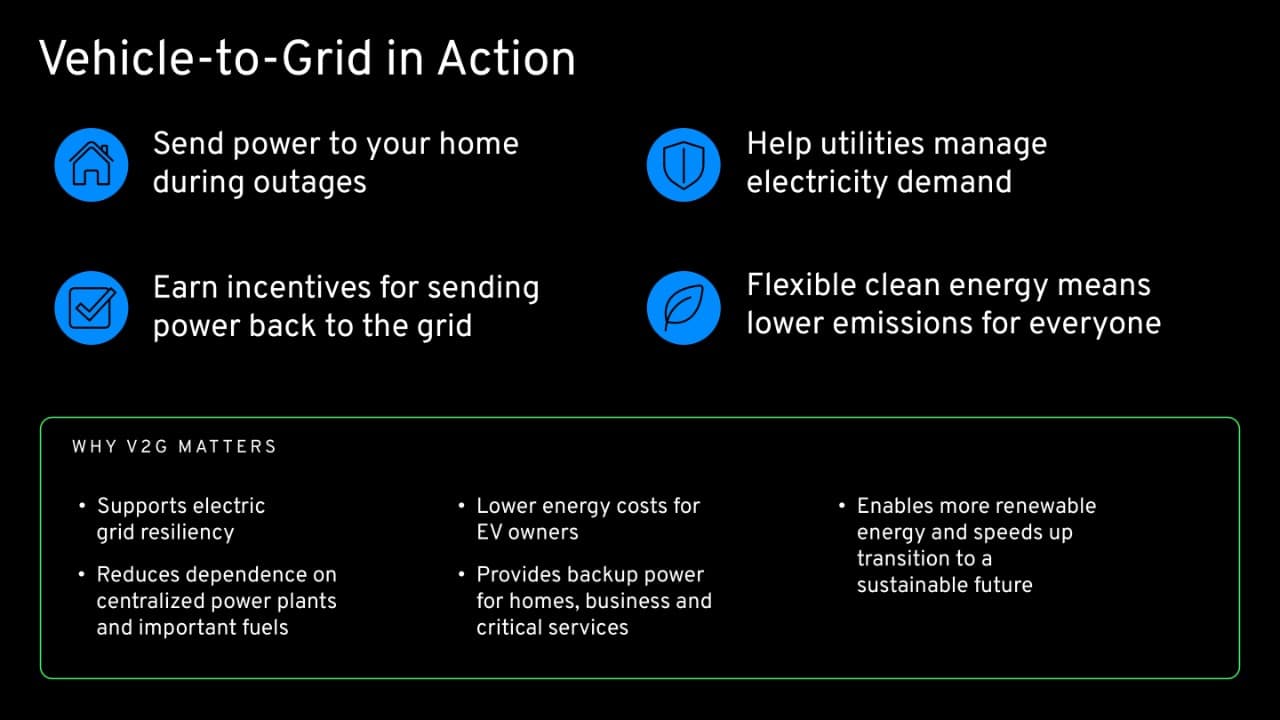
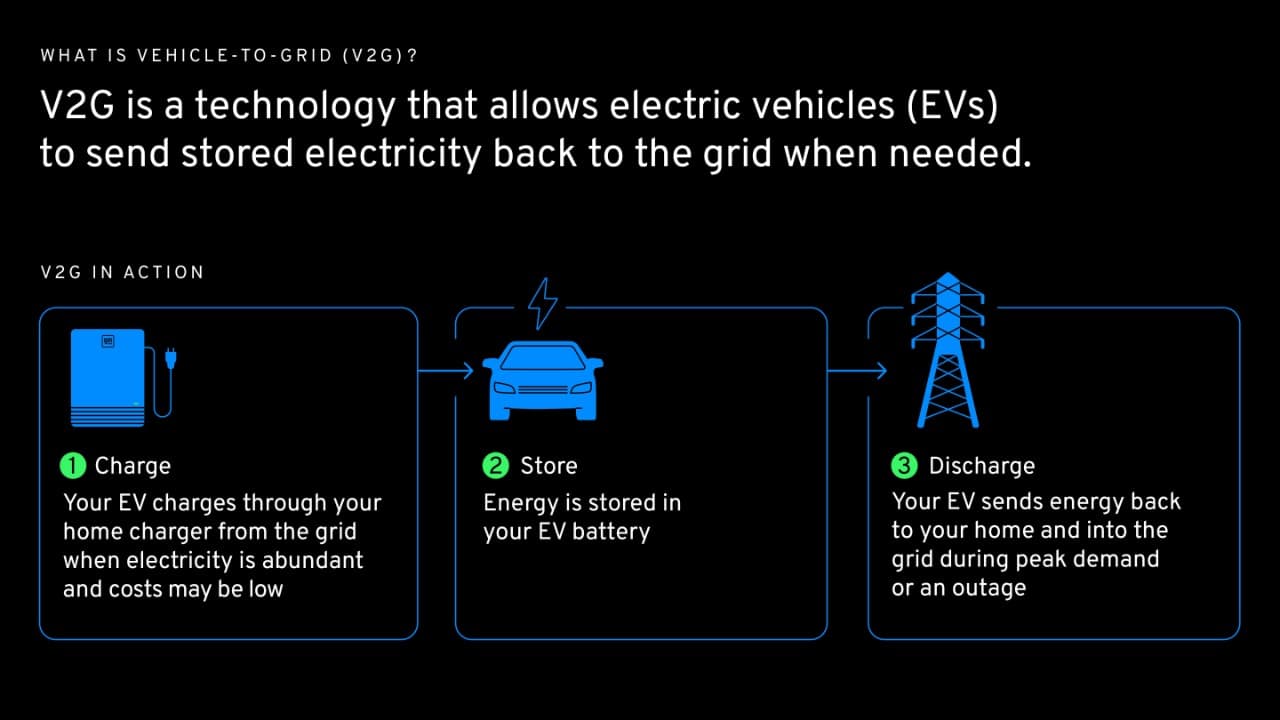
By allowing electricity to flow out of the vehicle, these EVs transition into mobile, distributed energy assets. Unlocking this capability requires a specialized combination of vehicle hardware, home power infrastructure, and utility integration.
Understanding the Architecture: V2H vs. V2G
GM’s bidirectional framework is split into two primary operational pathways, each serving a distinct structural function for home backup power and utility grid interaction.
Vehicle-to-Home (V2H) Emergency Backup
V2H technology repurposes the EV’s high-voltage battery into a stationary residential generator during power outages. Instead of relying on combustion-powered backup units, a properly configured system can pull energy from the car to sustain critical home loads like refrigeration, lighting, climate control, and home appliances.
Vehicle-to-Grid (V2G) Peak Shaving
V2G interfaces the vehicle’s battery pack with regional transmission networks via participating utility programs. During extreme weather events or peak demand hours, plugged-in vehicles discharge small amounts of power back to the grid. In time-of-use (TOU) energy markets, this enables automated peak shaving—allowing owners to draw cheap off-peak energy and discharge power during expensive high-tariff evening hours to lower net utility costs. For utilities, the platform establishes a distributed energy resource (DER) that reduces reliance on high-emission peaker plants.
The Equipment & Capital Requirements
Enabling bidirectional power flow requires moving beyond standard Level 2 charging stations. Homeowners must install specialized hardware capable of managing and inverting two-way high-voltage currents.
| Equipment Component | Operational Function | Approximate Cost (MSRP) |
| GM Energy V2H Bundle | Complete unified hardware package combining charger and isolation infrastructure. | $7,299 – $8,998 |
| PowerShift Charger | Bidirectional Level 2 station; delivers 19.2 kW (80-amp) charging and 9.6 kW continuous discharge. | $1,699 – $1,999 |
| V2H Enablement Kit | Integrates the Home Hub isolation switch, inverter, and dark-start battery for grid decoupling. | $5,600 – $6,999 |
| Electrical Installation | Professional labor, permitting, line routing, and potential 200-amp main panel upgrades via Qmerit. | $4,500 – $15,000+ |
Critical Safety Isolation: The GM Energy V2H Enablement Kit is required to island the home during a utility failure. The physical isolation switch automatically uncouples the home network from the public infrastructure, preventing hazardous backfeeding of energy into downed utility lines where repair crews are actively working.
Operational Steps to Implementation
Deploying a functional bidirectional ecosystem requires hardware verification, physical infrastructure modifications, and utility clearance.
Mitigating Costs with Utility Incentives
The total cost of equipment and specialized electrical work can be substantial, often totaling $12,000 to over $20,000 depending on home configuration. To accelerate deployment, various utility programs and tax structures offer financial offsets:
-
Utility Infrastructure Rebates: Major utility operators provide targeted equipment credits. For example, Pacific Gas & Electric (PG&E) features pilot initiatives offering up to $4,500 off compatible GM Energy bidirectional home hardware in exchange for grid-monitoring enrollment.
-
Panel Upgrade Assistance: Local utilities frequently subsidize the infrastructural upgrades needed for Level 2 charging. Programs via Southern California Edison (SCE) offer up to $4,200 to offset residential electric panel upgrades, while municipal utilities like Burbank Water and Power (BWP) provide up to $1,250 for combined charger and panel remediation.
Deciding if GM’s bidirectional system is worth the investment comes down to a math problem weighing your local power grid’s reliability against your utility provider’s rate structure. Because the required GM Energy hardware and Qmerit installation can easily scale from $12,000 to over $15,000 upfront, the math rarely works out in areas with low, flat electricity rates and highly stable infrastructure.
However, the financial return changes completely if you live in an area prone to regular blackouts, where a whole-house backup generator or a dual Tesla Powerwall setup would cost significantly more than the GM hardware bundle. Furthermore, if your utility provider relies heavily on steep Time-of-Use (TOU) rates or operates high-payout Virtual Power Plant (VPP) demand-response programs—which reward you for pumping power back into the grid during peak evening hours—the ongoing rate arbitrage can save or earn you over $1,000 annually.
Ultimately, if you view your compatible EV as an alternative to expensive, single-use stationary backup batteries, the dual-purpose nature of the Ultium platform makes a compelling financial case; otherwise, standard one-way Level 2 charging remains the more practical choice.