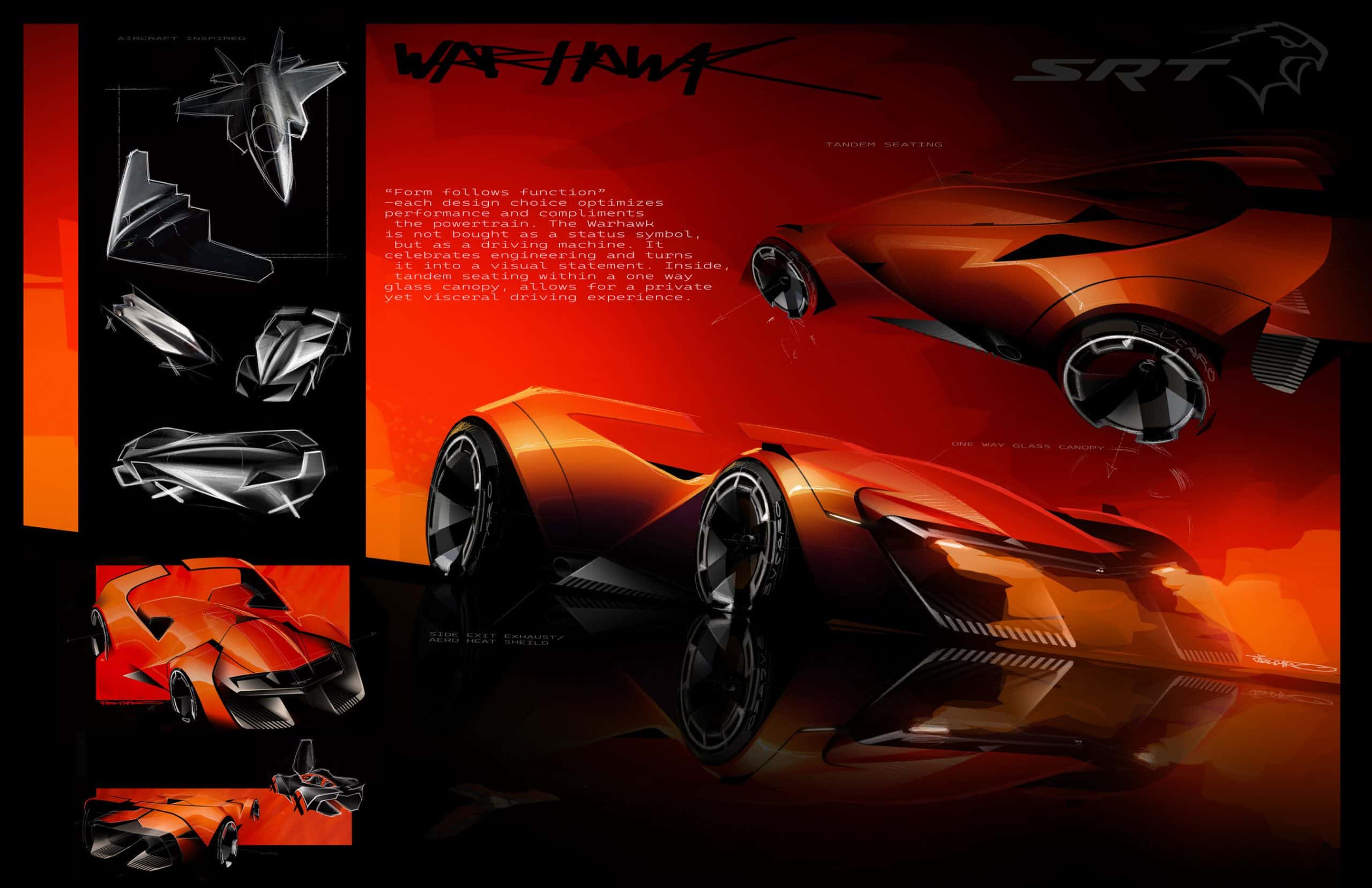
In a competition that has become a proving ground for the next generation of automotive designers, Stellantis has named a Wisconsin high school senior as the top winner of its 2026 Drive for Design contest, an annual program that asks students to envision the future of performance vehicles.
Felix Bucaro, a 12th grader, was awarded the grand prize for his interpretation of this year’s theme, “Design the Future of Fast,” which challenged participants to rethink speed, power and style through the lens of the company’s Street and Racing Technology, or SRT, division. His concept, like those of other finalists, drew on the design language of Stellantis’s well-known brands, including Chrysler, Dodge, Jeep and Ram.
The contest, now in its 14th year, has historically been limited to high school students. But in an effort to widen its reach — and perhaps cultivate talent earlier — the company introduced a junior division this year, opening the competition to students as young as kindergarten. The expansion reflects a growing recognition within the auto industry that design thinking often begins long before formal training.
Six students in total were recognized by the company’s North American design team. In the high school category, Owen Bronson of Michigan placed second, marking his third consecutive year finishing among the top three, while Javier Espino, also of Michigan, took third place.
For the winners, the rewards extend beyond recognition. Mr. Bucaro will be eligible for a summer internship with the Ram and SRT design studio, a rare opportunity for a student still in high school. He and the other top finishers will also see their sketches featured across Stellantis’s social media platforms and will serve as student judges at the EyesOn Design car show, an annual Father’s Day event held in Grosse Pointe, Mich.
Second- and third-place winners will receive a virtual mentorship session with Stellantis designers, as well as scholarships to a pre-college transportation design program at the College for Creative Studies in Detroit — a school long regarded as a pipeline into the automotive design industry.
In the newly established junior divisions, younger students were also honored: Jaxon Brobst, an eighth grader from Ohio; Richie LeBlanc, a fifth grader from Michigan; and Catherine Codouni, a first grader, also from Michigan. Their prizes include classroom visits from professional designers, art supplies and tickets to the same Grosse Pointe event.
“The imagination and talent we’ve seen over the years was seriously notched up with the SRT design theme,” said Mark Trostle, vice president of exterior design for Ram, Mopar and SRT, in a statement. “It adds to the excitement of the return of our in-house performance division for the next generation.”
The contest has, over time, become more than a promotional exercise. Several past winners have gone on to internships — and in some cases full-time roles — within Stellantis’s design studios. Among them are Ben Treinen, now working in Ram’s interior design studio, and Dongwon Kim, a former intern who later joined the company.
As automakers race to define what performance will mean in an era increasingly shaped by electrification and software, competitions like Drive for Design offer a glimpse into how younger generations imagine the road ahead — one that may place as much emphasis on creativity and identity as on horsepower.