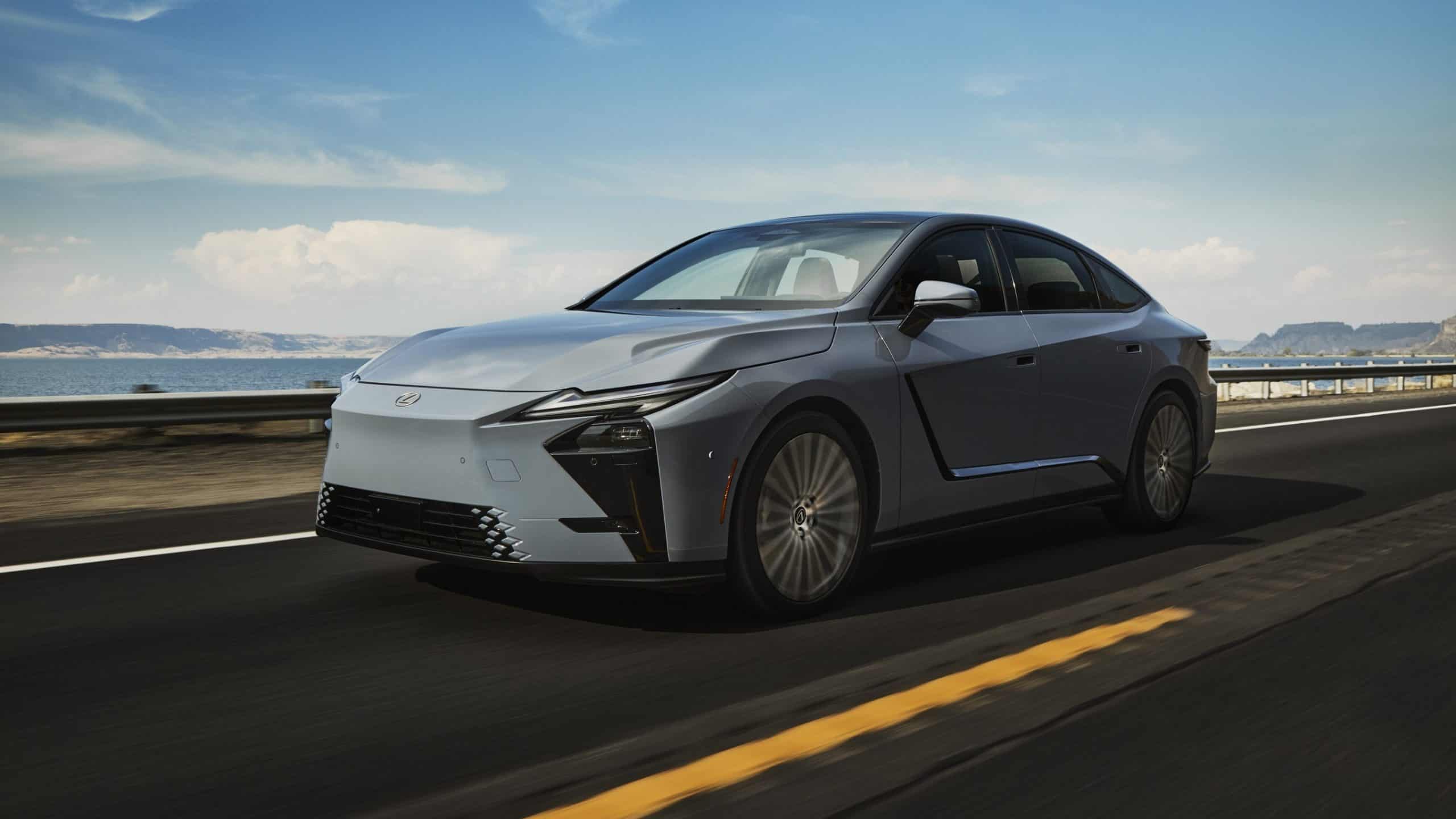
The familiar outline of the luxury sedan has been under quiet pressure in recent years, reshaped by electrification, software and shifting consumer expectations. Into that moment arrives the redesigned 2026 Lexus ES 350h, a model that seeks not to abandon tradition but to stretch it — pairing a new hybrid system with an expanded platform that also underpins the brand’s first battery-electric ES variants.
The eighth-generation ES, now reaching dealerships, reflects a broader recalibration at Lexus, where the goal is no longer to move decisively away from gasoline engines but to offer multiple pathways forward. The strategy is evident in the sedan’s new architecture, which supports both hybrid and fully electric drivetrains within a single design. It is a notable shift for a model that, for decades, has been defined by consistency more than experimentation.
At the center of the hybrid model is the company’s sixth-generation gas-electric system, an evolution that emphasizes both refinement and output. The 2026 ES 350h combines a 2.5-liter four-cylinder engine with electric motors integrated into a continuously variable transmission, producing a combined 244 horsepower. That figure marks a measurable increase over the outgoing model, while preserving the smooth, nearly imperceptible transitions between power sources that have long been a hallmark of Lexus hybrids.
For the first time in the ES’s history, buyers can opt for all-wheel drive in a hybrid configuration. The system adds a rear-mounted electric motor that engages when additional traction is needed, particularly in inclement conditions. Unlike traditional mechanical systems, the setup relies on electronic control to distribute torque between the front and rear axles, adjusting continuously based on road conditions, steering input and acceleration.
Fuel efficiency, long a selling point for the ES hybrid, remains central to its appeal. The front-wheel-drive version is rated at an estimated 46 miles per gallon combined, while the all-wheel-drive variant posts slightly lower figures. In an era when fully electric vehicles often dominate efficiency discussions, the ES 350h suggests that hybrid technology still occupies a meaningful middle ground — particularly for drivers not yet ready to commit to charging infrastructure.
The redesign extends beyond what lies beneath the hood. The 2026 ES is larger in nearly every dimension, with a longer wheelbase and a broader stance contributing to a more spacious interior. The changes are not merely numerical. The seating position has been raised, a subtle adjustment that aligns the sedan more closely with the driving posture of crossovers, which have steadily drawn buyers away from traditional four-door models.
Inside, the cabin reflects a careful balance between minimalism and technological density. A 14-inch touchscreen dominates the center of the dashboard, paired with a 12.3-inch digital instrument display. The system represents the latest iteration of the Lexus Interface, redesigned to emphasize clarity and ease of use. Wireless smartphone integration, over-the-air updates and cloud-based navigation further underscore how vehicles are increasingly defined as digital environments as much as mechanical ones.
Materials and finishes remain consistent with the ES’s longstanding emphasis on comfort. Heated and ventilated seating, ambient lighting and soft-touch surfaces are standard or widely available, reinforcing the sedan’s positioning as a quiet, composed alternative to more overtly performance-oriented rivals. Even as screens proliferate, Lexus has retained physical controls for essential functions, a nod to drivers who remain wary of fully digitized interiors.
The exterior design follows a similar path of evolution rather than rupture. Inspired in part by recent concept vehicles, the ES adopts sharper lines and a more sculpted profile while maintaining its recognizable proportions. The signature spindle grille has been reinterpreted, its presence softened in a way that aligns with the smoother front-end treatment of the electric variants.
That continuity is deliberate. The hybrid Lexus ES 350h shares its platform and much of its design with the battery-electric Lexus ES 350e and Lexus ES 500e models, which are being introduced alongside it. While the electric versions substitute battery packs and dual-motor systems for the hybrid’s gasoline engine, the visual differences are subtle — an indication that Lexus is emphasizing flexibility over fragmentation in its lineup.
Safety technology has also been expanded. The 2026 ES introduces the latest version of the company’s driver-assistance suite, Lexus Safety System+ 4.0, which includes enhanced collision detection, adaptive cruise control and new steering support features designed to respond more naturally to real-world driving conditions. Additional capabilities, such as traffic jam assistance and automated lane changes, extend the car’s ability to assist drivers in increasingly complex environments.
Pricing and Trims
Pricing for the 2026 ES lineup places the hybrid squarely in the middle of the range, above the base electric model but below higher-end variants. The hybrid Lexus ES 350h starts at just over $50,000 and climbs into the high-$50,000 range depending on trim and drivetrain configuration.
Below is the full U.S. pricing structure for the 2026 ES lineup:
| Model | Drivetrain | MSRP |
|---|---|---|
| ES 350e Premium | FWD (EV) | $48,895 |
| ES 500e Premium | AWD (EV) | $51,895 |
| ES 350e Luxury | FWD (EV) | $57,295 |
| ES 500e Luxury | AWD (EV) | $60,295 |
| ES 350h Premium | FWD (Hybrid) | $51,095 |
| ES 350h Premium AWD | AWD (Hybrid) | $52,495 |
| ES 350h Premium+ | FWD (Hybrid) | $55,895 |
| ES 350h Premium+ AWD | AWD (Hybrid) | $57,295 |
The structure reflects a notable inversion of traditional pricing logic: the entry-level electric model undercuts the hybrid, even as the latter offers the familiarity of gasoline refueling and extended range flexibility. Higher trims introduce additional luxury features, including upgraded audio systems and advanced driver-assistance technologies.
Beyond specifications and pricing, the redesigned ES speaks to a broader transition within the automotive industry. Electric vehicles continue to command attention, yet adoption remains uneven, shaped by infrastructure, cost and consumer preference. In that context, hybrid models like the ES 350h serve as a bridge — offering improved efficiency without requiring a wholesale shift in behavior.
For Lexus, the ES has long been less about reinvention than refinement. The 2026 model does not depart from that philosophy so much as expand it, layering new technology and flexibility onto a familiar foundation.
Whether that approach will resonate with buyers remains uncertain. The luxury sedan segment has contracted, squeezed by the rise of sport utility vehicles and electric crossovers. Yet there remains a cohort of drivers who value the quieter, more composed experience that sedans provide.
The new ES appears designed for that audience — one that may be curious about electrification but not yet ready to fully commit. By offering hybrid and electric variants side by side, Lexus is allowing customers to choose their own pace of change.
In doing so, the company is making a broader statement about the future of mobility. Rather than a single, decisive shift, the transition may unfold as a spectrum — one in which vehicles like the ES 350h continue to play a central, if evolving, role.