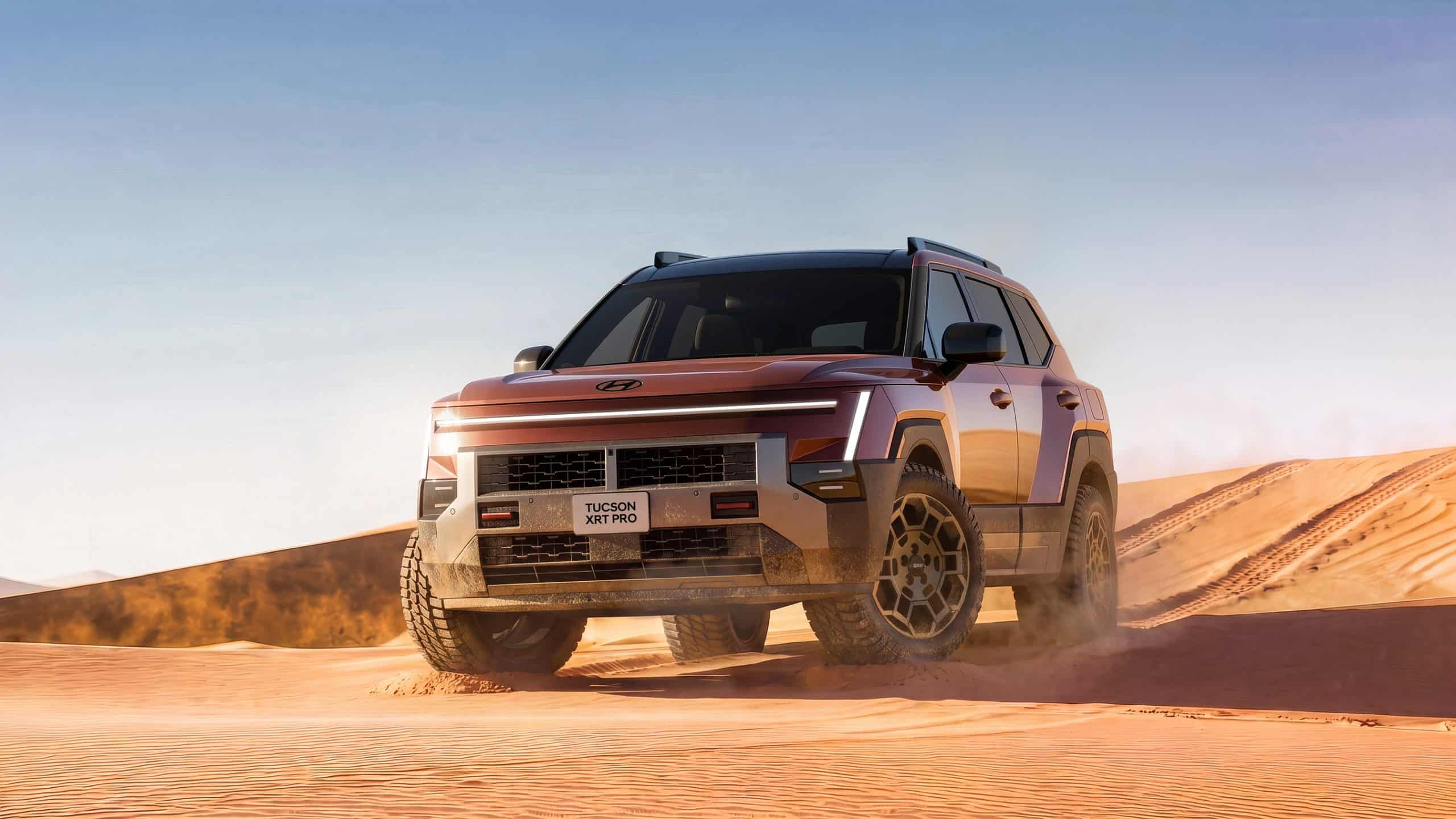
The setting was a statement of confidence in a model Hyundai describes as its best-selling SUV worldwide. The Tucson has been a pillar of the brand’s lineup for years, and the company is now asking it to carry a new design language, a new hybrid system and a new software experience all at the same time.
Art of Steel
The styling centers on what Hyundai calls the “Art of Steel” design philosophy, a phrase the company uses to describe muscular exterior surfaces paired with a purposeful, technology-forward interior. The release offers no dimensions or detailed design breakdown, and the images that accompanied the announcement were not described in the text. What the company does make clear is the intent: a vehicle meant to move, in its words, from sophisticated daily commutes to rugged weekend getaways without feeling out of place at either.
Inside, Hyundai points to a refined and spacious cabin built around everyday comfort. It cites intuitive controls, flexible storage and available relaxation features, though it does not say what those features are. The emphasis on physical ease of use is worth noting at a moment when many automakers are being criticized for burying basic functions in touchscreen menus.
A Hybrid Aimed at 42 Miles per Gallon
Under the skin, the headline powertrain claim is a next-generation hybrid system that Hyundai says is targeting up to 42 mpg while still delivering dynamic driving performance. The wording matters. It is a target, not an EPA rating, and the company has not released output figures, battery details or which trims might reach that number. Pricing and on-sale timing were also absent from the announcement.
The goal Hyundai describes is a familiar one in the segment: efficiency that does not feel like a compromise. The company calls the approach intelligent efficiency, suggesting software plays a role in how the system balances economy against response, though the release stops short of explaining how.
Pleos Connect and Gleo AI
The most forward-looking piece of the package may be the infotainment system. Pleos Connect, Hyundai’s next-generation platform, is described as an ever-evolving digital experience. It is enabled by Gleo AI, an expanding app marketplace and what the company calls intuitive UI and UX design.
Hyundai does not detail what Gleo AI does in practice, which apps will be available, or how updates will be delivered. Those specifics will determine whether the system is a genuine step forward or a polished rebranding of familiar features. The framing, though, points to a direction the industry has been moving for some time, in which the software experience is treated as a product that continues to change after the car leaves the lot.
The XRT PRO Goes Further Off-Road
Alongside the standard Tucson, Hyundai introduced the Tucson XRT PRO, a more rugged variant intended to expand the model’s adventure credentials. It debuts Hyundai’s first Smart Terrain Assist, a system the company groups with other advanced off-road technologies. The release does not explain how Smart Terrain Assist works, what hardware it relies on or how it differs from the terrain modes already common in the segment.
Still, the pairing of a hybrid-focused mainstream model with a more capable trim suggests Hyundai wants the Tucson to appeal to buyers on both ends of the compact SUV spectrum: those chasing fuel economy and those who regularly leave the pavement.
A Larger Offensive
The Tucson also arrives as the opening move in something much bigger. Hyundai Motor Company President and CEO José Muñoz said the new SUV opens the most ambitious product offensive in the company’s history, which includes more than 100 new and refreshed vehicles globally by 2030. Fifty-eight of them are planned for North America alone.
Muñoz called the Tucson the best one Hyundai has ever built and said millions of families around the world count on it. He credited its combination of bold design, generous space, seamless infotainment and available hybrid efficiency with setting a new standard for the segment.
For now, the new Tucson is a promise with a few firm details. The design direction, the 42 mpg target, the name of the infotainment platform and the existence of the XRT PRO are confirmed. Pricing, availability, powertrain specifications, the full list of features and independent performance data are not.