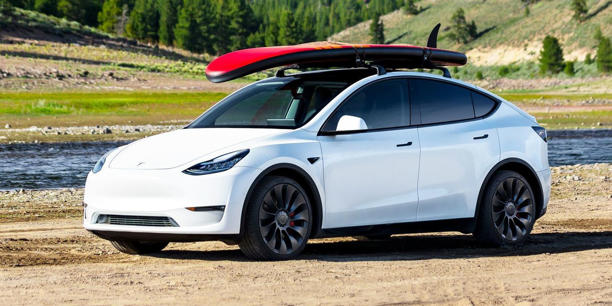
 The National Highway Traffic Safety Administration has announced plans to develop a federal safety standard requiring what regulators are calling a “robust and obvious door egress system” in all new vehicles. The rulemaking, confirmed in a regulatory filing, will not be limited to Tesla, the automaker whose flush, electronically operated door handles prompted the scrutiny in the first place. Instead, it will eventually bind every manufacturer still building vehicles with that design.
A Denial and a Rulemaking, Announced Together
The door egress announcement arrived alongside a separate and more narrowly focused decision. NHTSA denied a petition, filed in November 2025 by a private citizen, that had asked the agency to open a formal defect investigation into the emergency mechanical door release on 2022 Tesla Model 3 vehicles. The petitioner argued that the release mechanism was neither easy to locate nor clearly marked, and that this failure violated Federal Motor Vehicle Safety Standard 206. NHTSA’s Office of Defect Investigations reviewed the claim but found only a single consumer complaint in its database that matched the described issue, well below the pattern of complaints the agency typically requires before opening a formal probe.
What stands out in the denial is an admission buried within it. Federal Motor Vehicle Safety Standard 206 does not currently say anything about how manual door releases must be labeled or positioned, which means there was no existing rule for Tesla’s design to have violated. That regulatory vacuum is precisely why NHTSA chose to pursue rulemaking instead of enforcement, and why the agency granted the broader egress petition in the same filing where it rejected the narrower, Tesla-specific one.
A Pattern of Fatal Incidents
The safety concerns driving this shift are neither speculative nor isolated. Reporting from Bloomberg has tied at least 15 deaths across a dozen crashes to situations in which occupants or would-be rescuers could not open a Tesla’s doors after the vehicle lost power, with several of those cases involving people who survived the initial collision only to die in a fire that followed. It has also become known that Tesla Chief Executive Elon Musk pushed forward with electronic door designs despite internal safety concerns raised within the company.
NHTSA had already taken a narrower run at the issue in September, opening an investigation after nine complaints from Model Y owners who described being unable to free children trapped inside their vehicles. The United States was not first to act on this problem, however. China moved ahead of American regulators in February 2026, mandating that automakers install a mechanical release on both the interior and exterior of every vehicle door except the trunk. Similar regulatory efforts are under discussion in the European Union, though nothing there has yet become law.
Congress Weighs In, Too
The push for reform extends beyond NHTSA’s rulemaking process. U.S. Representative Robin Kelly introduced legislation earlier this year that would require manual door releases and guarantee first-responder access in new vehicles. Until that legislation or the NHTSA rule takes effect, the private citizen petition represented the only available avenue for addressing safety concerns in vehicles already on the road, and that avenue has now been closed.
A Slow Road to Compliance
Any resulting safety standard is expected to take years to reach automakers’ assembly lines. Michael Brooks of the Center for Auto Safety anticipates no compliance deadline before 2030, even under the most favorable timeline for the rulemaking process. Industry pushback against costly new mandates has also become a routine feature of congressional lobbying, adding further uncertainty to how quickly, or how strictly, any final rule will be enforced.
Some automakers aren’t waiting for regulators to settle the matter. Tesla’s chief designer said last year that the company was already reworking its door handles, and Rivian has said it is repositioning the manual release on its upcoming R2 SUV to sit closer to the powered handle, making it easier to locate in an emergency.
The Real Story Is Regulatory
The most consequential part of this development may have little to do with door handles themselves. By denying the Tesla-specific petition and pursuing an industry-wide rulemaking instead, NHTSA has found a way to formally acknowledge a well-documented safety problem without triggering recall liability for any single automaker. The eventual cost of compliance will instead be spread across every manufacturer still using flush, electronically operated door handles, a resolution that reshapes how the burden of this safety failure gets distributed across the industry.