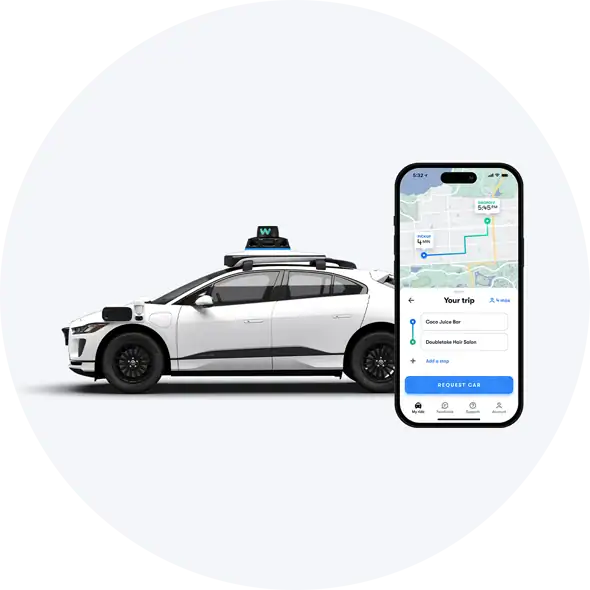
The financing was led by Dragoneer Investment Group, DST Global, and Sequoia Capital, with participation from Andreessen Horowitz, Mubadala Capital, Bessemer Venture Partners, Silver Lake, Tiger Global, and T. Rowe Price. Additional investors included BDT & MSD Partners, CapitalG, Fidelity Management & Research Company, GV, Kleiner Perkins, Perry Creek Capital, and Temasek. Alphabet remains Waymo’s majority shareholder and continued its long-term support in the round.
The investment comes as Waymo accelerates global expansion and scales what has become the most widely deployed autonomous ride-hailing service in the world. Industry analysts say the size and composition of the round reflect a sharp shift in sentiment toward autonomy, following years of skepticism after high-profile setbacks across the sector.
Safety Data as the Differentiator
Waymo’s pitch to investors has increasingly centered on safety performance rather than futuristic promises. The company reports more than 127 million miles of fully autonomous driving, with data indicating a 90% reduction in serious injury crashes compared with human drivers. That dataset—one of the largest in the industry—has become a core competitive advantage at a time when regulators and city officials are demanding measurable outcomes rather than simulations.
Transportation safety researchers have noted that human error remains responsible for the vast majority of road fatalities globally, a reality that has strengthened the case for highly automated systems that are not affected by distraction, fatigue, or impairment. Waymo’s growing statistical record has helped it secure regulatory approvals and operating permits that competitors have struggled to obtain.
From Pilot Programs to Scaled Service
In 2025 alone, Waymo more than tripled its annual ride volume to 15 million rides, surpassing 20 million lifetime rides. The company now provides more than 400,000 paid rides each week across six major U.S. metropolitan areas, including Phoenix, San Francisco, Los Angeles, and Austin.
This level of activity places Waymo in a category of its own. While rivals such as Cruise and Motional have paused or slowed operations following safety incidents, Waymo has continued to expand cautiously but consistently. Analysts at several mobility research firms describe the company as having crossed the threshold from “proof of concept” to infrastructure-scale service.
The new capital will support plans to launch ride-hailing operations in more than 20 additional cities in 2026, including international markets such as Tokyo and London. The company recently entered Miami, signaling a push into dense, complex urban environments and diverse weather conditions—areas long considered among the toughest challenges for autonomous driving systems.
Investor Confidence Returns to Autonomy
The funding round also reflects a broader recalibration among late-stage technology investors. After years of retrenchment in autonomous driving, venture and growth firms are increasingly concentrating capital into fewer companies with demonstrated traction.
Sequoia Capital, a longtime investor in platform-defining technologies, described Waymo as having moved beyond research milestones to operational excellence. DST Global, known for backing companies at inflection points, framed autonomous driving as a foundational shift comparable to the rise of mobile computing or cloud infrastructure.
Dragoneer Investment Group, which focuses on durable, category-leading businesses, cited Waymo’s sustained lead in real-world performance as a key reason for its investment. According to Dragoneer, the firm has studied autonomous driving for more than a decade and views Waymo as the clear outlier in terms of safety data, deployment scale, and technical maturity.
A Global Race Intensifies
Waymo’s expansion comes amid intensifying global competition. Chinese autonomous driving companies such as Baidu’s Apollo and Pony.ai continue to scale robotaxi services domestically, while European automakers are accelerating investments in advanced driver assistance and autonomy as part of broader software-defined vehicle strategies.
At the same time, governments are increasingly framing autonomy as a matter of public safety and economic competitiveness. Cities facing driver shortages, aging populations, and rising transportation costs are exploring autonomous mobility as a long-term solution rather than a novelty.
Waymo’s leadership believes the opportunity extends far beyond ride-hailing. Autonomous systems are widely expected to reshape logistics, public transit, accessibility for people with disabilities, and urban planning itself. Some urban economists argue that widespread adoption could reduce parking demand, lower congestion, and fundamentally alter how cities are designed.
Looking Ahead
With $16 billion in new capital, Waymo is now positioned to expand its fleet, hire aggressively, and accelerate international deployments while maintaining its conservative approach to safety validation. The company has emphasized that growth will continue to be staged market by market, rather than through rapid, uncontrolled expansion.
Industry observers say the round could mark a turning point not just for Waymo, but for the autonomous driving sector as a whole.