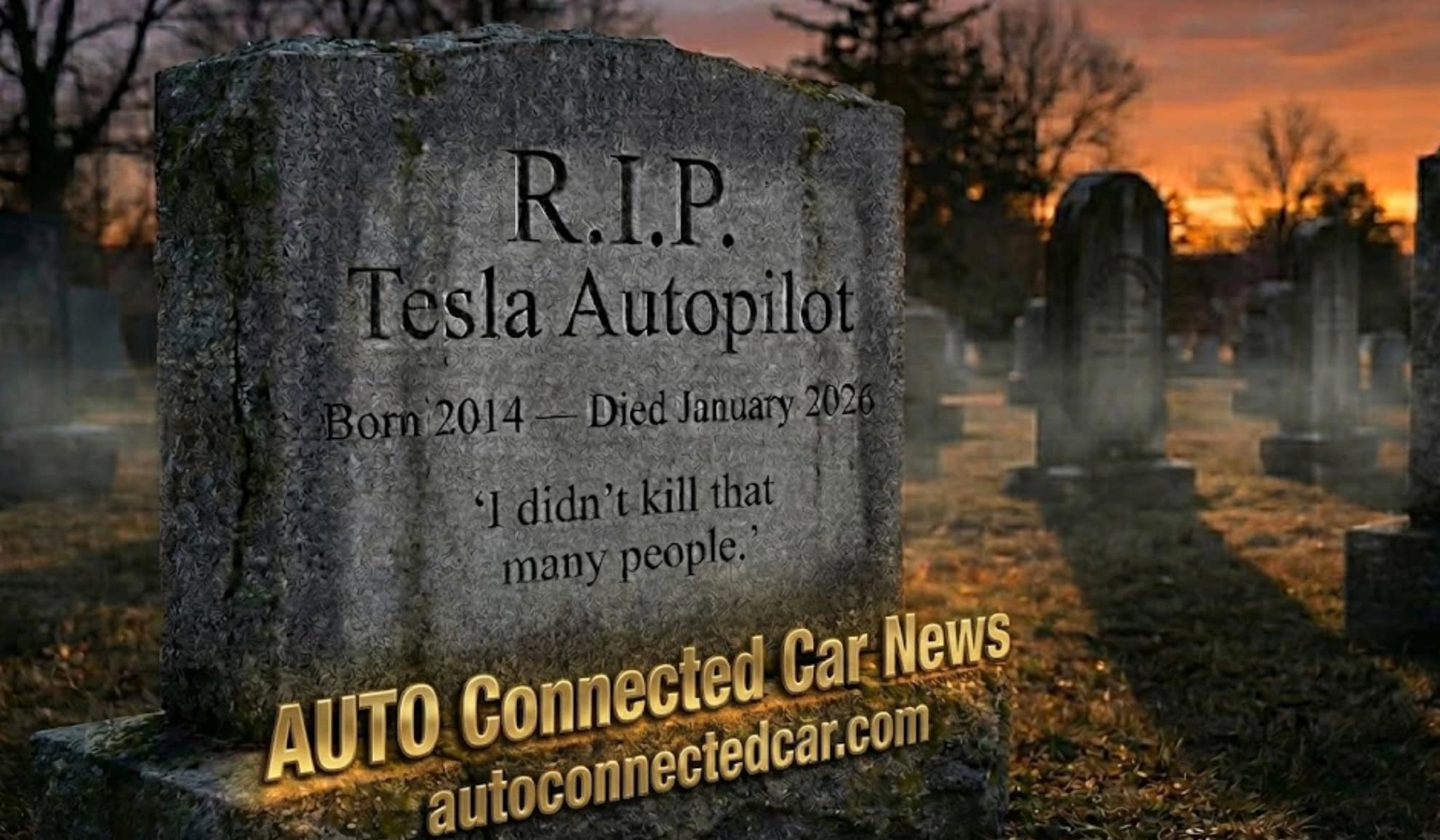
The electric vehicle maker, facing a threatened license suspension in California, has begun stripping its most recognizable brand name from its driver-assistance software across the United States and Canada — a retreat years in the making.
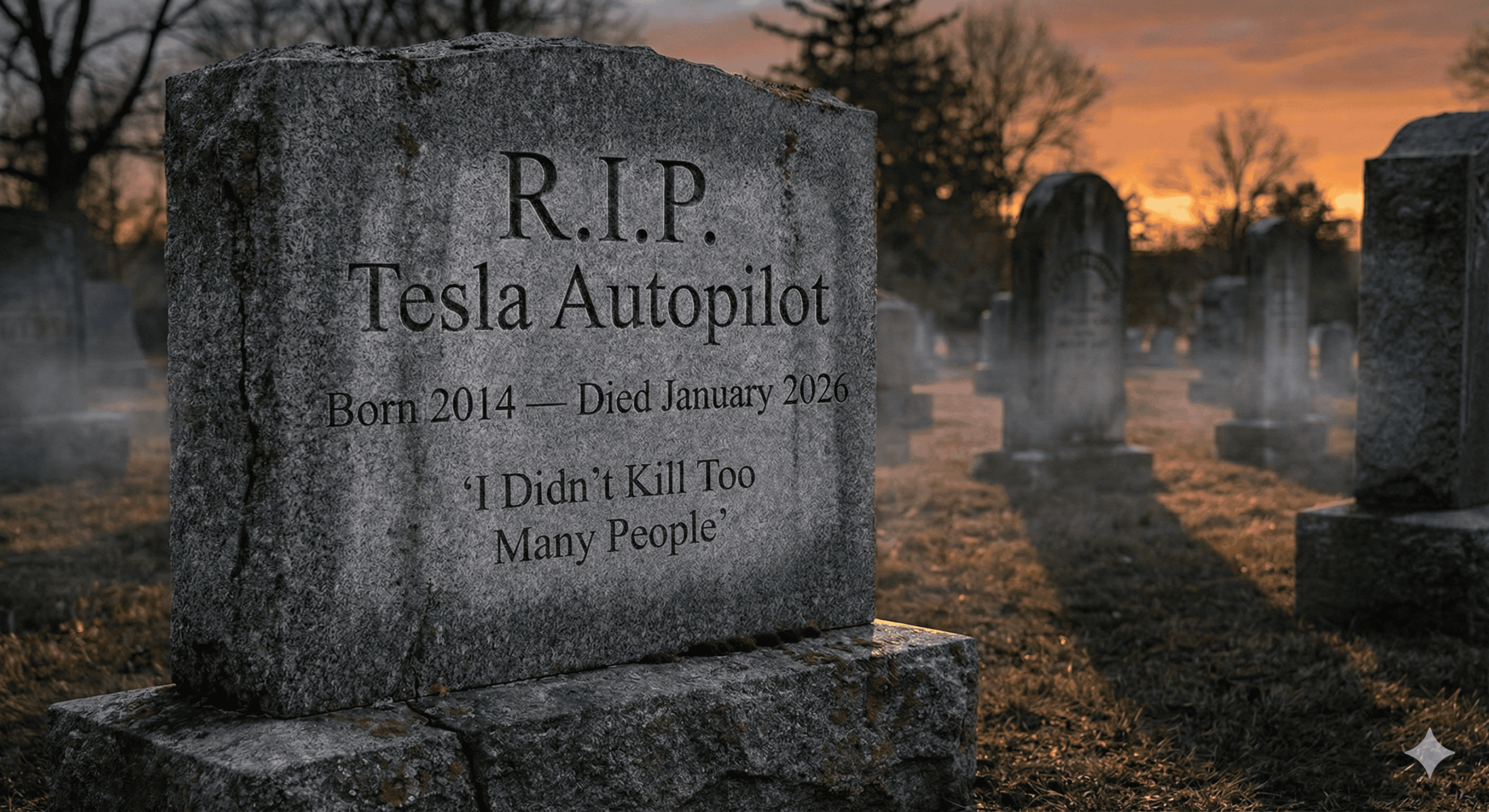
Tesla has retired one of the most recognized and contested names in the automobile industry, phasing out the Autopilot brand for its driver-assistance technology after California regulators ruled that the term deceived consumers into believing their vehicles could drive themselves.
The decision, which took effect for new vehicle orders across the entire United States and Canada in early January, marks the end of a decade-long era in which the Autopilot name helped transform Tesla from an upstart electric vehicle company into a symbol of the autonomous driving future. It also represents a significant, if belated, concession to regulators who have long argued that the company’s marketing overpromised what its technology could actually deliver.
A California administrative law judge ruled that the Autopilot designation violated state consumer protection laws, finding that it created misleading expectations about the capabilities of what is technically classified as a Level 2 driver-assistance system — one that requires a human to remain alert and in control at all times. Facing a 30-day suspension of its manufacturing and dealer licenses in its largest domestic market, Tesla moved swiftly to comply.
The company is replacing the Autopilot label with the more clinical designation Traffic-Aware Cruise Control for its base-level features — a name that, whatever its lack of glamour, more accurately describes what the system does. Autosteer, the lane-keeping feature that was previously bundled into Autopilot as standard equipment, has been removed from new vehicles entirely and will now require a paid subscription to access.
“The nomenclature was always the problem,” said one regulatory official familiar with the matter, speaking on the condition of anonymity because the proceedings were ongoing. “Autopilot implies the car is flying itself.”
Broader Than California
While the enforcement action originated in California, Tesla’s response went well beyond what state regulators required. The company eliminated the Autopilot name for all new vehicle orders throughout the United States and Canada — a decision that suggests Tesla saw the California ruling as a harbinger of what was coming elsewhere rather than an isolated regulatory skirmish.
Critically, the change applies only to new vehicles. Existing Tesla owners retain their Autopilot software and will not see it removed. And in Europe, where regulatory frameworks differ, Basic Autopilot remains standard on new vehicles, with Enhanced Autopilot available as an add-on — meaning the retirement of the name is a North American decision, not a global one.
The simultaneous timing of the name change, the removal of Autosteer from base pricing, and Tesla’s compliance deadline was not lost on industry observers. The company appeared to use a regulatory mandate as cover to restructure its entire driver-assistance business model around subscriptions — satisfying the California DMV while simultaneously engineering a more lucrative revenue stream.
A Branding Retreat, Years in the Making
The retirement of the Autopilot name is the final chapter in a branding retreat that Tesla began under sustained pressure from the National Highway Traffic Safety Administration and the California Department of Motor Vehicles, which first raised formal concerns in 2023.
The company had already made one significant concession, renaming its premium software package from Full Self-Driving Capability to Full Self-Driving (Supervised) — an awkward construction that nonetheless signaled an acknowledgment that the technology was not, in fact, capable of fully autonomous operation. The elimination of the Autopilot name closes the loop on that effort.
The changes are being delivered to existing vehicles through an over-the-air firmware update — the same wireless delivery mechanism Tesla has long used to add and modify features without requiring a visit to a dealership. The update also refines the system’s driver-monitoring protocols, using the cabin-facing camera and steering wheel torque sensors to more aggressively verify that drivers remain engaged.
A Wider Reckoning for the Industry
While the enforcement action was rooted in California law, its implications are reverberating far beyond the state’s borders. Regulators in Texas, Florida and New York have been monitoring the proceedings closely, according to people familiar with the matter, raising the prospect that other states could pursue similar actions — and that automakers across the industry may be forced to revisit the language they use to describe their own driver-assistance systems.
Tesla is not alone in having navigated the treacherous marketing terrain between what autonomous driving technology promises and what it can currently deliver. But as the company that most aggressively staked its identity on that promise, it has the most to answer for — and, potentially, the most to lose.
By aligning its terminology more closely with the definitions established by SAE International, the industry’s standard-setting body, Tesla is also positioning itself for the eventual certification of more advanced Level 3 and Level 4 systems in global markets — a future in which the regulatory landscape will be far less forgiving of ambiguity.
A New Business Model Beneath the Rebranding
The timing of the change is not without strategic calculation. Along with the rename, Tesla has removed standard driver-assistance features like Autosteer from the base price of its vehicles, nudging owners toward a monthly subscription for the full supervised software suite.
The move reflects a broader shift in how Tesla — and the auto industry at large — generates revenue in an era of software-defined vehicles. Selling features as ongoing subscriptions rather than one-time purchases offers a more predictable and scalable income stream, even as it asks consumers to pay repeatedly for technology they may have expected to own outright.
For Tesla, the retirement of Autopilot is at once a legal necessity, a regulatory olive branch and a business pivot. Whether it will be enough to satisfy the growing chorus of regulators who believe the company spent years selling a dream it could not yet deliver remains to be seen.