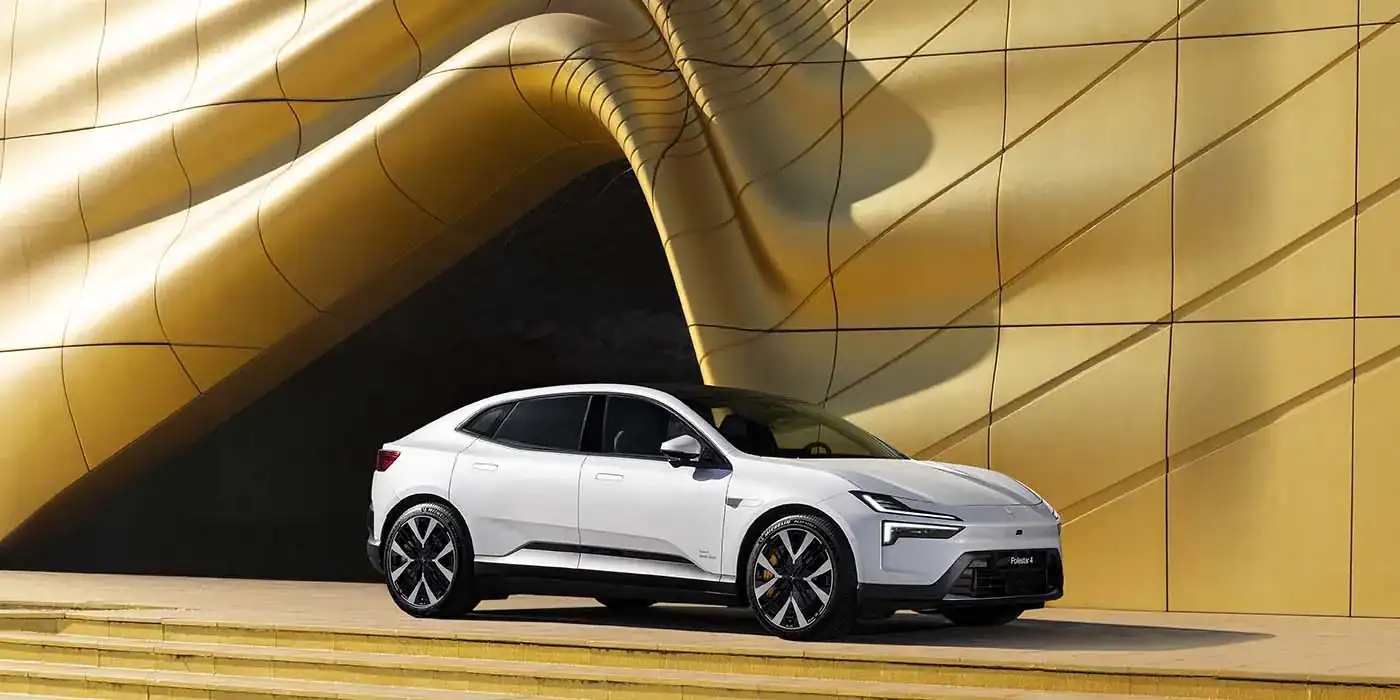
Cars.com leads with this issue in its 2025 review, describing the Polestar 4 as “defined by its lack of a rear window.” The outlet found the camera feed to be technically impressive but said the setup “adversely affects the driving experience,” particularly for drivers who instinctively glance backward when merging or parking. Cars.com nonetheless praised the 4’s spacious and upscale interior, applauding its high-quality materials and sustainable touches, though it noted that key air-vent and climate controls hidden in the touchscreen could frustrate some users.
MotorTrend’s first look echoed the fascination with the rear-window deletion, calling it a “radical design move” meant to improve aerodynamics and free up headroom for rear passengers. The publication explains that a panoramic glass roof extends further back where a window would normally sit, creating a cleaner silhouette and better structural rigidity. MotorTrend also praised the car’s Android-based infotainment system—a 15.4-inch touchscreen powered by Google Assistant, Maps, and Play—as one of the most responsive and intuitive in the segment.
TechCrunch viewed the missing window as a symbol of Polestar’s tech-first philosophy. Its reviewers noted that the wide-angle camera feed offers a broader field of view than a conventional mirror, but it demands an adjustment period for depth perception and glare. TechCrunch credited Polestar for being bold enough to replace glass with code, calling it “a literal re-imagining of visibility.”
Edmunds, in its second-drive review of the 2026 U.S. model, agreed that the digital mirror works well once acclimated but warned that “old habits die hard.” Edmunds also highlighted Polestar’s commitment to continual improvement through over-the-air updates, including an upcoming Google Maps “Live Lane Guidance” feature that uses onboard cameras to detect lane markings and provide visual cues on the central screen. The publication described the Polestar 4 as a “rolling software platform,” with Google integration so deep that the car feels like “a smartphone you can drive.”
Wired took a design-focused approach, calling the no-window layout “a bold aesthetic gamble that pays off in serenity.” The magazine praised the minimalist cabin, sustainable textiles, and clean interfaces, noting that the absence of a rear window allows for a more cocoon-like interior. It said the move “pushes Scandinavian simplicity to its logical extreme,” while the ambient lighting and digital mirrors combine to make the cockpit feel futuristic but calm.
Ars Technica emphasized the driving dynamics, finding that the Polestar 4 offers sharp steering and a balanced ride, but acknowledged that “the no-rear-window design will remain controversial.” The outlet argued that Polestar traded a bit of driver familiarity for a sleeker roofline and improved structural efficiency. Still, it described the experience as “engaging yet composed,” suggesting the car’s performance and refinement mostly overshadow its quirks.
From a market standpoint, Motor1 reported that the Polestar 4 will start around $56,300 for the Long Range Single Motor version in the U.S., with the Dual Motor AWD model commanding a higher premium. Production for North American units is shifting to a South Korean plant to avoid tariffs on Chinese-built vehicles, part of Polestar’s broader effort to stabilize costs and expand its U.S. footprint. Wired confirmed this strategy, noting that Polestar is trying to maintain pricing competitiveness while preserving premium materials and technology.
Taken together, U.S. reviewers portray the Polestar 4 as one of the boldest EVs of its class—both for what it includes and what it omits. Its tech integration, sustainable craftsmanship, and over-the-air capability earn high marks, while its unconventional approach to visibility splits opinion. For many drivers, the lack of a rear window will feel like an adjustment; for others, it signals the next evolution in how humans and machines share information on the road.